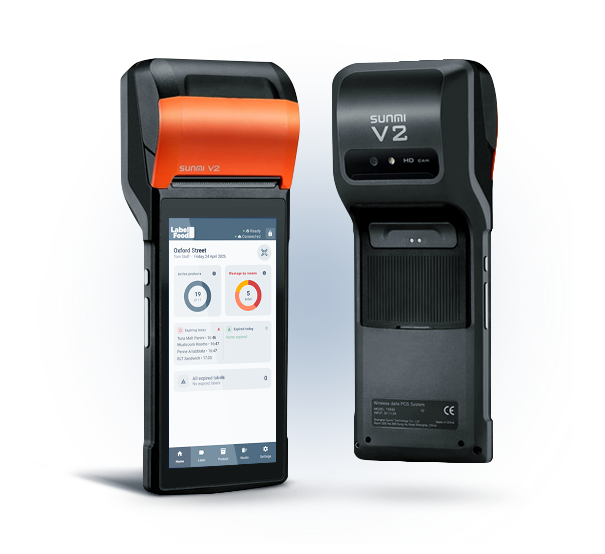
UK hospitality businesses discard approximately 920,000 tonnes of food annually. In a fast-paced London kitchen, much of this waste results from manual prep dating errors and spoilage. Managing handwritten labels whilst maintaining Natasha's Law compliance is a significant drain on your team's time. Adopting an automated kitchen labelling system London kitchens can trust is now a standard requirement for protecting margins. It's essential for food safety, especially with mandatory digital waste tracking arriving in 2026.
You need a system that works as hard as your line chefs. This guide provides a pragmatic framework for selecting and implementing an automated labelling solution to improve prep speed and waste management. We'll examine how digital records and clear labels transform kitchen efficiency. You'll learn how to move from chaotic manual processes to an audit-ready digital system. This approach simplifies staff training. It reduces waste. It keeps your kitchen focused on service.
Key Takeaways
- Identify the operational risks of manual prep dating and how automated systems reduce food waste costs in London's high-rent hospitality market.
- Master the requirements of Natasha’s Law for PPDS food and the correct labelling of the 14 statutory allergens, including the separation of peanuts and nuts.
- Learn how to implement an automated kitchen labeling system London kitchens use to centralise data via the SV2 printer and cloud-based management.
- Improve kitchen accountability by using individual staff PINs and digital reporting tools like the Compliance Pack for EHO inspections.
- Streamline system setup using AI-assisted menu onboarding, ensuring all data is reviewed and edited for total accuracy before printing.
Why London Kitchens are Transitioning to Automated Labelling
London commercial kitchens operate under extreme financial pressure. High rents and rising labour costs leave no room for operational waste. UK hospitality businesses discard approximately 920,000 tonnes of food annually. Much of this is avoidable. Manual labelling is a weak point in this high-stakes environment. It relies on handwritten 'day dots' that are often illegible or incorrectly calculated. Transitioning to an automated kitchen labeling system London businesses can rely on helps eliminate these common human errors. It ensures every prep container has a clear, accurate label. This shift is no longer just about convenience; it's about survival in a market where margins are razor-thin. By 2026, digital waste tracking will become a mandatory requirement for many UK businesses. Moving to digital systems now prepares your team for these upcoming regulatory shifts.
The Limitations of Manual Stock Rotation
Handwriting varies significantly between staff members. This inconsistency creates immediate food safety risks. If a chef cannot read a date, they may discard perfectly good stock or use expired product. Both outcomes are costly. Calculating shelf life manually also drains productivity. During a busy prep cycle, every minute spent doing mental arithmetic is a minute lost to production. There is also the hidden cost of "guessing". Without a standardised system, staff often default to shorter shelf lives to stay safe. This behaviour drives up food waste in a city where disposal costs are rising. Professional kitchens need a definitive answer, not an estimate. Manual systems simply cannot provide the precision required for modern multi-site management.
EHO Inspection Readiness in London
Professional standards are shifting toward digital records. Under the UK Food Information Regulations, businesses must provide accurate allergen and ingredient data. Digital systems create a transparent trail for Environmental Health Officers (EHO). In London, the Food Hygiene Rating Scheme (FHRS) determines a business's public reputation. A rating of 5 is the standard for any serious operator. Automated systems act as a support tool for these inspections. They provide clear, printed evidence of stock rotation and allergen management. This level of organisation is distinct from Scotland’s Food Hygiene Information Scheme, which uses a "Pass" or "Improvement Required" status. Digital records remove the ambiguity of paper logs. They prove that your kitchen follows a consistent, professional protocol every day. This creates peace of mind for managers and owners alike.
Core Components of a Professional Labelling System
An automated kitchen labeling system London operators choose must be a complete solution. It shouldn't be a fragmented collection of third-party apps and office-grade hardware. Kitchen environments are harsh. They are hot, humid, and fast-paced. A professional setup integrates robust hardware with a centralised digital management layer. This ensures data consistency across every prep station. When you buy a system that includes both the device and the software, you eliminate compatibility issues. You gain a single point of accountability for your kitchen records.
The LabelFood Printer SV2: Purpose-Built Hardware
The LabelFood Printer SV2 is a dedicated standalone device. It doesn't require a separate tablet or a fragile touchscreen to operate. Thermal printing technology is used. This means you never need to replace ink or toner. It's a critical advantage in a busy kitchen. The footprint is compact. This is vital for London kitchens where prep space is often limited. It's built for durability. Generic office printers or mobile devices aren't designed for constant use in a culinary environment. This dedicated hardware ensures that labels remain clear and legible throughout the shelf life of the product.
The Cloud Management Dashboard
Centralisation is the key to managing multiple sites. The Cloud Management Dashboard allows you to organise your entire product catalogue from a single location. You can access it via web browsers or the iOS/iPad app. Note that there is no Android version available. This platform is where you manage your 14 statutory allergens and ingredient lists. Following the official guidance on Natasha's Law is simpler when data is controlled centrally. You can update a recipe once and sync it to every printer in your estate instantly. It's a reliable way to manage your kitchen labelling without manual data entry at each site.
Security is handled through individual PINs. Every staff member has a unique code. This creates a clear trail of activity. You know who printed which label and when. It builds a culture of accountability. Your digital records become a reliable asset during audits rather than a source of stress.
Kitchen Wi-Fi is notoriously unreliable. Basement kitchens or thick-walled heritage buildings often have dead zones. A professional system must offer offline functionality. The LabelFood system stores your data locally on the SV2 printer. It continues to function even if the internet drops out. Once the connection is restored, it syncs all activity back to the cloud. This ensures your prep cycle never stops. It's a robust approach to an automated kitchen labeling system London businesses need for continuous operation.
Managing Natasha's Law and Allergen Compliance
Managing food safety regulations is a primary concern for any operator. An automated kitchen labeling system London businesses implement must handle the complexity of the 14 statutory allergens. These include celery, cereals containing gluten, crustaceans, eggs, fish, lupin, milk, molluscs, mustard, sesame, soya, and sulphur dioxide/sulphites. Crucially, the regulations require you to treat peanuts and nuts as two distinct categories. Manual ingredient lists are prone to transcription errors. A digital system automates the bolding of these allergens. This ensures your labels meet the required visual standards every time. Using allergen management software UK kitchens trust provides a centralised database for all recipes. It removes the need for chefs to remember every sub-ingredient in a complex sauce or dressing.
Natasha's Law Requirements for 2026
Natasha's Law applies specifically to prepacked for direct sale (PPDS) food. This refers to food prepared and packed on the same premises before a customer orders it. Common examples in London include sandwiches, salads, or bakery items packaged for grab-and-go service. By 2026, EHO inspectors expect high precision in these labels. They must show the full name of the food and a complete ingredient list. Any of the 14 allergens must be emphasised, usually through bold text. Clear labelling is your first line of defence against cross-contamination risks. You can use the natasha's law labelling requirements guide to ensure your staff understand exactly which products fall under this regulation. It serves as a vital training resource for new team members.
Digital Allergen Records and Audits
Inspections are often unpredictable. Having a "Compliance Pack" ready for an EHO officer changes the dynamic of the visit. This digital record shows exactly what has been printed and when. If an ingredient supplier changes their specification, you update the Cloud Management Dashboard once. Every LabelFood Printer SV2 on your network reflects that change immediately. The "Label Report" feature allows you to verify historical print data. You can see which labels were produced during a specific service. This level of detail is impossible to maintain with a manual paper log. The "Staff Activity" report also tracks who printed each label via their unique PIN. This builds a culture of accountability. It provides a reliable support tool for your food safety management system without the burden of manual filing.
Operational Integration: Waste Tracking and Staff Accountability
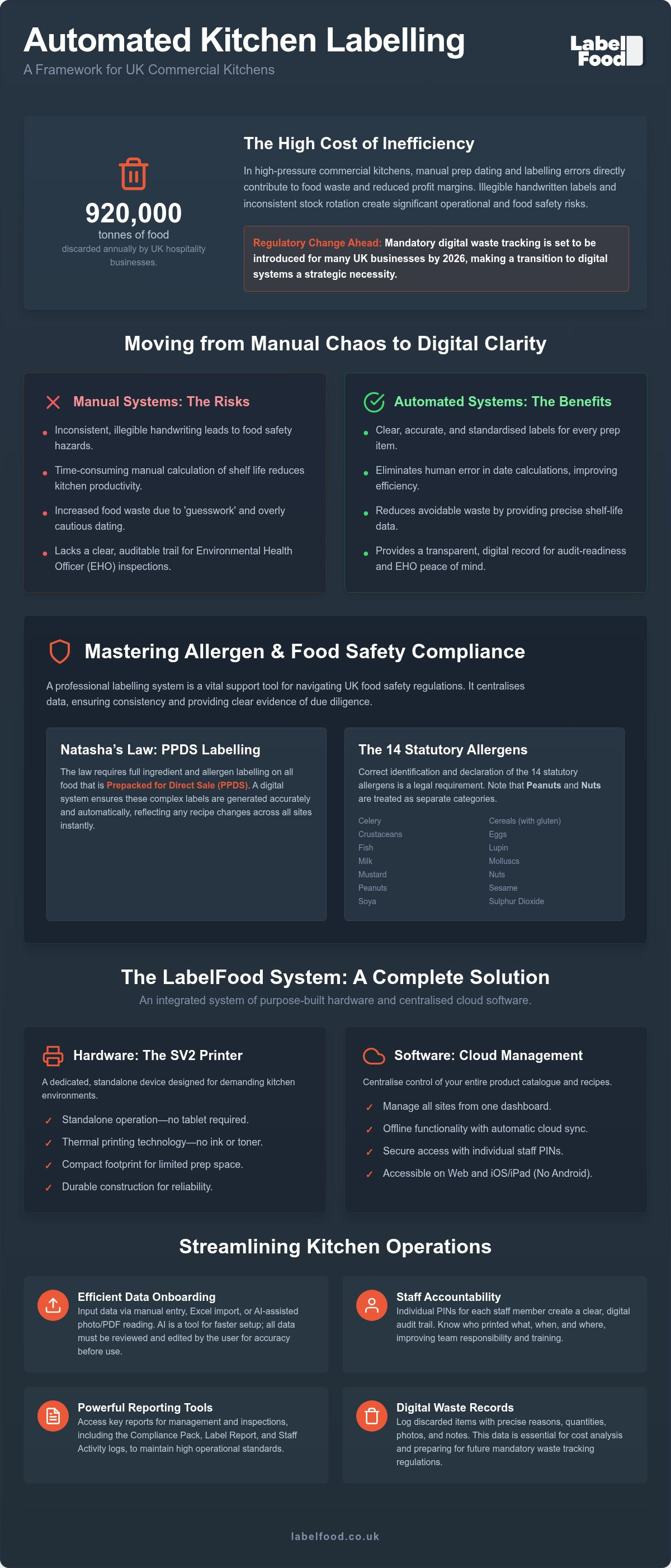
London restaurants lose an estimated £682 million to food waste annually. Efficiency isn't just about clear labels; it's about understanding why items are being discarded. An automated kitchen labeling system London kitchens use should include integrated waste tracking. This moves the task from a forgotten paper log to a live digital record. Every action is tied to a specific team member. Using individual PINs creates a clear line of accountability. You can see which staff members are managing stock correctly and who requires further training. The "Staff Activity" report identifies these gaps. It allows you to address specific behaviours before they impact your margins.
Digital Food Waste Logs
Paper waste sheets are easily lost or ignored. Digital logs allow staff to record waste with photos and specific notes. This provides the context behind the spoilage. You can determine if it's a storage issue, a supplier problem, or simple overproduction. Analysing these patterns helps you adjust your ordering and prep levels. It ensures you aren't paying for stock that ends up in the bin. Leveraging food waste recording software provides a clear ROI by pinpointing exactly where your margins are leaking. These records are audit-ready and stored securely in the cloud.
AI-Assisted Menu Onboarding
Setting up a full product catalogue is often the biggest barrier to entry for busy operators. AI-assisted onboarding simplifies this process. The system can read photo or PDF menus to extract data rapidly. It's important to remember that AI is a tool for user review and editing. It's not an autonomous publisher of data. You maintain total control over the final output. For large-scale London rollouts, you can also import existing data via Excel. This ensures a fast, accurate setup across multiple sites. The management panel is available on web and iOS/iPad only, giving you oversight of your entire estate from a single dashboard.
A unified system connects the physical act of labelling with the digital layer of management. It creates a frictionless workflow for your team. You can view the complete food labelling system to see how these components work together to protect your business and improve kitchen standards.
Implementing an Automated System in Your Kitchen
Implementing an automated kitchen labeling system London operators trust requires a methodical approach. It isn't a simple hardware purchase. It's an operational upgrade. You must first evaluate the best UK food labelling solutions to ensure the software matches your specific kitchen volume. Successful implementation relies on clean data and clear staff communication. By 2026, professional standards will dictate that digital records are the baseline for food safety management.
The Setup Process
The initial phase involves menu upload and allergen verification. You must ensure that every ingredient list is accurate before it reaches the printer. Use the AI onboarding tool to save time; however, you must perform a manual review of all 14 statutory allergens. Configure your label templates to suit different prep types. This includes "use-by" dates for raw ingredients and full PPDS labels for grab-and-go items. Testing the LabelFood Printer SV2 in your specific kitchen environment is vital. Verify that the thermal print remains legible in high-humidity areas. Assign individual PINs to all staff members during this stage to establish immediate accountability.
Maintaining Professional Standards
A system is only effective if it's used consistently. Transitioning staff from manual day dots to a digital interface requires clear instruction. Focus on the speed and accuracy benefits for the team. Once operational, use the management dashboard to oversee performance across multiple sites. Regularly reviewing the Compliance Pack and Label Report helps you stay prepared for EHO visits. Utilising digital kitchen compliance records allows you to identify trends in food waste or labelling errors. To prevent downtime, manage your label roll supplies through a subscription service. This ensures your kitchen never reverts to unreliable manual dating due to a lack of consumables. Reliable hardware and a consistent supply of materials are the foundations of long-term efficiency.
Advancing Your Kitchen Standards for 2026
Modern commercial kitchens cannot rely on manual dating and paper logs. The operational risk is too high. Adopting an automated kitchen labeling system London operators trust provides a stable foundation for food safety. It eliminates the ambiguity of handwritten labels. It streamlines prep cycles. It ensures your business is ready for the mandatory digital waste tracking requirements arriving in 2026. You gain a professional system designed for the rigours of high-volume service.
LabelFood provides the tools needed for total oversight. Every subscription includes the professional standalone SV2 hardware. You benefit from integrated food waste recording with photo evidence and dedicated UK-based compliance support. These features move your kitchen from reactive management to proactive efficiency. Your digital records become a reliable asset during inspections. Your team stays focused on production rather than calculations.
Secure your kitchen's operational future now. Request a pragmatic consultation for your London kitchen. Build a more resilient, waste-conscious business.
Frequently Asked Questions
Is the LabelFood system compliant with Natasha's Law?
The system is designed to support Natasha's Law requirements for prepacked for direct sale (PPDS) food. It allows for full ingredient lists with the 14 statutory allergens automatically emphasised in bold. Whilst the system is a robust support tool for record-keeping, the food business operator remains responsible for ensuring the data entered is accurate and meets current UK labelling standards.
Does the automated labelling system work offline?
Yes, the LabelFood Printer SV2 maintains full functionality without a constant internet connection. All product data is stored locally on the device, ensuring your prep cycle never stops during a Wi-Fi outage. Once the connection is restored, the printer automatically syncs all labelling and waste activity back to the cloud management dashboard. This makes it a reliable automated kitchen labeling system London operators can depend on in basement or thick-walled sites.
How many allergens does the system track for UK kitchens?
The system tracks all 14 statutory allergens required by UK law. This includes celery, gluten-containing cereals, crustaceans, eggs, fish, lupin, milk, molluscs, mustard, sesame, soya, and sulphur dioxide. Crucially, the system treats peanuts and nuts as two separate categories to ensure precise menu transparency and safety.
Can I use the management dashboard on an Android tablet?
No, the management panel is not available on Android devices. You can access the cloud dashboard through any standard web browser on a PC or Mac, or via the dedicated app for iOS and iPad. This ensures a consistent and secure user experience for managers overseeing multi-site operations.
How do individual staff PINs improve kitchen accountability?
Individual PINs attribute every printed label and waste record to a specific team member. This creates a transparent digital trail that you can review through the "Staff Activity" report. It allows managers to identify specific training needs and monitor prep behaviour without constant physical supervision.
What is included in the LabelFood Printer SV2 subscription?
The subscription provides a complete food labelling system, which includes the standalone SV2 printing hardware. You also gain access to the Cloud Management Dashboard, food waste recording modules, and specific reporting tools like the Compliance Pack. It is a unified solution rather than just a hardware purchase.
Does the system help with EHO Food Hygiene Ratings?
The system acts as a support tool for the Food Hygiene Rating Scheme used in England, Wales, and Northern Ireland. It helps you maintain the clear, digital records that EHO inspectors expect to see during an audit. By generating a Compliance Pack, you can provide transparent evidence of your stock rotation and allergen management protocols.
Can I import my existing menu from an Excel file?
Yes, you can import your product catalogue directly via Excel for rapid setup. The system also features AI-assisted menu onboarding that can read photo or PDF menus. This AI serves as a tool for user review and editing, ensuring you remain the final authority on the data before it is published to your printers.