EHO & Food Hygiene Rating

Ready Before the Inspector Walks In

An Environmental Health Officer asks for evidence, not explanations. LabelFood records every label printed and every item thrown away as your team works, so the paperwork is done before the visit starts.

Evidence, Not Explanations

What an EHO Inspection Actually Asks Of You

An Environmental Health Officer can visit a food business at any time, usually without an appointment. The visit covers how food is handled, the condition of the premises, and the systems you have in place to keep food safe. The first two are judged largely on what the officer sees on the day. The third is judged on what you can show them.

That third area is where a lot of otherwise well-run kitchens lose ground. A team can be working cleanly and carefully and still struggle to produce evidence of it. Handwritten date labels fade, get smudged or get thrown out with the container. Waste is dealt with at the end of a shift and never written down. When the question is "show me", a confident description of your process is not the same as a record.

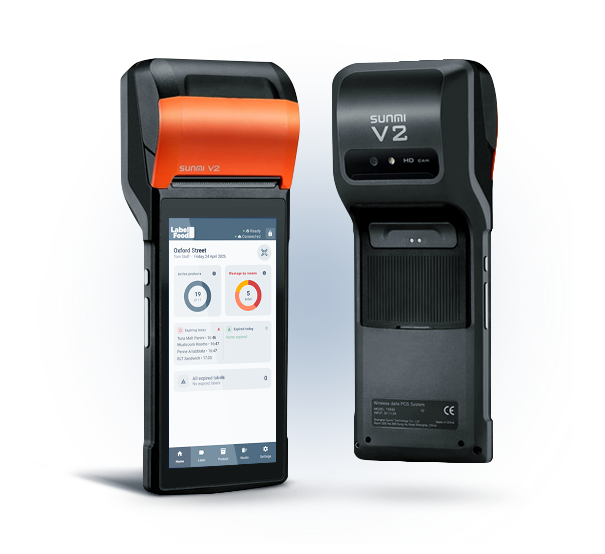
LabelFood closes that gap without adding a paperwork job to anybody's shift. Every time a member of staff scans a barcode and prints a label, the system stores what was printed, when, for which product, and by whom. Every time something is thrown away, the reason is captured on the device in a few taps. The evidence accumulates as a by-product of normal work.

By the time an inspector arrives, there is nothing to prepare. The records covering the last 90 days are already in the dashboard, searchable by product and exportable to PDF. Instead of reconstructing a month of prep from memory, you hand over a report.

This matters for every kind of food business, not only the ones covered by allergen labelling rules. A kitchen that cooks entirely to order still has to demonstrate date control, stock rotation and safe disposal. Those are exactly the records LabelFood keeps.

Every Label Timestamped

Each label records what was printed, when it was printed and when it expires. Use-by dates are calculated from the shelf life set against the product, so they are never handwritten and never worked out from memory during service.

Every Action Attributed

Staff sign in with their own PIN, so every label and every waste record carries the name of the person who made it. An inspector asking who labelled an item gets an answer from the record, not from a guess.

Waste Recorded with a Reason

When food is thrown away, staff record it on the device with a reason, optional notes and a photo. Disposal is one of the areas an inspector asks about, and the answer is already written down.

A Purpose-Built Compliance Pack

One report, built for this exact conversation. Choose 7, 30 or 90 days and export a single branded PDF covering label discipline, your wastage log and allergen coverage across the catalogue.

Allergens Printed, Not Remembered

All 14 UK allergens are set once against each product and printed in bold on every label automatically. Staff cannot print a label that quietly leaves the allergen information off.

Records Continue Offline

The device keeps printing and keeps recording when the Wi-Fi drops, storing everything locally and syncing when the connection returns. A bad connection never leaves a gap in the trail.

How the Food Hygiene Rating Is Scored

In England, Wales and Northern Ireland, the outcome of a food hygiene inspection is expressed as a Food Hygiene Rating: a score from 0 to 5 given by your local authority and published by the Food Standards Agency, where anyone can look it up before they order from you. In Wales and Northern Ireland the rating must also be displayed at your premises. In England displaying it is voluntary, but the online listing is public either way. Scotland runs a separate scheme, the Food Hygiene Information Scheme, which results in a Pass or an Improvement Required outcome rather than a number.

Whichever scheme applies to you, the inspection behind it looks at the same three things: how hygienically food is handled, the cleanliness and physical condition of the premises, and how confident the officer is in your management of food safety.

LabelFood has nothing to do with the state of your building, and it will not scrub a surface. What it does is remove the excuse for the third area being weak. Date labelling, allergen control, stock rotation and waste disposal are all part of managing food safety, and all four leave a written trail in LabelFood automatically.

No system can promise you a particular score, and any supplier who tells you otherwise should be treated carefully. What LabelFood can do is make sure that when an officer asks for evidence, the evidence exists, is legible, and can be produced in the time it takes to open a laptop.

Evidence Instead of Explanation

An inspector asking how you manage allergens or date control gets a report rather than a description of your intentions.

Nothing to Prepare in Advance

Because the records are written as your team works, an unannounced visit finds the paperwork already done.

Consistent Across Sites

Every branch records the same way, so a multi-site operator is not depending on one manager keeping a better notebook than another.

What Records Does LabelFood Keep for an Inspection?

Environmental health inspections focus on whether your food safety management is documented rather than assumed. The records below are produced by LabelFood as a normal consequence of labelling and waste recording, with no separate logbook to maintain.

Date Labelling Records

Every label printed is stored with its print time and its calculated expiry, giving you a continuous record of date control across prep, chilled storage and display.

  • Product name
  • Print date and time
  • Calculated use-by date
  • Storage location note
  • Batch code
  • Staff member

Allergen Records

Allergens are set against the product in the dashboard and printed in bold on every label, so the allergen information on any given item can be traced back to a controlled source.

  • All 14 UK allergens
  • Full ingredient list
  • Bolded on every printed label
  • Updated centrally, applied everywhere
  • QR code to full details

Waste and Disposal Records

Staff record waste on the device as it happens, with a reason attached. Disposal is a standard line of questioning in an inspection and one of the hardest things to reconstruct after the fact.

  • Reason for disposal
  • Optional notes
  • Optional photo
  • Timestamp
  • Staff member
  • Breakdown by cause in the dashboard

Staff Accountability Records

Individual PINs mean every action is attributable. This supports both an inspection and your own internal supervision, showing that labelling is controlled rather than left to whoever is nearest.

  • Per-staff PIN sign-in
  • Labels attributed by person
  • Waste attributed by person
  • Inactivity lock between services

Expiry and Stock Rotation Records

Scanning a label already on a container reads back the product and tells the user whether it is still in date, and the dashboard separates live labels from expired ones.

  • Live labels
  • Expired labels
  • Removed labels
  • Expiry alerts by product

Multi-Site Records

Each branch keeps its own activity log while head office sees all of them from one dashboard, which matters when an inspection at one site raises questions about how the group operates.

  • Per-site activity log
  • Per-device history
  • Central product and allergen control
  • Group-level reporting

The Compliance Pack

A single due-diligence summary written for environmental health inspections, covering 7, 30 or 90 days and exported as one branded PDF carrying your organisation and branch details.

  • Labels printed and removed
  • Removal rate
  • Labels left expired on shelf
  • Wastage records, quantity and cost
  • Wastage broken down by reason
  • Products with allergens declared

Preparing for an Unannounced Visit

The most useful thing you can do before an inspection is to make the records a habit rather than an event. Kitchens that write everything up the night before a visit tend to produce paperwork that looks exactly like what it is, and an experienced officer will notice.

A few practical steps help. Make sure each member of staff signs in with their own PIN rather than sharing one, so the trail reflects reality. Keep the product catalogue current, because an allergen profile that is out of date will print an out-of-date label perfectly. Record waste at the point it happens rather than at the end of the week.

It is also worth knowing what you are entitled to after an inspection. You can ask the officer to explain the scoring, you have a right to reply that is published alongside your rating, and once you have addressed the issues raised you can request a re-visit for a fresh assessment. None of that depends on LabelFood, but all of it goes better when you can show what changed and when.

Who Needs Inspection-Ready Records?

Every food business in the UK is subject to environmental health inspection, which makes inspection readiness a broader concern than allergen labelling on its own. A restaurant cooking to order, a dark kitchen fulfilling delivery apps, a bakery with a counter, a caterer working out of a production unit and a food truck moving between events are all inspected against the same framework.

For businesses selling directly to the public, the resulting rating is published and customers use it. For businesses supplying other businesses, the same records tend to be requested again during customer due diligence audits, often in more detail than an inspector would ask for.

In both cases the underlying need is identical: a defensible written account of what was made, when it was labelled, who handled it and what happened to anything that was not used. LabelFood produces that account as a by-product of daily labelling, across a single kitchen or a hundred of them.

FAQ

Frequently Asked Questions

An EHO inspection is a visit from an Environmental Health Officer at your local authority, usually unannounced, to check that your food business is operating safely. The officer looks at how food is handled, the cleanliness and condition of the premises, and how well you manage and document food safety.

In England, Wales and Northern Ireland it is a score from 0 to 5 given after a food hygiene inspection and published by the Food Standards Agency. Wales and Northern Ireland require the rating to be displayed at the premises; in England display is voluntary but the rating is still published online. Scotland uses the Food Hygiene Information Scheme, which gives a Pass or Improvement Required result instead.

Hygienic food handling, the cleanliness and condition of the facilities and building, and management of food safety. The third area covers your systems, checks and written records, which is where a kitchen with good practices but poor documentation tends to lose ground.

Typically your food safety management system and the records that support it: date labelling and stock rotation, allergen information, temperature checks, cleaning schedules, staff training and how waste is disposed of. LabelFood covers the date labelling, allergen, and waste disposal parts of that list.

Every label printed and every waste record created is timestamped and attributed to the staff member who made it. The dashboard then has a Compliance Pack: a single due-diligence summary covering label discipline, your wastage log and allergen coverage, exported as one branded PDF. The evidence is ready without anyone preparing it in advance.

No supplier can promise a particular score, and the rating also depends on things LabelFood has nothing to do with, such as the condition of your building. What LabelFood does is address the documentation side of food safety management, so that when an officer asks for evidence of date control, allergen management or waste disposal, it exists and can be produced immediately.

Yes. Natasha’s Law applies specifically to food that is pre-packed for direct sale, but environmental health inspection applies to every food business. A kitchen cooking entirely to order still has to demonstrate date control, stock rotation and safe disposal, and those records are exactly what LabelFood keeps.

The device keeps working offline. Labels still print and waste is still recorded, held locally on the device, and synced to the cloud dashboard when the connection returns. Exporting a report from the dashboard does require a connection.

The Compliance Pack can be produced for the last 7, 30 or 90 days. The separate Label Report covers the last 90 days in full detail, showing total labels printed along with live, expired and removed labels, searchable by product name.

Yes. Wholesale customers, contract caterers and venues often run their own due diligence checks and ask for evidence of allergen control and traceability. The reports produced for an inspection serve the same purpose without any extra work.

Ready to get started?

Start your 14-day free trial today. Pay nothing until day 15, then choose a plan that fits your business.

Contact

Get in Touch

Have a question or need assistance? Fill out the form and our friendly team will get back to you within 24-48 hours.

We reply within 24 hours
Book a demo

No commitment

No setup fees, no obligation. Just a question; we'll answer it.

Talk to a real person

Our team knows food labelling inside out. Not a chatbot: real humans.

Free trial included

Want to try first? We'll set up your 14-day free trial, device included.