Half of all UK consumers with food hypersensitivities experienced a "near miss" or an adverse reaction in the last six months. This figure confirms that the margin for error in your kitchen has effectively vanished. You likely feel the pressure of rising regulatory scrutiny. Managing natasha's law labelling requirements manually is no longer a viable strategy for a modern kitchen. It's slow. It's prone to human error. It's a legal risk you don't need to take.
We understand the frustration of vague PPDS definitions and the fear of heavy fines. This guide provides a professional framework to master compliance and protect your reputation. You'll learn exactly how to meet every legal requirement whilst accelerating your prep workflows. We'll cover the latest FSA guidance, the 14 mandatory allergens, and how to maintain audit-ready digital records that guarantee total peace of mind.
Key Takeaways
- Identify exactly which products qualify as Pre-Packed for Direct Sale (PPDS) to ensure your business remains on the right side of UK law.
- Master the specific natasha's law labelling requirements, including the mandatory declaration of the 14 major allergens and full ingredient lists in descending order of weight.
- Eliminate the risk of illegible handwriting and manual errors by transitioning to a precise, digital labelling system designed for high-pressure kitchens.
- Streamline your compliance strategy by centralising recipe data in a cloud management dashboard for instant updates across multiple sites.
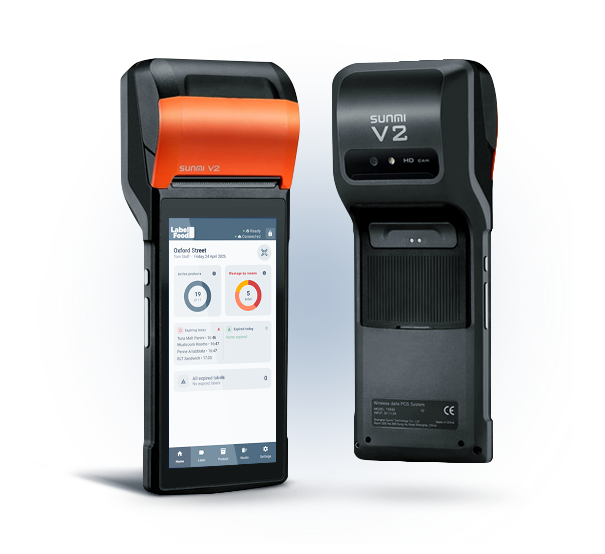
- Discover how standalone hardware like the SV2 printer provides a rugged, reliable solution that removes the need for tablets and ink in the workspace.
What is Natasha’s Law and the PPDS Definition?
Natasha's Law is the informal name for the UK Food Information Amendment (2019). The legislation follows the 2016 tragedy involving Natasha Ednan-Laperouse. She suffered a fatal allergic reaction after consuming a baguette that lacked specific allergen information. This event exposed a critical gap in food safety regulations. Before this amendment, food prepared and packaged on-site did not require full ingredient lists. The law changed that on 1 October 2021. Now, every UK food business must provide total transparency. Meeting natasha's law labelling requirements is a legal mandate. It is not a suggestion.
The amendment applies specifically to food classified as Prepacked for Direct Sale (PPDS). This term covers any item packaged before a customer selects or orders it. Whether you operate a national coffee chain or a local school canteen, the rules are identical. There is no exemption for small businesses. If you package food on your premises for immediate sale, you are responsible for accurate labelling. Failure leads to heavy fines and severe legal consequences. Precision is the only way to ensure safety and maintain trust in 2026.
The PPDS Criteria: Is Your Food Covered?
Determining if your inventory falls under PPDS requires a rigorous three-step evaluation. If your food meets all three criteria, you must follow natasha's law labelling requirements. Precision here prevents compliance gaps.
- Criterion 1: The food is presented to the consumer in packaging. This includes containers, bags, or wraps that fully or partially enclose the food.
- Criterion 2: It is packaged before the consumer selects or orders it. Items prepared and wrapped in anticipation of a rush are the primary focus.
- Criterion 3: It is packaged on the same premises where it is sold. This includes mobile units or market stalls where the packing and selling happen under the same business name.
Common PPDS Examples in 2026
Compliance often fails in the "grey areas" of daily prep. In 2026, the Food Standards Agency (FSA) remains focused on grab-and-go items. Common examples include sandwiches and baguettes prepared on-site before the lunch rush. Salad pots, burgers, and pizzas packaged in the kitchen for a chilled display also qualify. Even bakery items like cookies or croissants placed in bags before a sale fall under PPDS. If the packaging is closed before the transaction occurs, a compliant label is mandatory. No exceptions. No shortcuts.
Mandatory Labelling Requirements: The 14 Allergens
Compliance requires more than a generic sticker. Every PPDS item must carry three specific data points to meet natasha's law labelling requirements. Precision is mandatory. The first requirement is the legal name of the food. Avoid marketing fluff. Use the descriptive name that accurately identifies what the customer is eating. The second requirement is a full list of ingredients. These must appear in descending order of weight. The heaviest ingredient used at the time of preparation comes first. This transparency allows consumers to make informed, safe choices.
The third and most critical requirement is the explicit emphasis of allergens. The 14 major allergens must stand out clearly from the rest of the ingredient list. Most kitchens achieve this through bolding, italics, or contrasting colours. Anaphylaxis UK explains the law and its vital role in protecting consumers with life-threatening allergies. Professional food labelling solutions automate these formatting rules. This removes the risk of a chef forgetting to highlight a specific ingredient during a busy service.
The 14 Major Allergens You Must Identify
You are legally required to declare 14 specific allergens. These must be emphasised every time they appear in your ingredient list. The categories include:
- Cereals containing gluten (such as wheat, rye, barley, and oats), crustaceans, eggs, and fish.
- Peanuts, soybeans, milk, and tree nuts (including almonds, hazelnuts, walnuts, cashews, pecans, Brazil nuts, pistachios, and macadamia nuts).
- Celery, mustard, sesame seeds, and sulphur dioxide or sulphites (if at concentrations of more than 10mg/kg or 10mg/litre).
- Lupin and molluscs (such as mussels, whelks, and squid).
Technical Standards for Label Legibility
Legibility is a legal standard, not an aesthetic choice. If a customer can't read the label, you aren't compliant. The FSA 2026 guidelines require a minimum x-height for font size, which is typically 1.2mm. For very small packaging where the largest surface area is less than 80cm², this can be reduced to 0.9mm. However, larger is always safer. High contrast is also essential. Black text on a white or light-coloured background remains the industry gold standard for reliability. Per FSA 2026 guidelines, 'clear legibility' is defined as text that is easily readable by the average consumer under normal lighting conditions without visual aids. Don't let poor print quality compromise your legal standing.
Manual vs Digital: Why Handwritten Labels Fail Audits
Handwritten labels are a liability in a modern professional kitchen. In a high-pressure service, legibility is the first thing to suffer. Rushed handwriting often results in blurred ink or illegible characters. If an Environmental Health Officer (EHO) cannot read your ingredient list, you have failed to meet natasha's law labelling requirements. It's that simple. Beyond audits, the risk to the consumer is extreme. A single misinterpreted letter can lead to a hospitalisation. Digital precision isn't just a convenience; it's your primary defence against legal action.
The 'Day Dot' dilemma highlights the inadequacy of traditional methods. Simple date stickers were sufficient for back-of-house storage, but PPDS requires a higher standard of data. You aren't just marking a shelf-life; you're providing a comprehensive safety record. Manual entry also increases the risk of cross-contamination. If ingredient lists aren't standardised, different staff members may describe the same recipe differently. This inconsistency creates gaps in your safety net that digital systems easily close.
The Hidden Cost of Manual Labelling
Labour is your most expensive resource. Writing out full ingredient lists for fifty sandwiches takes significant time. A time-cost analysis reveals that manual entry consumes minutes per item, whereas thermal printing takes seconds. This inefficiency scales poorly. There's also the cost of wasted stock. If a batch is labelled incorrectly or allergen information is missing, that product cannot be sold. Perhaps most importantly, manual systems place immense psychological stress on your team. Forcing chefs to act as compliance officers during peak hours is a recipe for burnout and error.
Digital Precision with the LabelFood Printer SV2
Switching to a digital framework removes the burden of data entry from your staff. By using pre-set templates, you ensure every label is identical and legally compliant. There is no variation. There is no guesswork. The LabelFood Printer SV2: The Standalone Solution for UK Kitchen Compliance provides a rugged, ink-free alternative to manual writing. It stabilises your workflow by automating natasha's law labelling requirements. You gain total control over your output whilst freeing your team to focus on food quality rather than administrative tasks. Digital records also mean you are always audit-ready with a single click.

Implementing a Compliance Strategy in Your Kitchen
Compliance is a systematic process. It requires a clear roadmap to move from manual chaos to digital precision. The first step involves conducting a full ingredient audit of every recipe. You must scrutinise every component, including sub-ingredients in pre-made sauces or seasonings. One missed allergen in a minor ingredient means you fail to fully meet natasha's law labelling requirements. Once your data is verified, organise it within a central cloud management dashboard. This creates a single source of truth. It ensures that any changes to a supplier's ingredients are reflected across your entire operation instantly.
Training your team is the third critical pillar. Staff must understand the 'packaged before order' rule with absolute clarity. If a sandwich is wrapped before a customer speaks, it must meet natasha's law labelling requirements. Timing is everything. Finally, establish a digital trail. Food safety inspections in 2026 are increasingly data-driven. Paper logs are easily lost or damaged; digital records are permanent and searchable. This transparency proves to authorities that you are in total control of your kitchen's safety protocols.
Managing Recipe Data Effectively
Spreadsheets are the enemy of scalability. In multi-site operations, version control becomes impossible. One kitchen uses an old version whilst another uses the new one. This inconsistency is a legal trap. A cloud-based system allows you to sync ingredient changes to the kitchen floor in real time. This level of autonomy ensures that every site is always compliant. For smaller setups, choosing the right tool is essential. Read our Natasha's Law Software for Small Kitchen Operations: A Compliance Guide to find the best fit for your workflow.
Preparing for a Food Safety Inspection
Environmental Health Officers (EHOs) in 2026 look for evidence of a robust, repeatable system. They want to see how you manage allergen data from delivery to display. Digital logs provide an indisputable record of your compliance history. They demonstrate a proactive approach to food safety that paper records simply cannot match. If you operate in the capital, ensure you are ready by following our Natasha's Law Compliance Checklist for London Cafes. Being audit-ready reduces the stress of surprise visits and protects your business from punitive action. Ensure your kitchen is fully equipped by investing in professional food labelling solutions today.
LabelFood: Streamlining Compliance with Professional Hardware
The LabelFood Printer SV2 is the definitive solution for modern kitchens. It is a rugged, standalone unit built to withstand the rigours of a professional workspace. It does not require a tablet to operate. It does not need ink or ribbons. This thermal technology ensures maximum reliability during peak service hours. By removing the need for external devices, you eliminate the most common points of failure in digital labelling. This hardware is the most efficient way to meet natasha's law labelling requirements. It provides a consistent, high-impact result every time you press print. Reliability is built into the design.
Management is centralised through our Cloud Management Dashboard. This digital layer provides total autonomy over your ingredient data. You can update recipes, highlight allergens, and manage multiple sites from a single login. When a supplier changes their formulation, you update the record once. The new data syncs to every printer in your network immediately. This ensures your natasha's law labelling requirements are met across all locations without delay. We have also integrated food waste recording into the system. This allows you to track prep errors and reduce costs. You protect your customers and your profit margins simultaneously whilst maintaining total legal compliance.
Why Professional Hardware Matters
Professional hardware is a necessity, not an option. Consumer-grade Bluetooth printers suffer from frequent connection drops. These delays are unacceptable during a lunch rush. A dedicated device like the SV2 stays exactly where it is needed. It is a permanent fixture of your prep station. Speed of execution is another critical factor. The SV2 prints 50 compliant labels in under sixty seconds. This speed allows your team to maintain momentum. It removes the bottleneck of manual labelling and ensures that every item is ready for the shelf instantly. Reliability translates directly into peace of mind for the operator.
Taking the Next Step Toward Total Compliance
The transition to digital precision is seamless. Most kitchens move from paper to a fully digital workflow in less than 24 hours. Our framework is designed for immediate integration. You can request a demo of the LabelFood system to witness the efficiency firsthand. For more information on selecting the right hardware, read our Natasha's Law Label Printer: The 2026 Buying Guide for UK Kitchens. Compliance is an ongoing commitment. The right tools make that commitment effortless. Stabilise your kitchen. Protect your brand. Automate your safety records today.
Future-Proof Your Kitchen Compliance
Compliance is no longer a manual task. It's a digital mandate. We've defined the PPDS criteria and identified the 14 allergens that demand total transparency. Moving from handwritten stickers to a professional system removes the risk of human error. It also protects your business from the severe penalties associated with missing natasha's law labelling requirements. Precision is your best defence. There's no room for ambiguity in a high-pressure environment.
Leading London kitchens already rely on the SV2 to maintain their safety standards. This standalone hardware requires no extra devices and syncs with a cloud dashboard for 100% data accuracy. You gain faster prep workflows and audit-ready records with minimal effort. It's time to replace the uncertainty of manual entry with the reliability of a dedicated tool. This transition ensures your operation remains frictionless and fully compliant whilst protecting your reputation.
Secure your kitchen with the LabelFood SV2 Printer today. Take control of your food safety protocols and give your customers the absolute clarity they deserve. Your kitchen is ready for the transition to digital precision.
Frequently Asked Questions
What is the definition of PPDS under Natasha's Law?
Prepacked for Direct Sale (PPDS) refers to food packaged on the same premises from which it's sold before being ordered or selected by the consumer. This includes items like sandwiches wrapped before the lunch rush or salad pots placed in a grab-and-go fridge. If the packaging encloses the food fully or partially and cannot be altered without opening it, the item falls under this legal category.
Do I need to label food if it is made to order?
No, food prepared and packaged after a customer orders it doesn't require a full ingredient label under Natasha's Law. These items are classified as non-prepacked food. However, you're still legally required to provide allergen information upon request. The March 2025 FSA guidance strongly recommends providing this information in writing on menus or via clear signage to ensure total customer safety.
What are the 14 allergens that must be highlighted?
The 14 major allergens are celery, cereals containing gluten, crustaceans, eggs, fish, lupin, milk, molluscs, mustard, peanuts, sesame, soybeans, sulphur dioxide/sulphites, and tree nuts. Every one of these must be clearly identified and emphasised on your labels. Failure to highlight even one of these ingredients constitutes a breach of natasha's law labelling requirements. Precision is non-negotiable for consumer safety in any kitchen.
Can I use handwritten labels for Natasha's Law compliance?
Whilst technically legal, handwritten labels are a significant risk due to potential illegibility and human error. An Environmental Health Officer (EHO) requires that all labels are clearly readable under normal lighting. Rushed handwriting during a busy service often fails this standard. Digital printing ensures every label is identical, legible, and compliant. It removes the stress of manual entry and provides a professional finish.
Does Natasha's Law apply to charities and schools?
Yes, Natasha's Law applies to any food business operator, including schools, nurseries, and charities. New statutory guidance, known as Benedict's Law, will also come into force on 1 September 2026. This requires schools in England to have a comprehensive allergy policy. Whether you're selling food or providing it as part of a service, you must follow the same labelling standards as commercial retailers.
What happens if my business fails to comply with labelling requirements?
Failure to comply can result in unlimited fines, formal cautions, or criminal prosecution. Local authorities have the power to issue improvement notices or stop sales of unlabelled products immediately. Beyond legal penalties, the reputational damage from an allergic reaction can be terminal for a business. Ensuring you meet natasha's law labelling requirements is a fundamental part of your professional risk management strategy.
How do I highlight allergens in an ingredients list?
Allergens must be emphasised in the ingredients list using a distinct font, style, or background colour. Common methods include using bold text, italics, or contrasting CAPITAL LETTERS. The goal is to ensure the allergen stands out immediately to the consumer. This formatting must be consistent across all your product labels to avoid confusion and ensure your kitchen remains audit-ready at all times.
Is a QR code sufficient for allergen information?
No, a QR code alone isn't sufficient to meet the legal requirements for PPDS food. The law states that the full ingredients list and emphasised allergens must appear directly on the physical package. Whilst QR codes are useful for providing extra nutritional data or sourcing information, they can't replace the mandatory printed label. You must provide the required safety information in a clear, physical format.