A single illegible date dot isn't just a kitchen error. It's a liability. It could cost your business its reputation and thousands in fines. You know the pressure of an impending EHO inspection. You've felt the anxiety of ensuring every ingredient meets Natasha’s Law requirements whilst managing a frantic service. Manual labelling is slow. It's prone to mistakes. It's a drain on your team's focus and your bottom line.
Investing in a professional commercial kitchen labeling system UK turns compliance into a silent, automated process. You'll discover how digital tools eliminate manual errors and create a streamlined prep workflow. We'll look at how the LabelFood Printer SV2 and cloud dashboards ensure 100% accurate allergen data and clear food waste recording. This guide shows you how to achieve stress-free audits and total control over your kitchen's safety standards.
Key Takeaways
- Replace manual handwriting with a digital ecosystem that connects your physical printer to a secure cloud database for total accuracy.
- Automate Natasha’s Law compliance with systems that highlight the 14 mandatory allergens instantly and accurately on every label.
- Learn why a standalone commercial kitchen labeling system UK like the SV2 outperforms tablet-based alternatives in high-pressure environments.
- Reduce food waste by tracking ingredient lifecycles and recording disposal data directly through your printer interface.
- Organise your entire prep workflow by centralising allergen data and custom templates in a single cloud management dashboard.
What defines a modern food labelling solution in the UK?
Modern food labelling is no longer about stickers and pens. It is a digital compliance ecosystem. It replaces the unreliable "day dot" with a unified, cloud-connected infrastructure. This shift is driven by the need for absolute precision in a post-Natasha’s Law environment. A professional commercial kitchen labeling system UK ensures that every ingredient, allergen, and expiry date is printed with machine-perfect clarity. It eliminates the guesswork that causes cross-contamination risks and regulatory failures.
A modern solution integrates physical hardware with a centralised data layer. It moves beyond simple date tracking to provide comprehensive ingredient transparency. This is essential for Prepacked for Direct Sale (PPDS) food, where accuracy is a legal mandate rather than an operational preference. The system becomes a silent partner in your kitchen, enforcing safety standards without slowing down the line.
The transition from manual to digital labelling
Handwriting is the primary source of labelling errors in busy kitchens. Smudged ink, illegible dates, and inconsistent allergen information create immediate safety hazards. During a surprise EHO inspection, an illegible label isn't just an oversight; it's a critical point of failure. It can lead to heavy fines or a lower hygiene rating. Digital systems remove the human element of error. They standardise prep across multiple sites. This ensures a chef in Soho and a chef in Westminster follow the exact same safety protocols. It creates a repeatable, failsafe process that protects both the customer and the brand reputation.
Core components of a professional system
A professional commercial kitchen labeling system UK requires more than just a printer. It needs industrial-grade thermal hardware. This device is built to survive the heat, steam, and grease of a working kitchen. Unlike generic office label makers, these are designed for high-volume output and durability. They don't use expensive ink or toner; they use heat to create permanent, clear text.
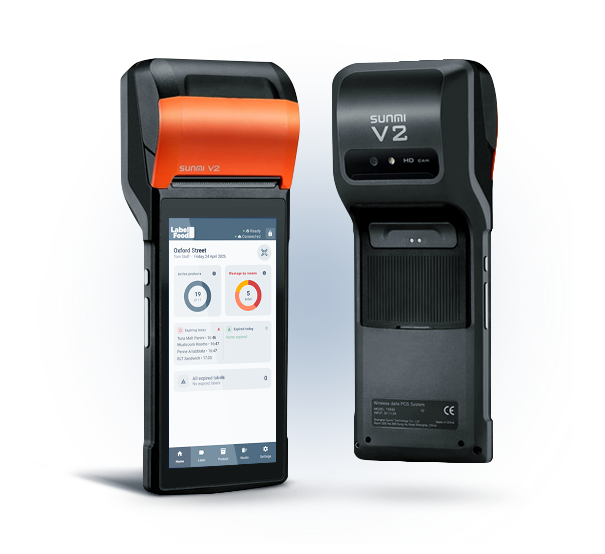
The system is powered by a cloud management dashboard. This acts as the central brain. It secures your data and pushes real-time updates to every printer in your network. Dedicated standalone hardware is always the superior choice over tablet-and-app combinations. Tablets are fragile and prone to connectivity drops. They rely on Bluetooth that often fails in stainless steel environments. A dedicated, Wi-Fi-connected printer provides the reliability a high-pressure kitchen demands. It operates autonomously, ensuring service never stops because of a software glitch or a dead battery.
Navigating Natasha’s Law and PPDS requirements
Natasha’s Law changed the landscape of UK food service. Since October 2021, all food prepacked for direct sale (PPDS) requires a full ingredient list. The 14 mandatory allergens must be clearly emphasised. This is a non-negotiable legal requirement. A digital commercial kitchen labeling system UK removes the burden of manual compliance. It ensures every label is accurate, legible, and legally sound. It takes the guesswork out of complex regulations.
Real-time updates are critical. Ingredients change. Suppliers swap products. In a manual system, these changes often go unrecorded until it's too late. Digital systems solve this instantly. When you update your product database, the change pushes to every printer across your network. This prevents the dangerous use of outdated labels. It keeps your customers safe and your business protected. Adhering to the FSA allergen labelling guidance becomes an automated part of your daily routine rather than a stressful administrative task.
Allergen management in high-pressure environments
Kitchens are chaotic. The morning prep rush is a high-risk period for mislabelling. Human error is the leading cause of compliance failures. Standardising allergen icons and text creates a visual language your team understands at a glance. Integrating allergen management software UK ensures total consistency. Data syncs across every device. One update in the cloud dashboard secures the entire operation. It builds a culture of precision that survives even the busiest service.
PPDS labelling best practices
Compliance isn't just about what you say. It's about how you say it. UK law dictates specific requirements for label clarity:
- Allergen names must be emphasised using bold, italic, or contrasting colours.
- The minimum font size must be met to ensure legibility on small packaging.
- The full ingredient list must be present on the individual product label.
The LabelFood Printer SV2 handles these technical requirements automatically. It fits detailed ingredient lists onto small labels whilst maintaining perfect clarity. The system manages date-of-production and use-by dates without manual input. This ensures your labels are audit ready for the 2026 standards. You can view our full range of food labelling solutions to see how these tools simplify your compliance journey.
Evaluating hardware: Why the LabelFood Printer SV2 is the UK standard
Kitchens are hostile environments for technology. Steam, grease, and extreme temperatures destroy consumer-grade electronics within months. A professional commercial kitchen labeling system UK must be resilient. It needs to operate without fail during the peak of service. The SV2 is designed specifically for these conditions. It isn't a modified office tool. It's an industrial solution. It provides the stability required to maintain total compliance under pressure.
Reliability is the foundation of kitchen safety. If your printer fails, your compliance stops. The SV2 eliminates common points of failure found in cheaper alternatives. It doesn't rely on fragile external components. It's a self-contained unit that handles high-volume printing with ease. This hardware is built for longevity. It ensures that your investment continues to protect your business and your customers year after year.
Thermal printing vs Inkjet in kitchens
Ink-based printers are a liability in a commercial food environment. Ink smudges when exposed to moisture. Cartridges run out at the most inconvenient times. Thermal technology uses heat to create permanent, high-contrast text. It removes the need for expensive consumables like ink or toner. This ensures compliance with the Food Information Regulations 2014 by providing clear, indelible information that won't fade. Thermal labels resist condensation. They remain legible in the fridge or freezer. They stay stuck to various surfaces, from stainless steel to plastic containers. The long-term cost benefits are significant. You stop paying for ink and start paying for performance.
The benefits of standalone hardware
Standalone functionality is the gold standard for modern kitchens. App-based systems on tablets introduce "tech friction" that slows down your team. Tablets break. Batteries die. Bluetooth connections often drop in environments filled with stainless steel and heavy machinery. The LabelFood Printer SV2 operates independently. It connects directly to your Wi-Fi network. It doesn't rely on a secondary device to function. This keeps your compliance data secure and centralised. It prevents staff from using personal phones on the prep line. It's a dedicated tool for a dedicated task. By removing unnecessary layers of technology, you increase speed and reduce the risk of downtime. Your team can focus on prep, not troubleshooting hardware issues.
Speed matters. A slow printer creates a bottleneck in the prep room. The SV2 prints labels in seconds. It keeps the kitchen momentum high. Reliability means you don't spend your morning fixing jams or resetting connections. You spend it preparing safe, high-quality food. Using a dedicated commercial kitchen labeling system UK ensures that your standards never slip, even during the busiest shifts.
Integrating food waste recording into your workflow
Labelling is only half the story. A complete commercial kitchen labeling system UK must track an ingredient from arrival to disposal. Most kitchens lose profit through unrecorded waste. Digital systems change this. They turn the printer into a data entry point. You record the reason for disposal directly on the SV2 interface. It is fast. It is accurate. It replaces the messy, unreliable paper waste log. You gain total visibility over your inventory lifecycle.
Digital recording provides immediate clarity. You see exactly what is being thrown away and why. Is it over-prepping? Is it poor storage? The data gives you the answer. By using integrated food waste recording software, you move from guesswork to precision. The financial ROI is clear. Reducing waste by even a small percentage directly increases your gross profit margin. It is a simple shift that yields significant results.
Identifying waste patterns with data
Data without analysis is useless. The cloud management dashboard centralises your waste reports. You can analyse daily or weekly trends with a few clicks. This allows you to identify high-loss items before they drain your budget. If a specific ingredient consistently appears in the waste log, you adjust your prep levels. You don't wait for the end-of-month stock take to find the problem. You fix it in real-time. Training staff becomes easier too. They see the impact of their recording. It creates a culture of accountability. Every gram of waste is accounted for. Every disposal is a lesson in efficiency.
Sustainability and the bottom line
Better labelling leads to better stock rotation. This is the "First In, First Out" (FIFO) principle in action. When labels are clear and dates are automated, staff naturally pick the oldest stock first. This reduces spoilage. It also improves your environmental footprint. Sustainability is a priority for modern UK restaurants. Reducing physical waste is the most effective way to be "green" whilst saving money. You turn waste data into actionable procurement changes. You buy exactly what you need. You prep exactly what you sell. It is a leaner, more profitable way to operate. Transitioning to a digital commercial kitchen labeling system UK is a strategic move for any serious operator. Start recording your kitchen waste accurately with LabelFood.
Implementing a professional labelling system in your kitchen
Transitioning to a professional commercial kitchen labeling system UK requires a clear execution plan. It is not just about the hardware. It's about the data architecture. A successful rollout ensures your kitchen remains compliant whilst increasing prep speed. You move from a reactive state to a controlled, managed environment. Implementation is a four-step process designed for minimal disruption to your service.
Step one involves centralising your product and allergen data in a cloud management dashboard. This is the brain of your operation. Once your data is secure, you move to step two: configuring custom label templates. You create specific layouts for different prep categories, from internal date dots to customer-facing PPDS labels. Step three is staff training. You integrate the SV2 into the morning prep routine. It becomes a natural extension of the chef's station. Finally, step four focuses on regular data audits. You ensure ingredient lists remain current and compliant with any new supplier information.
Setting up for success
The initial setup is often the most daunting phase for chefs. We simplify this. You can bulk-upload your existing menu data directly to the dashboard. This removes the need for manual entry of hundreds of ingredients. You then assign user permissions. This is a critical security step. It prevents unauthorised data changes at the kitchen level, ensuring only approved allergen information is printed. You also choose the right label sizes for your specific packaging. Whether you need small adhesive dots for prep tubs or larger labels for grab-and-go sandwiches, the system adapts to your inventory. This level of preparation ensures that when the printer arrives, it's ready for immediate use.
Ongoing compliance and support
A commercial kitchen labeling system UK must evolve with the law. UK food regulations are not static. Our system handles remote software updates automatically. You don't need to manually patch devices or worry about outdated allergen lists. When legislation changes, your system updates to meet the new standards. For high-volume, London-based kitchens, access to reliable technical support is essential. We provide the expertise needed to keep your line moving. This infrastructure is built for scalability. You can manage a single cafe or a national catering operation from the same dashboard. You maintain total control over every site, every printer, and every label. It is a professional solution for professional operators who value precision and peace of mind.
Secure your kitchen’s compliance and profitability
Adopting a professional commercial kitchen labeling system UK is a strategic shift towards total operational control. Digital automation removes the liability of manual errors in allergen management. It ensures your business meets every requirement of Natasha’s Law with absolute precision. You've seen how industrial hardware like the SV2 survives the demands of a professional environment whilst providing the data needed to protect your margins. Transitioning to a digital ecosystem turns food safety from a daily stress into a silent, reliable process.
LabelFood is trusted by leading London hospitality brands to maintain the highest standards of safety and efficiency. We provide a guarantee of full Natasha’s Law and EHO compliance. Every system is backed by dedicated UK-based technical support to ensure your service never falters. It is time to eliminate the guesswork of handwritten date dots and embrace a solution built for the modern industry. Precision in labelling is the foundation of a successful, safe kitchen.
Request a demo of the LabelFood Printer SV2 for your kitchen and discover how digital certainty can streamline your prep workflow today. Take the first step towards a more organised, compliant, and profitable future.
Frequently Asked Questions
Is a digital labelling system mandatory under Natasha’s Law?
No, digital systems aren't legally mandatory, but the accuracy they provide is. Natasha’s Law requires full ingredient lists with 14 allergens highlighted for PPDS food. Achieving this level of detail consistently by hand is nearly impossible during a busy service. A digital commercial kitchen labeling system UK ensures your business remains compliant without relying on the legibility of a chef's handwriting.
How much time can a kitchen save by switching from handwritten labels?
Time savings are significant. Kitchens often report that switching from manual handwriting to the SV2 printer reduces labelling time by over 50% during morning prep. Instead of writing out complex ingredient lists, staff simply select the product and print. This allows your team to focus on food quality rather than administrative compliance tasks. It removes the bottleneck at the prep station.
Do thermal labels stay attached in freezers and high-heat areas?
Yes, professional thermal labels are built for extreme conditions. They feature strong adhesives that maintain their grip in freezers and high-humidity areas. Unlike standard paper stickers, these labels resist condensation and grease. The text remains sharp and legible regardless of the storage environment. This ensures your stock rotation remains clear and your EHO audits stay stress-free. Compliance remains intact from the walk-in to the pass.
Can I manage multiple kitchen locations from one central dashboard?
Yes. The Cloud Management Dashboard is designed for scalability. You can manage a single site or a national chain from one central interface. Any changes made to allergens or ingredients push to every printer in your network instantly. This ensures total consistency across all your locations. It protects your brand reputation whilst ensuring every customer receives the same accurate information regardless of the site they visit.
What happens if my kitchen Wi-Fi goes down while using the SV2?
The SV2 is designed for reliability. Whilst it uses Wi-Fi for data synchronisation and cloud updates, it functions as a standalone hardware solution. It doesn't require a constant live connection to print your existing product list. Your prep line stays moving even if your internet connection experiences temporary downtime. Compliance is never interrupted by technical glitches or connectivity issues. Your data remains accessible on the device.
How does the system handle daily specials or seasonal menu changes?
Seasonal changes are handled through the digital dashboard. You can add, edit, or remove products in seconds. There is no need to manually update physical folders or train staff on new handwriting protocols. Once you update the cloud data, the new specials appear on the printer interface immediately. This makes menu innovation fast and compliant. It ensures your team always has the correct data at their fingertips.
Is the LabelFood system compliant with EHO audit requirements for 2026?
Yes. The LabelFood system is built to exceed current and future standards. It provides the clear, accurate, and timestamped records that EHO inspectors look for during an audit. By using a professional commercial kitchen labeling system UK, you can demonstrate a rigorous approach to allergen management and food safety. This makes the audit process faster and significantly less stressful for your management team. It provides a digital trail of compliance.
Can the system print barcode labels for retail grab-and-go items?
Yes. The SV2 printer supports high-resolution thermal printing suitable for barcodes. This is essential for retail grab-and-go items that require scanning at a point of sale. You can integrate barcodes into your custom label templates alongside full ingredient lists and allergen warnings. It provides a professional, retail-ready finish for every product leaving your kitchen. This allows you to scale your retail offering without investing in separate hardware.