Food Allergy Labels in Wales

Allergy Labels Your Bakery Never Has to Second-Guess

Wrapped cakes, bagged sandwiches, counter treats: every one needs the full ingredients and all 14 allergens on the label. LabelFood prints them in seconds and keeps the record behind each one.
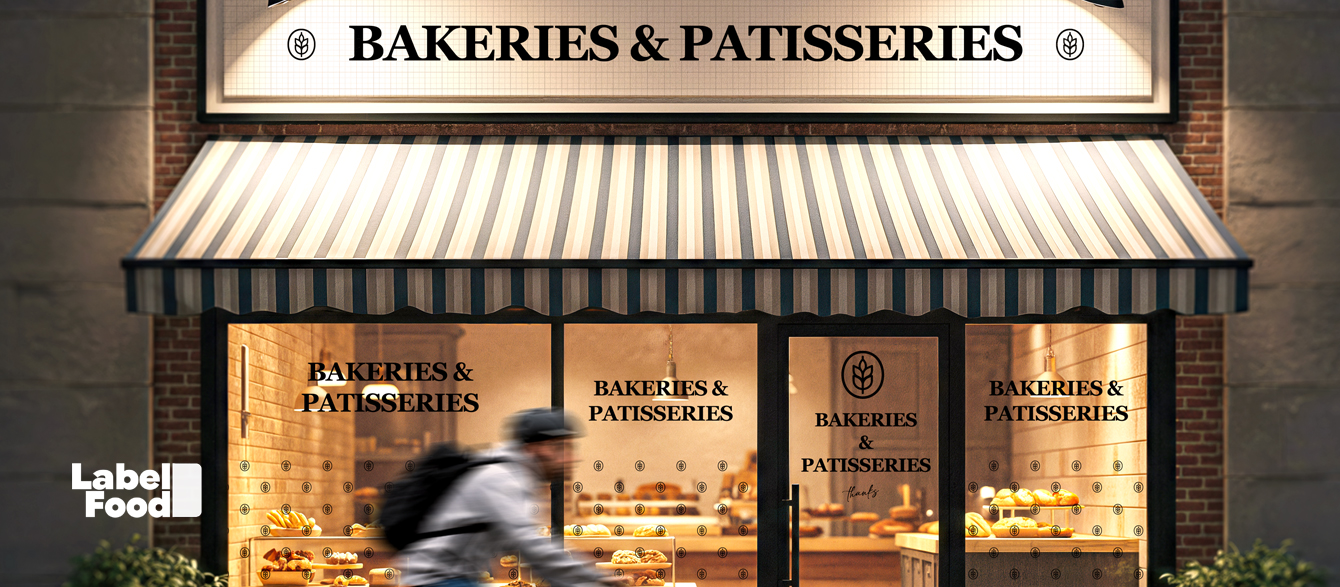
Bakery in Wales using LabelFood for allergen labelling

The Straight Answer

Need Food Allergy Labels for a Bakery in Wales?

If you run a bakery in Wales and need food allergy labels, the answer is a system, not a stationery supplier. What the law asks of you is that every prepacked item you sell carries the full ingredient list with the fourteen major allergens clearly emphasised, and that the information on it is accurate every single time. LabelFood is built for exactly that: you set each product and its allergens once in the cloud dashboard, and staff print a compliant label at the counter in seconds, for every batch, every day.

Wales follows the same food information rules as the rest of the United Kingdom. Since October 2021, Natasha's Law has applied to food that is prepacked for direct sale, which in a bakery means almost anything you wrap or bag yourself: the sandwiches made in the morning and placed in the cabinet, the cake slices in bags beside the till, the flapjacks and Welsh cakes sealed for the counter. Each of those items needs the product name and the full ingredient list on the pack, with allergens highlighted, not just a verbal warning behind the counter.

For unwrapped goods the rules are lighter: allergen information must be available for loose bread, pastries and counter items. This is precisely where bakeries are most exposed. A card saying "please ask staff about allergens" puts the whole answer in the memory of whoever happens to be serving. A printed label beside the tray, or printed information on the bag, removes that dependence entirely.

That is the practical case for a dedicated system. Spreadsheet printouts go stale when a recipe changes. Handwritten stickers smudge and vary by shift. LabelFood keeps one source of truth for every recipe: change the allergen profile of your barras brith once and every label from that moment is correct, everywhere. Each label also records when it was printed and by which member of staff, so the trail exists without anyone keeping a separate logbook.

There is a commercial side to it as well. In Wales your Food Hygiene Rating must be displayed at the premises and anyone can look it up online before they visit. Allergen management and date control are part of what an environmental health officer assesses. The records LabelFood produces as a by-product of printing labels (timestamps, staff attribution, a wastage log with reasons) are the same records that inspection asks for.

Start free for 14 days

Set the recipe once. Print the label forever.

Every label carries the full ingredients with all 14 allergens in bold, the calculated use-by date and the staff member who printed it, for a fraction of the time handwriting takes.

A label costs under 1p. Handwriting it costs hours every week.

No setup fee
No extra hardware
Cancel anytime
£27 /month 8 weeks free

£325 a year, or £32/month rolling

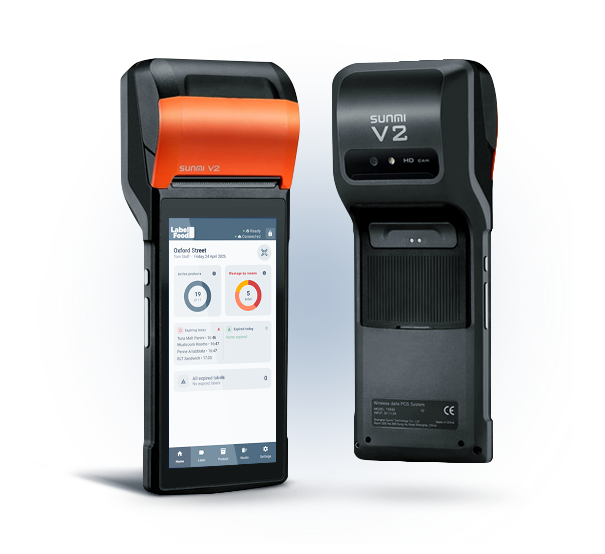
LabelFood Printer SV2 — the all-in-one food labelling terminal

Full Ingredients, Set Once

Every product in your bakery has its own ingredient list and allergen profile in the cloud dashboard. Enter a millionaire shortbread once and every label printed for it, in every branch, carries the same controlled recipe, never a version retyped from memory.

Use-By Dates Calculated, Not Guessed

You set the shelf life against each product. The label shows the calculated date every time, so a batch made at 6am on Tuesday never goes out with Friday still written on it.

Print at the Bench in Seconds

Staff scan or tap the product on the counter device and the label prints on the spot. Prepping forty sandwich bags before the morning rush takes minutes, and every one of them is labelled properly.

All 14 Allergens Covered

Gluten, eggs, milk, nuts, peanuts, sesame, soya, mustard, celery, fish, crustaceans, molluscs, lupin and sulphites are set against the product and printed in bold on the label. Nothing depends on whoever is on the till remembering.

Ready for the Local Authority

Every label and waste record is timestamped and attributed to a staff member. When your council environmental health officer asks how you manage allergens, the Compliance Pack export answers in one PDF.

A System, Not a Sticker Book

Handwritten stickers fade and inconsistent handwriting is a genuine weakness if a label is ever questioned. Printed labels look the same every time, which is exactly what a due diligence defence needs.

What the Law Requires of a Bakery in Wales

The allergen labelling rules that apply to your bakery in Wales come from UK-wide food law: the Food Information Regulations, as amended in 2021 by the change usually called Natasha's Law. That change requires full ingredient and allergen labelling on food that is prepacked for direct sale, and it applies in Wales exactly as it does in England, Scotland and Northern Ireland. There is no separate Welsh exemption or lighter regime for a small bakery.

Enforcement sits with your local authority. Environmental health officers handle hygiene inspections, and food standards officers deal with composition and labelling. Both work for the council, whether you are in Cardiff, Swansea, Wrexham or a rural county. The Food Standards Agency, which has its Wales office in Cardiff, publishes the guidance and runs the Food Hygiene Rating Scheme.

The rating scheme itself is where Wales differs from England most visibly. Displaying your rating at the premises is a legal requirement in Wales, not a choice, and the rating is published on the Food Standards Agency website where customers can check it before ordering. Allergen control, date labelling and how you document food safety all feed into what the officer scores on a visit.

A bakery also has to be registered with its local authority as a food business, free of charge, 28 days before trading. If allergen labelling fails at inspection or after an incident, the consequences run from an improvement notice through to prosecution. Being able to show a consistent, printed, attributable labelling system is the difference between a conversation and a case.

Correct by Default

The allergen profile lives with the product, so a label cannot be printed without it. Accuracy stops depending on the busiest hour of the day.

Fits a Bakery Morning

Bagging the first batch at 6am means printing dozens of labels before opening. Scan, print, done. No filling in by hand while the oven timer runs.

One Truth Across Every Counter

A second site, a market stall or a new weekend baker all print from the same catalogue, so the answer to "does this contain nuts?" is the same at every till.

What Goes on a Bakery Allergy Label?

Natasha's Law sets the minimum: the food's name and the full ingredients list, with the fourteen allergens emphasised. A LabelFood label carries that, plus the operational detail that keeps a bakery traceable day to day.

The Legal Minimum

Everything the food information rules require on a prepacked-for-direct-sale item.

  • Product name
  • Full ingredient list in descending order
  • All 14 UK allergens emphasised in bold
  • Use-by or best-before date

The Operational Layer

The details that turn a label into a record: printed automatically, never handwritten.

  • Preparation date and time
  • Calculated use-by from the product's shelf life
  • Batch code
  • Storage note
  • Staff member who printed it

The Trail Behind the Label

What the dashboard keeps for every label, so evidence exists without extra work.

  • Timestamped print history per product
  • Live, expired and removed labels
  • Waste records with reason, notes and photo
  • Allergen coverage across the catalogue
  • 7, 30 or 90-day Compliance Pack export to PDF

Wrapped Lines and the Loose Counter

Bakeries are unusual among food businesses because most of the stock is loose. The sourdough on the rack, the teacakes in the basket and the cream buns on the tray are not prepacked, so they do not need a full ingredient label, but the allergen information still has to be available, either on a sign at the counter or given verbally by staff.

The verbal route is the weak point. It relies on the person serving knowing fourteen allergens across a changing range of products, on a busy Saturday, in a second language if a customer asks through a translator app. Under Natasha's Law, relying on a verbal answer is no longer allowed at all for wrapped items, which is usually the moment a bakery realises its counter practice needs to catch up.

LabelFood gives you a middle path that suits either case. For wrapped lines, staff print the compliant label directly onto the pack. For loose lines, the same product data produces a printed card for the tray or a label for the bag, so the customer sees the real ingredient list instead of being asked to trust memory. Either way the information comes from the same controlled catalogue, and every print is recorded.

Who Should Use LabelFood?

The question "who should I use?" usually hides a second question: who is this actually for? If you bake and sell from your own counter (a village bakery, a city-centre sourdough shop, a market stall with wrapped brownies), you are exactly the business Natasha's Law was written for, and exactly the business LabelFood is priced for.

Larger operations get the same benefit with more leverage. A bakery with two or three sites keeps one catalogue of recipes and allergen profiles, so a recipe change applied centrally is correct on every label within seconds. Wholesale lines going into cafés and delis carry the same labels, which those customers increasingly ask to see during their own due diligence checks.

What you should not use is a generic label maker with a roll of stickers and good intentions, or a print shop that produces beautiful static cards for a range that changes weekly. Allergen information has to follow the recipe. A system that updates the recipe in one place and pushes it to every label is the only thing that keeps pace with a real bakery menu.

FAQ

Frequently Asked Questions

You need a labelling system rather than a supplier of blank stickers. LabelFood stores each product with its full ingredient list and allergen profile in the cloud, and staff print a compliant label at the counter in seconds: on the packs for wrapped items, and on cards or bags for loose goods. Every label is timestamped and attributed, and the records double as evidence for your local authority inspection.

Yes. Natasha's Law, in force since October 2021, applies across the whole of the United Kingdom including Wales. Any food you prepack on your premises for direct sale (sandwiches, cake slices, bags of Welsh cakes) must carry the product name and the full ingredients list with the fourteen major allergens emphasised.

Yes. Prepacked for direct sale means packed on the same premises before being offered for sale, which describes most bakery grab-and-go lines. It does not matter that the customer watches you bag it. Once it is wrapped and displayed for sale, the full labelling requirement applies.

Loose items do not need a full ingredient label, but the allergen information must be available on a sign, in writing, or given verbally by staff. Because a verbal answer depends on whoever is serving, most bakeries now put printed allergen information beside the tray or on the bag. LabelFood prints both from the same product data.

The fourteen recognised in UK law: celery, cereals containing gluten, crustaceans, eggs, fish, lupin, milk, molluscs, mustard, peanuts, sesame, soybeans, sulphur dioxide and sulphites, and tree nuts. On a LabelFood label they are printed in bold within the ingredient list, which satisfies the emphasis requirement.

Yes. Wales requires food businesses to display their Food Hygiene Rating at the premises. This is a difference from England, where display is voluntary. The rating is also published online by the Food Standards Agency. Allergen control and documentation are part of what the inspector scores, so the records LabelFood keeps support the rating you display.

Your local authority. Environmental health officers cover hygiene and food safety management, and food standards officers cover labelling and composition, and the split varies slightly by council, but both come from the same place. The Food Standards Agency in Wales issues the guidance they work to.

Handwritten labels are not illegal as long as the information is accurate, complete and legible, but they are the weakest part of most bakery defences. They fade, they vary by shift, and consistency is hard to prove after the fact. Natasha's Law made the information requirements heavier, which is exactly when handwritten systems start dropping detail.

The investigation will ask what the product contained, what the label said, when it was made and who packed it. With a printed, timestamped label produced from a controlled recipe, those questions have documented answers and a due diligence defence is realistic. With a handwritten sticker and memory, they do not.

It is priced for exactly this size of business, and it is faster than the alternative: entering a recipe once and printing correct labels from then on takes less time than writing one sticker by hand. You also get the waste log and the Compliance Pack export for local authority visits at no extra effort.

The device keeps printing and recording offline. Everything is stored locally and syncs to the cloud dashboard when the connection returns, so a router outage never leaves an unlabelled batch on the shelf.

Contact

Get in Touch

Have a question or need assistance? Fill out the form and our friendly team will get back to you within 24-48 hours.

We reply within 24 hours
Book a demo

No commitment

No setup fees, no obligation. Just a question; we'll answer it.

Talk to a real person

Our team knows food labelling inside out. Not a chatbot: real humans.

Free trial included

Want to try first? We'll set up your 14-day free trial, device included.