Could a single handwritten mistake on a prep label lead to a heavy fine or a life-threatening allergic reaction? With 2.4 million adults in the UK now living with clinically confirmed food allergies, the margin for error in a professional kitchen has vanished. You already know that manual labelling is a bottleneck. It is slow, prone to human error, and makes managing ingredient changes across a busy menu nearly impossible. The fear of legal action is a constant weight on your operations.
This guide provides the definitive path to total compliance using allergen management software UK. You will learn how to master Natasha's Law and the upcoming Benedict's Law whilst streamlining your entire kitchen workflow. We will explore how to bridge the gap between your digital recipe data and the physical labels on your prep table. By the end of this article, you will understand how to implement a system that delivers audit-ready records, faster prep-work through automated printing, and significantly reduced food waste. It is time to replace manual guesswork with a professional system built for precision.
Key Takeaways
- Move beyond manual "day dots" to a digital-first system that eliminates human error and ensures total compliance with Natasha's Law.
- Implement allergen management software UK to centralise ingredient data and automate the highlighting of the 14 mandatory allergens across your entire menu.
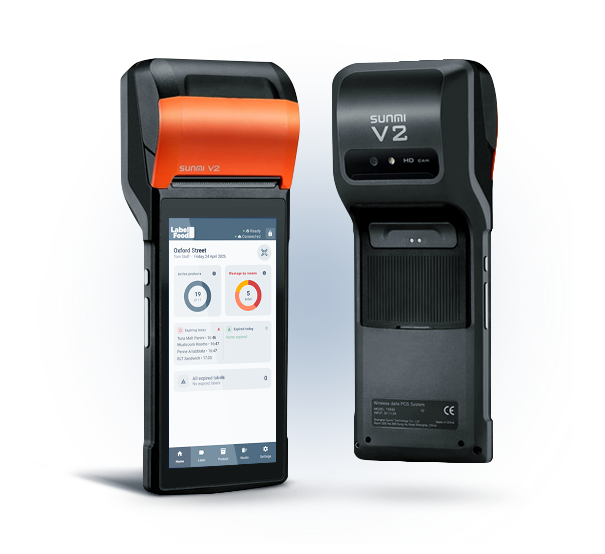
- Recognise why general-purpose office printers fail in kitchen environments and how dedicated hardware like the LabelFood Printer SV2 ensures label durability.
- Secure your business against legal action by maintaining a digital audit trail and generating instant reports for food safety inspectors.
- Streamline prep-work and cut operational costs through automated labelling and integrated food waste recording via a cloud dashboard.
The Evolution of Allergen Management in UK Hospitality
The era of the handwritten "day dot" has come to an end. UK hospitality is now governed by some of the most stringent UK food information regulations in the world. For commercial kitchens, manual systems are no longer just a nuisance; they are a significant legal risk. High-pressure environments demand precision that ink and paper simply cannot provide. This is where allergen management software UK becomes the backbone of your operation. It replaces fragmented notes with a unified digital truth. It ensures that every recipe update is instantly reflected on every label across your business.
Modern food safety requires more than just a list of ingredients. It requires a system that tracks supply chain changes in real-time. If a supplier swaps a brand of mayonnaise, the allergen profile of every sandwich in your fridge could change instantly. A digital-first approach allows you to update one record and push that data to every printing station. This transition from simple lists to comprehensive, automated tracking is the only way to maintain pace with current standards. It provides the stability your kitchen needs to function without the constant fear of a labelling error.
Understanding Natasha's Law and PPDS Requirements
Natasha's Law mandates that all food prepacked for direct sale (PPDS) must carry a label with a full ingredients list and all 14 major allergens highlighted in bold. This regulation fundamentally changed the UK hospitality sector by shifting the burden of information from verbal staff communication to physical, printed labels. With Benedict's Law set to introduce stricter requirements for schools in September 2026, the trend toward total transparency is only accelerating. You can't just "ask the staff" anymore. The label must be the definitive source of truth. Your software must automatically recognise and format the 14 mandatory allergens, including cereals containing gluten, crustaceans, eggs, fish, peanuts, soybeans, milk, tree nuts, celery, mustard, sesame, sulphur dioxide, lupin, and molluscs. This automation removes the risk of a chef forgetting to bold a specific ingredient during a busy shift.
The Risks of Non-Compliance for UK Businesses
The financial stakes are absolute. UK businesses face unlimited fines for failing to meet labelling standards, and the reputational fallout from an allergen incident is often permanent. Beyond the legal threat, manual labelling creates operational chaos. Inconsistent handwriting and fading thermal paper lead to confusion and cross-contamination errors during prep. Digital systems provide a psychological safety net for your team. When an inspector arrives for a snap audit, your staff won't panic. They can produce a perfect digital audit trail showing exactly when every label was printed and which ingredients were used. This level of control turns a high-stress compliance hurdle into a routine part of your kitchen's workflow.
Essential Features of Professional Allergen Management Software
Professional allergen management software UK is more than just a digital database. It is a command centre for your kitchen. The most critical feature is centralised product data management. When you update a single ingredient in your master list, that change synchronises across every label in every branch. This eliminates the risk of outdated information remaining on the shelf. Accuracy is non-negotiable. Speed is essential. The right software delivers both by automating the highlighting of the 14 mandatory allergens. This ensures your labels remain compliant with Food Standards Agency guidance without requiring manual formatting from your chefs.
Cloud Management Dashboards: The Brain of the Kitchen
A Cloud Management Dashboard organises complex recipe data into clean, printable formats. It acts as the single source of truth for your entire operation. If a supplier suddenly swaps a brand of flour, you can push a real-time update to your London network from any device. This instant sync is vital for maintaining total accuracy across multiple sites. It allows for effortless scalability. You can add new menu items or seasonal specials in seconds. The system handles the technical compliance whilst your team focuses on service. Transitioning to integrated food labeling solutions ensures your data and your hardware work as one unified system.
Beyond Allergens: Prep Dates and Waste Tracking
True kitchen efficiency extends beyond legal compliance. It integrates into the daily reality of prep and inventory management. Automating prep-date labels removes the ambiguity of handwritten "day dots" and prevents costly food spoilage. When your team prints a label, they aren't just marking allergens; they are setting a clear expiration standard. Integrating Food Waste Recording directly into your compliance software allows you to track exactly what is being thrown away. You stop treating waste as an unavoidable cost and start seeing it as data to optimise your procurement. This creates a comprehensive digital record that is invaluable during food safety audits.
- Centralised Control: Manage all recipes and ingredients from one secure cloud location.
- Automated Formatting: Bold and highlight allergens automatically to meet UK legal standards.
- Real-Time Synchronisation: Ensure every printer in your business has the latest ingredient data instantly.
- Integrated Waste Logs: Record and analyse food waste to improve your kitchen's bottom line.
Compliance and sustainability should live in the same system. By combining allergen tracking with waste recording, you create a frictionless workflow. Your team spends less time on paperwork and more time on the pass. The result is a safer kitchen and a more profitable business.
The Hardware-Software Bridge: Why the Printer Matters
Reliable data is useless if it cannot be read. Many businesses invest in sophisticated cloud systems but neglect the physical hardware that produces the label. General-purpose office printers are the number one point of failure in UK kitchen compliance. They aren't designed for high-humidity, high-temperature environments. Inkjet labels smudge when touched by damp hands or exposed to steam. Thermal printing is the only professional standard. It produces smudge-proof, heat-resistant labels that remain legible from the prep table to the customer's hand. This physical durability is a core requirement for following Food Standards Agency allergen guidance.
Wireless connectivity bridges the gap between your digital records and the kitchen floor. Your allergen management software UK must sync directly with your printing hardware. This eliminates the need for messy cables or dedicated PC stations in cramped prep areas. It creates a seamless flow of information. When a manager updates a recipe on the dashboard, the chef sees the change at the prep station instantly. There's no delay. There's no opportunity for old, incorrect data to be printed. This real-time integration is what separates a professional system from a makeshift solution.
The LabelFood Printer SV2: Built for Professional Kitchens
London kitchens are notoriously cramped. Space is a premium asset. The LabelFood Printer SV2 features a compact design that fits into tight kitchen centres without disrupting the workflow. It's built for the reality of commercial cooking. It withstands the steam, grease, and spills that would destroy consumer-grade electronics. Speed is another critical factor. During a busy lunch rush, your team doesn't have time to wait for a slow print queue. The SV2 delivers compliant labels in seconds. It keeps the line moving whilst ensuring every product is safely accounted for.
Eliminating the "Manual Error" Gap
Direct integration prevents the "manual error" gap. In a traditional setup, a chef might have to manually select or type ingredient information. This is where mistakes happen. A "Click and Print" workflow reduces the cognitive load on your staff. They select the menu item, and the printer does the rest. The software handles the bolding of the 14 allergens and the calculation of shelf-life dates automatically. This ensures total consistency. Whether you're operating one site or ten, every label looks identical. It projects a professional image and, more importantly, it guarantees safety through technical precision.

Preparing for a Food Safety Audit in the UK
An Environmental Health Officer (EHO) inspection is the ultimate test of your kitchen's systems. Between January 2023 and June 2026, the UK hospitality sector recorded 765 allergen-related non-conformances. This averages 19 failures every month. Most incidents occur because of fragmented paper records or illegible labels. You need a system that provides absolute proof of compliance. Using allergen management software UK allows you to generate comprehensive reports in seconds. It tracks every label printed and every ingredient used. This digital audit trail is your strongest defence against legal action. It transforms a high-pressure inspection into a routine demonstration of professional standards.
Staff training is equally vital. Your team must be able to navigate the system whilst under the pressure of a busy service. A professional dashboard simplifies this by removing complex manual entries. If your staff can use a smartphone, they can manage your compliance. Consistency is the goal. When every chef follows the same digital workflow, the risk of human error disappears. You stop relying on individual memory and start relying on a verified process. This transition is essential for maintaining safety during staff turnover or peak London trading hours.
The Digital Compliance Checklist
Follow these three steps to ensure your kitchen remains audit-ready at all times:
- Verify PPDS Accuracy: Check that every prepacked item carries a full ingredient list with the 14 allergens clearly bolded.
- Inventory Synchronisation: Ensure your Cloud Management Dashboard matches the physical stock currently in your pantry.
- Archive Waste Logs: Maintain up-to-date Food Waste Recording to prove you are monitoring product life cycles and disposal.
Local Signals: Navigating London Inspections
London borough councils, from Westminster to Hackney, maintain rigorous standards due to high urban footfall. Inspectors in these areas often focus on the "Right First Time" approach. They look for evidence that your systems prevent errors before they reach the customer. Professional labelling is a direct contributor to your Food Hygiene Rating (FHRS) score. A five-star rating relies on documented management systems as much as physical cleanliness. Clear, durable labels prove to the EHO that you have mastered the complexities of UK food law. It shows a commitment to precision that handwritten notes cannot match.
Don't wait for a snap inspection to find the gaps in your system. Implement Natasha's Law Compliance Labels today to secure your five-star rating and protect your business.
Implementing LabelFood: The Future of Kitchen Compliance
The future of kitchen safety is integrated. It requires a physical presence on the prep table and a digital brain in the cloud. The LabelFood system delivers this by combining the LabelFood Printer SV2 with a powerful Cloud Management Dashboard. This pairing eliminates the friction between data entry and label production. You stop managing individual labels and start managing a unified compliance network. Adopting allergen management software UK is the most decisive step you can take to future-proof your business against evolving regulations. Precision is the goal. Automation is the method.
Moving from manual logs to a digital-first kitchen is about establishing a new standard of reliability. The transition is straightforward. You replace messy binders and fading thermal rolls with a single, secure dashboard. The cost-benefit analysis is clear. A monthly subscription is a minor operational expense when weighed against the catastrophic risk of non-compliance. A single labelling error can lead to unlimited fines and total reputational collapse. A professional system provides peace of mind through total control. It is a scalable solution that grows with your business. Whether you operate a single London cafe or a nationwide catering firm, the system remains consistent and precise.
The LabelFood Advantage for UK Businesses
Compliance is not a static target. Regulations like the upcoming Benedict's Law, set for implementation in September 2026, mean your systems must stay current. LabelFood provides continuous software updates to ensure you stay ahead of evolving UK food safety legislation. You also benefit from dedicated, UK-based support for both hardware and software queries. You are never left to troubleshoot a technical issue during a busy lunch service. The system is tailored for the UK market. It understands the specific nuances of London's high-pressure hospitality environment and provides the stabilizing force your kitchen team needs.
Getting Started with the SV2 System
Implementation is designed to be frictionless. You begin by setting up your Cloud Management Dashboard and importing your existing recipe list. The software automatically identifies and highlights allergens based on your ingredients. Once your data is centralised, you connect the SV2 printer via your wireless network. You can run your first compliant label batch in minutes. This digital-first approach ensures that every label produced is accurate, durable, and legally compliant. It removes the cognitive load from your chefs and allows them to focus on food quality rather than paperwork.
- Centralise: Import and organise all recipes in one secure cloud location.
- Connect: Link the SV2 printer to your dashboard for instant, wireless label production.
- Comply: Produce smudge-proof Natasha's Law labels with automated allergen bolding.
- Scale: Add new menu items or site locations with a single click.
Book a demo of the LabelFood Printer SV2 and Cloud Dashboard to see how we can transform your kitchen's compliance workflow.
Secure Your Kitchen’s Future
Compliance is no longer a manual task. It is a digital requirement. Transitioning to allergen management software UK allows you to eliminate human error and secure your business against legal risk. You have seen how a unified system bridges the gap between cloud data and the physical label. It ensures every ingredient change is tracked and every allergen is bolded automatically. Audit readiness becomes your new operational baseline. There is no room for guesswork in a professional environment.
Leading London commercial kitchens already rely on this technology to maintain their five-star ratings. By integrating food waste recording with allergen tracking, you achieve total kitchen control. This system is specifically designed for Natasha’s Law compliance. It protects your customers whilst improving your bottom line. It is time to replace outdated "day dots" with a professional standard that works as hard as your team does. Precision is the only way forward.
Streamline your kitchen compliance with LabelFood’s SV2 Printer and Cloud Dashboard today. Precision is within reach. Start your transition to a safer, more efficient kitchen now.
Frequently Asked Questions
Is allergen management software mandatory for UK restaurants?
No, the software itself isn't a legal mandate, but the results it produces are. Using allergen management software UK is the professional standard for meeting the Food Information Regulations. It replaces manual logs that often fail during high-pressure service. Without a digital system, you risk inconsistent labelling and significant legal non-compliance.
How does Natasha's Law affect food prepared and sold on the same premises?
Natasha's Law applies to Prepacked for Direct Sale (PPDS) food. This includes any item prepared and packed on-site before a customer orders it. These products must carry a physical label. It must list every ingredient and highlight the 14 major allergens in bold. Verbal communication is no longer a legal substitute for these physical labels.
Can I use a standard office printer for my allergen labels?
Standard office printers are unsuitable for commercial kitchens. Inkjet and laser prints smudge when exposed to steam, grease, or damp hands. They also require expensive cartridges and bulky setups. Dedicated thermal printers like the LabelFood Printer SV2 use heat to create permanent, smudge-proof labels. This ensures your safety information remains legible throughout the product's shelf life.
What are the 14 allergens that must be bolded on UK food labels?
You must highlight 14 specific allergens by law. These are celery, cereals containing gluten, crustaceans, eggs, fish, lupin, milk, molluscs, mustard, peanuts, sesame, soybeans, sulphur dioxide and sulphites, and tree nuts. Professional software automates this process. It identifies these ingredients in your recipes and bolds them on every printed label without manual intervention.
How does digital food waste recording help my kitchen’s bottom line?
Digital Food Waste Recording turns trash into actionable data. It tracks exactly what is being discarded and why. This insight allows you to adjust your procurement and reduce over-ordering. By identifying patterns in spoilage or prep errors, you directly improve your gross profit margins. Compliance and profitability work together in a unified system.
Is the LabelFood Printer SV2 compatible with all kitchen sizes?
The LabelFood Printer SV2 is specifically designed for space-constrained environments. Its compact footprint fits onto busy prep tables or small service counters. It is a robust solution for everything from independent London cafes to high-volume commercial kitchens. Wireless connectivity removes the need for bulky cables, keeping your workspace organised and efficient.
What happens if an inspector finds a mislabelled allergen in my shop?
Mislabelled allergens lead to severe consequences. You face unlimited fines and the risk of criminal prosecution. Beyond the legal penalties, a single incident can permanently damage your brand's reputation. Inspectors look for robust management systems. If you can't demonstrate a reliable digital process, your Food Hygiene Rating will suffer.
How often should I update my allergen data in the cloud dashboard?
You should update your allergen management software UK immediately whenever a change occurs. This includes supplier substitutions, recipe tweaks, or new seasonal additions. Real-time updates ensure that your kitchen team is always printing the most current and accurate information. The cloud dashboard makes these changes instant across your entire operation.