Your bin is likely the most expensive piece of equipment in your building. Globally, the hospitality industry loses over £125 billion annually to discarded stock. In the UK, rising ingredient costs mean every gram of wasted protein or produce directly erodes your bottom line. To effectively reduce food waste commercial kitchen managers must replace manual guesswork with digital precision. Relying on handwritten prep labels is a liability that leads to premature disposal and unnecessary spend.
It's a challenge every chef understands. The intense pressure of service often leads to oversight, resulting in compliance risks and avoidable waste. You need a system that works as hard as your team does. This article provides a comprehensive, data-driven checklist designed for the 2026 regulatory landscape. You'll learn how to automate your labelling, eliminate manual dating errors, and use real-time data to streamline your entire operation. It's time to stop guessing and start measuring. We will show you exactly how to turn your kitchen into a model of efficiency and profit.
Key Takeaways
- Identify the "Hidden Cost" of waste and learn why protecting your margins starts with auditing supplier minimums.
- Eliminate manual dating errors by replacing unreliable handwritten labels with automated, legible printing solutions.
- Implement digital recording to reduce food waste commercial kitchen staff create, gaining real-time insights into spoilage and over-production.
- Streamline your prep workflow and ensure total Natasha’s Law compliance with a standalone, tablet-free system.
- Leverage cloud-based analytics to set actionable reduction targets and manage waste performance across multiple sites effortlessly.
The Financial Case: Why You Must Reduce Food Waste in Your Commercial Kitchen
Every scrap of food thrown into your bin represents a direct hit to your bottom line. To effectively reduce food waste commercial kitchen operators must first understand exactly what they are losing. Waste isn't a single category; it is a combination of spoilage, prep waste, and plate waste. Spoilage occurs when stock expires before it's used. Prep waste includes avoidable loss during trimming or peeling. Plate waste is simply what the customer leaves behind. Each of these represents a different failure in your operational chain.
The financial impact is far greater than the cost of the raw ingredients. Industry data highlights a "Hidden Cost" ratio of 1:3. This means for every £1 of food you discard, your business actually loses £3. This figure accounts for the labour spent handling the food, the energy used for storage and cooking, and the escalating fees for waste collection. Understanding global food waste statistics clarifies the scale of this inefficiency. It's a systemic drain on profitability that no modern kitchen can afford to ignore. When your Gross Profit (GP) is squeezed by rising costs, waste reduction is your most effective lever. Every gram of food saved is a gram of food you don't need to repurchase.
The Escalating Costs for UK Hospitality
Operating in the UK in 2026 presents unique financial pressures. Ingredient prices remain volatile, making the value of every kilogram of stock higher than ever. In cities like London, landfill taxes and commercial waste collection fees continue to climb. These costs penalise businesses that fail to manage their output. The UK's 2026 sustainability targets also put pressure on the sector to slash methane emissions from organic waste. Beyond the balance sheet, there's a significant reputational risk. Modern diners are increasingly selective; they often choose venues based on their sustainability credentials. Poor waste management is no longer just a financial leak; it is a brand liability.
The Goal: Moving from Disposal to Prevention
Traditional bin audits are reactive. They tell you what you've already lost, but they don't stop the loss from happening again. Transitioning to a zero-waste culture requires a shift in mindset from disposal to active prevention. This means moving away from "mystery tubs" and smudged handwritten labels toward digital precision. When you categorise waste into spoilage, over-production, or plate waste, you gain the visibility needed to adjust procurement and prep workflows. You can't manage what you don't measure. Digital recording allows you to see the exact moment a product becomes a loss, letting you intervene before it hits the bin.
Food waste prevention must be treated as a core operational KPI that dictates the long-term viability and gross profit of your kitchen.
Checklist 1: Smarter Procurement and Inventory Management
Waste prevention begins at the back door. To reduce food waste commercial kitchen teams must audit their procurement habits with clinical precision. Many chefs order based on supplier minimums rather than actual covers. This leads to overstocking and inevitable spoilage. Review your contracts. Negotiate for smaller, more frequent batches of high-spoilage items like leafy greens or soft fruits. It's better to pay a slight premium on delivery than to throw away 20% of your stock every Friday.
Implement a strict First In, First Out (FIFO) system. This is a non-negotiable standard. Use clear, legible labels to identify delivery dates immediately. When you rely on memory or smudged handwriting, stock gets pushed to the back. It stays there until it's unusable. Utilising EPA food waste assessment tools can help you identify exactly where your inventory management is failing. A daily low-stock check for perishables ensures you only buy what you will sell within 48 hours.
Mastering the Order Cycle
Stop guessing. Use your historical sales data to predict prep requirements. If your Tuesday covers have been consistent for six months, don't order for a busy Saturday. Planning your menu around seasonal UK produce also helps. Seasonal items are often more affordable and have shorter supply chains. They arrive fresher. Reducing delivery frequency where possible also lowers your carbon footprint. It simplifies the receiving process. This allows your team to focus on quality control rather than constant unloading.
Storage Optimisation for Longevity
Precision storage extends shelf life. Ensure your fridges are consistently under 5°C. Even a two-degree fluctuation can accelerate bacterial growth. Organise your storage using a centre-aligned layout. Keep the most frequently used items at eye level in the centre. This prevents stock from being forgotten in dark corners. Use airtight containers for all prepped ingredients to maximise freshness. For total control over your stock rotation, consider how a food labeling solution can standardise your storage labels and eliminate mystery tubs forever.
Checklist 2: Precision Labelling and Prep Workflow
Mystery tubs are the silent killers of kitchen margins. If a chef cannot identify the contents, age, or allergen profile of a container at a glance, that product is destined for the bin. To reduce food waste commercial kitchen staff must be equipped with clear, legible labelling systems that leave no room for interpretation. Understanding how food labels reduce kitchen waste is essential for any modern operation. These labels act as an immediate visual cue. They tell the team exactly what must be used next. This eliminates the "if in doubt, throw it out" mentality that plagues unorganised workspaces.
Compliance and waste reduction go hand-in-hand. Under Natasha’s Law, missing allergen information is more than a mistake; it is a legal liability. When containers lack full ingredient transparency, they are often discarded to ensure guest safety. Standardising your labels ensures that every tub remains compliant and usable until its actual expiry date. You protect your guests and your profits simultaneously.
Automating the Prep Date Process
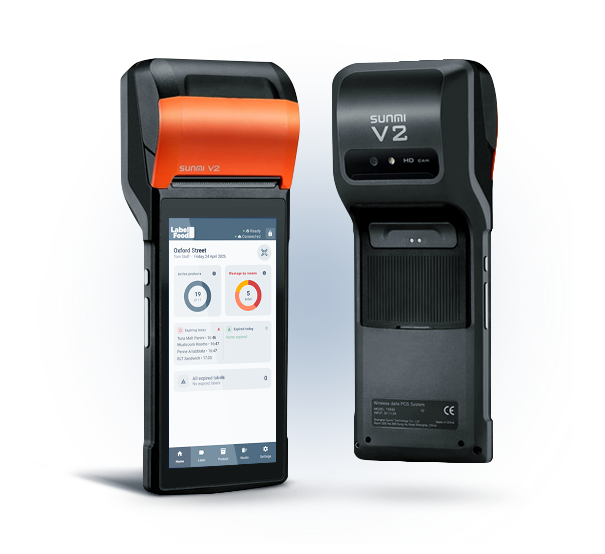
Manual date calculation is a high-risk activity in a high-pressure environment. A tired chef miscalculating a three-day shelf life by 24 hours results in premature disposal. The LabelFood Printer SV2 removes this human element entirely. It is a standalone solution that prints accurate, audit-ready labels instantly. You save time on prep whilst ensuring every Use-By date is mathematically perfect. It is about precision, not guesswork.
Visual Management in the Kitchen
Effective visual management uses colour-coding to highlight the oldest stock. Labels must also be durable. They need to withstand the transition from a steaming prep station to a walk-in freezer without smudging or peeling. High-quality labels remain legible throughout the entire product lifecycle. This clarity is vital for maintaining a fast-paced service without compromising on standards. Clear labelling reduces the "sniff test" disposal habit by providing a definitive, data-backed reason to keep or discard stock.

Checklist 3: Digital Waste Recording and Data Analysis
Paper logs are a liability. They are often incomplete, illegible, and impossible to analyse in a high-pressure environment. To effectively reduce food waste commercial kitchen teams must move toward digital precision. A paper sheet at the end of a shift is a post-mortem; a digital record is a diagnostic tool. It provides the clarity needed to stop losses before they repeat. When you digitise your records, you transform a chore into a strategic advantage.
Categorisation is the first step toward control. You must distinguish between spoilage, over-production, and plate waste. Spoilage suggests a failure in procurement or storage rotation. Over-production points to poor prep planning or inaccurate forecasting. Plate waste indicates a problem with portion sizes or menu appeal. By logging every discard, you can link waste data directly to your menu engineering. If one specific dish accounts for 50% of your bin volume, you need to change the recipe or the portion size immediately. Every item in the bin is a signal that your operation needs adjustment.
Implement a "Waste First" protocol. Nothing hits the bin until it has been recorded. This creates a culture of mindfulness amongst your staff. It forces the team to acknowledge the financial loss of every discarded item. It turns the bin from a black hole into a data source.
The Power of Real-Time Waste Logs
Switching to a food waste log digital system creates instant accountability. You can identify patterns that paper logs miss entirely. Perhaps waste spikes on Tuesday nights or during specific staff rotations. This visibility allows for targeted training rather than general reprimands. Using food waste recording software enables you to generate weekly efficiency reports automatically. You see the trends. You see the costs. You see the path to a higher gross profit.
Turning Data into Action
Data is useless without execution. If plate waste is consistently high, adjust your portion sizes. If trim waste is excessive, re-train your prep team on knife skills. Precision trimmings can save thousands of pounds over a financial year. Using food waste data also gives you leverage with UK suppliers. You can prove your actual consumption rates and negotiate better prices for the volumes you truly need. Stop letting your profits slide into the bin. You can start recording your kitchen waste accurately with LabelFood today.
Building a Sustainable Kitchen Culture with LabelFood
Technology provides the data, but your team provides the execution. To effectively reduce food waste commercial kitchen leaders must foster a culture where precision is the standard. This starts with setting realistic, measurable targets. Don't aim for a total elimination of waste overnight. Instead, set an initial goal of a 15% reduction across your London or UK-based sites. This is an achievable milestone. It builds confidence amongst your staff and demonstrates immediate financial impact. When the team sees that their efforts directly protect the business, engagement increases.
The LabelFood Cloud Dashboard is the central nervous system for this cultural shift. It provides the oversight needed to manage multi-site operations from a single interface. You can monitor Food Waste Recording data in real-time, identifying which kitchens are hitting their targets and which require further training. This visibility eliminates the "out of sight, out of mind" problem that often leads to waste in larger organisations. You gain total control over your stock performance without needing to be physically present at every location.
Engaging Your Team in the Process
Incentivise your staff to take ownership of the bin. Rewarding teams that hit waste reduction milestones turns a mandatory task into a shared victory. Integrate waste logging into your standard "Closing Down" checklist. This ensures that recording happens when the data is freshest. Pragmatic leadership in a high-pressure kitchen means removing obstacles. By providing tools that simplify their workflow, you show the team that efficiency is a priority, not an afterthought. A disciplined kitchen is a profitable kitchen.
The LabelFood Advantage
The LabelFood Printer SV2 is the favourite choice for busy UK kitchens because it is a standalone solution. It requires no tablets. There is no complex third-party integration to manage. It operates with absolute reliability in the most demanding environments. This simplicity reduces the "friction" of compliance. Your chefs spend less time fighting with hardware and more time focussing on service. The system is designed for total autonomy. It provides a stabilising force that allows your team to focus on what they do best.
Scalability is a core feature of our platform. Our solutions grow with your business, whether you operate a single boutique cafe or a national UK chain. The transition to a more efficient, sustainable operation is seamless. You can deploy the SV2 system across multiple sites and synchronise your data instantly via the cloud. The journey to a zero-waste kitchen starts with a single, accurate record. It is time to stop the leak in your profits and start your waste reduction journey with a partner you can trust.
Start reducing your kitchen waste with the SV2 system today.
Precision Operations Start Today
Protecting your margins in 2026 requires more than just better cooking. It demands digital precision. You've seen how smarter procurement and automated labelling eliminate the guesswork that leads to spoilage. Transitioning to digital records transforms your bin from a black hole into a diagnostic tool. To effectively reduce food waste commercial kitchen managers must replace manual error with reliable, standalone technology. These systems ensure your staff focus on quality whilst the hardware handles compliance. Efficiency is a choice, not an accident.
LabelFood is the expert partner for leading UK hospitality brands. Our SV2 printer is built for the physical realities of your workspace. It requires no tablets. It ensures full Natasha’s Law compliance immediately. Combined with our Cloud Dashboard, you gain total visibility over your waste data across every site. Efficiency is now within your reach. It is time to stop the leak in your profits and build a kitchen that prioritises precision. Take control of your operations and let data drive your success.
Book a demo of the LabelFood SV2 and Cloud Dashboard to secure your operational future.
Frequently Asked Questions
What is the most common cause of food waste in commercial kitchens?
Over-ordering and poor inventory rotation are the primary causes of waste. When kitchens lack visibility on stock levels, they often order based on supplier minimums rather than actual demand. This leads to spoilage. Prep errors and excessive plate waste also contribute significantly to the total volume of discarded food.
How much money can a UK restaurant save by reducing food waste?
UK restaurants can save thousands of pounds annually by implementing a strategy to reduce food waste commercial kitchen managers often overlook. Industry research suggests that for every £1 invested in waste reduction, businesses can see a £7 return in savings. This directly improves your gross profit margins by lowering procurement and disposal costs simultaneously.
Is digital waste tracking better than using a paper log?
Digital tracking is significantly more effective than paper logs. Paper records are often incomplete, illegible, or lost during a busy shift. Digital systems provide real-time insights and automated reporting. This allows you to identify waste patterns instantly and make data-backed adjustments to your menu or ordering cycles without manual data entry.
How does Natasha’s Law affect food waste in a kitchen?
Natasha’s Law mandates full ingredient and allergen labelling for pre-packed for direct sale (PPDS) food. If a container lacks clear, compliant labelling, it must be discarded to prevent a safety risk. Integrating allergen info into your standard labelling process reduces these safety discards whilst ensuring legal compliance and guest safety.
Can a food label printer really help reduce my spoilage rates?
A food label printer reduces spoilage by ensuring every container has a clear, calculated Use-By date. Manual dating is prone to human error, which often results in food being thrown away too early. Automated printers provide consistent, legible visual cues that facilitate a strict FIFO system throughout your storage areas, ensuring stock is used in the correct order.
What are the legal requirements for food waste disposal in the UK?
UK businesses must follow the "Duty of Care" for waste management. This includes separating food waste from other streams for collection. Under current environmental regulations, many businesses are required to arrange for separate organic waste recycling. Failure to comply can lead to significant landfill surcharges and potential legal penalties from local authorities.
How do I train my kitchen staff to record waste consistently?
Train your staff by making waste recording a mandatory part of the "Closing Down" checklist. Use standalone hardware to remove the friction of logging. When the process is quick and integrated into the existing workflow, consistency improves. Rewarding teams for hitting reduction targets also encourages long-term habit changes and a culture of mindfulness.
What happens if we fail a food safety audit due to poor labelling?
Failing an audit can result in a lowered Food Hygiene Rating and legal improvement notices. Inspectors may order the immediate disposal of any unlabelled or incorrectly dated stock, causing instant financial loss. This also damages your brand reputation amongst diners and can lead to increased scrutiny during future inspections.