Up to 20% of all food purchased by UK commercial kitchens goes to waste. This represents 15% of your purchasing budget disappearing before a single plate reaches a customer. You already know that manual tracking is flawed. Paper logs get lost, smeared with grease, or filled with "best guess" estimates at the end of a gruelling shift. It's a system that fails under pressure. Adopting a food waste log digital solution changes the dynamic entirely. It replaces guesswork with precision.
Switching to digital records eliminates manual errors and protects your kitchen margins. You'll gain total control over your inventory whilst ensuring your business stays compliant with the latest UK waste regulations. This move provides the data you need to stop overproduction at the source. We'll explore how smart records provide real-time visibility and keep your operation audit-ready for the 2026 Digital Waste Tracking mandate. It's time to turn your waste data into a profit-protection tool.
Key Takeaways
- Replace unreliable end-of-shift estimates with instant data capture to secure your kitchen margins.
- Categorise waste by specific cause to identify whether losses stem from prep errors or expired stock.
- Adopt a food waste log digital system to ensure total compliance with the 2026 UK digital waste tracking mandate.
- Use real-time insights to adjust supplier par levels and eliminate the cost of over-ordering.
- Centralise your waste records and compliance labelling through a single, kitchen-hardened digital dashboard.
Why Traditional Paper Food Waste Logs Fail in Professional Kitchens
Paper logs are a legacy solution in an industry that has moved on. They are a liability. In a high-pressure kitchen, paper is static. It's a snapshot of the past, often distorted by the chaos of service. When a chef discards a tray of spoiled prep, the immediate priority is replacing it to keep the line moving. The clipboard remains untouched. By the time the shift ends, that event is either forgotten or roughly estimated. This practice, known as "pencil-whipping", is why many UK kitchens never see their true margins. It's a systemic failure that costs thousands.
The scale of this issue extends beyond the individual kitchen. Addressing global food loss and waste starts with accurate, primary measurement at the source. Paper simply cannot provide this. Kitchens are hostile environments for physical records. Grease, steam, and water quickly make handwritten notes illegible. An illegible log is an invalid log. During a surprise inspection, a smeared signature doesn't suffice as proof of due diligence. If you can't read the record, it didn't happen.
The admin burden is another silent profit killer. Managers often lose several hours every week manually inputting data from stained sheets into spreadsheets. This is dead time. It provides no immediate value because the waste happened days ago. You cannot correct a recurring prep error that occurred on Tuesday if you only see the report on Friday afternoon. Adopting a food waste log digital system removes this friction. It transforms waste from a hidden cost into an actionable data point. It replaces historical guesswork with real-time intelligence.
The Problem of Retrospective Logging
Staff are busy. They wait until the end of a gruelling shift to record waste. This is where memory bias takes over. Small, frequent prep errors are often ignored in favour of "big" bin events like a broken fridge or a dropped tray. This under-reporting masks the most common causes of high food costs. You cannot fix a margin problem if your data is only 70% accurate. A food waste log digital interface ensures that recording takes seconds, not minutes, capturing the data as it happens.
Compliance Risks with Manual Records
Regulatory pressure in the UK is mounting. Environmental Health Officers (EHOs) increasingly look for timestamped, verifiable evidence of waste management. Paper logs lack individual accountability. Anyone can pick up a pen and fill in a line. Digital records provide a clear, unalterable trail of who wasted what and when. With the UK's mandatory digital waste tracking approaching in 2026, paper is no longer a viable strategy. It leaves your business exposed to fines and lower hygiene ratings. Precision is your best defence.
What defines a Professional Digital Food Waste Log?
A professional system is a dedicated hardware and software ecosystem. It is not a generic mobile application. Speed is the primary requirement. In a busy London kitchen, a food waste log digital interface must allow a chef to record a discard event in under five seconds. Anything slower becomes a barrier to entry. If the system is too complex, staff will revert to the very shortcuts that cause data inaccuracy. Efficiency is the only way to ensure 100% participation from your team.
Categorisation is the second pillar of a professional system. It is not enough to know how much was wasted. You must know why. A robust system distinguishes between spoiled ingredients, expired stock, prep errors, and plate waste. This granularity allows for targeted intervention. If prep errors are high, training is the solution. If expired stock is the issue, par levels need adjusting. You can find additional commercial kitchen waste reduction resources to help refine these operational categories and improve your bottom line.
Integration with your prep labelling system provides the ultimate efficiency gain. When your food labeling solutions and waste logs share a common database, you close the loop on product lifecycles. The same terminal that prints your use-by labels should record when those items are discarded. This unified approach eliminates double-entry and ensures your Cloud Management Dashboard reflects the true state of your inventory across all London sites. It's about total control from delivery to disposal.
Real-Time Capture at the Discard Point
The terminal must sit at the point of waste. It must be kitchen-hardened. Professional systems use simplified touch interfaces that survive heat and moisture. Automatic timestamping creates a bulletproof audit trail. Every entry is linked to a specific user and time. This level of accountability is essential for EHO inspections and internal performance reviews. It ensures the data is captured as it happens, not at the end of the shift when memories fade.
Cloud Analytics and Reporting
Raw data is useless without context. A professional dashboard transforms discard events from your food waste log digital into visual cost trends. You can see at a glance which ingredients are bleeding profit. Benchmarking allows you to compare performance between different kitchen teams or locations. It identifies top performers and highlights where intervention is needed. This is how you move from reactive logging to proactive margin protection and long-term scalability.
Commercial Examples: How Digital Tracking Saves UK Kitchens Money
Data only provides value when it triggers action. In a professional kitchen, this means moving from abstract "food costs" to specific operational adjustments. Consider a high-volume site processing 50kg of broccoli daily. Without a food waste log digital system, the disposal of stalks is often overlooked. However, when the dashboard highlights a consistent 15% loss due to "prep error" or "trimming waste", the solution becomes clear. You train the team on stem utilisation or switch to pre-prepped florets if the labour cost outweighs the yield. This is margin protection in practice.
Inventory management provides another immediate win. Many kitchens suffer from "Sunday Spoilage", where weekend over-ordering leads to significant waste on Monday morning. By reviewing expired-stock logs, managers can identify exactly which items are surplus to requirements. If £150 of premium sourdough is discarded every week, you don't just feel the loss; you see the evidence. You adjust your Friday par levels with the supplier. The result is a leaner inventory and an immediate boost to your bottom line.
Plate waste analysis is often the most revealing metric for menu engineering. If a specific garnish or side dish consistently returns to the pot-wash area untouched, it is a drain on resources. Digital tracking allows you to quantify this. You might discover that the expensive micro-herb garnish adds £0.40 to every plate but is discarded 90% of the time. Removing it reduces costs and simplifies prep without impacting the customer experience. It turns your waste bin into a consultant for your menu design.
Finally, there is the advantage of regulatory confidence. During a surprise EHO inspection, being able to produce a timestamped, digital record of every waste event demonstrates a "Best Practice" culture. It proves you have total control over your stock rotation and disposal protocols. This level of transparency often leads to higher hygiene ratings and lower insurance premiums. It transforms a mandatory task into a competitive advantage.
The Prep Error Correction
Tracking prep errors identified a need for staff retraining by highlighting specific shifts where waste spikes occurred. Digital logs pinpoint whether losses happen during the morning prep or the evening service rush. This allows for targeted intervention. GP is optimised because you are no longer paying for ingredients that never reach the customer's plate. Precision replaces the "best guess" culture of manual logging.
Menu Engineering through Waste Data
Analysing plate waste allows you to identify unpopular garnishes or oversized portions that frustrate your margins. You begin adjusting ordering based on "Expired" logs rather than gut feeling. This data-driven approach reduces your environmental footprint whilst simultaneously cutting costs. It ensures every pound spent on stock has the maximum possible chance of generating revenue. You stop buying what you don't sell.

How to Implement a Digital Food Waste Log System
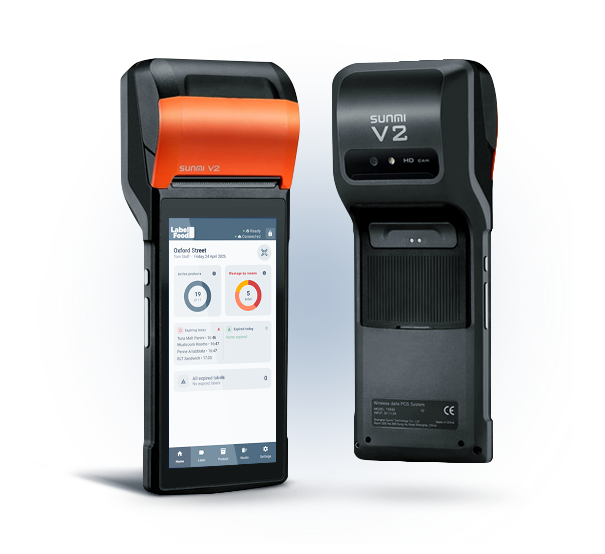
Implementation is a refinement of existing kitchen habits, not a complex overhaul. It requires a logical progression from physical setup to digital analysis. Start by defining your waste categories. Grouping everything as "General Waste" provides no actionable data. You must distinguish between spoilage, prep errors, plate waste, and expired stock. This clarity allows you to identify exactly where your money is disappearing. Once your categories are set, deploy your hardware. A food waste log digital terminal must be kitchen-hardened. It must survive the heat, steam, and pressure of a professional line. The LabelFood Printer SV2 is designed for this exact environment, serving as both a labeling station and a waste recording hub.
Training is the next critical phase. Establish a "Discard and Log" policy. If an item goes in the bin, it must be recorded on the terminal first. This habit ensures 100% data accuracy. Finally, integrate this data into your broader compliance workflow. By linking waste logs with your Natasha's Law compliance labels, you create a unified record of every ingredient's journey through your kitchen. To start your transition to a more efficient operation, explore our integrated food labeling solutions today. This system ensures your kitchen remains profitable, compliant, and audit-ready at all times.
Defining Actionable Categories
General waste is a black hole for your margins. To gain control, you must separate unavoidable waste, such as bones and vegetable peels, from avoidable waste like burnt portions or over-prepped ingredients. Avoidable waste is where your profit hides. Customise your categories to reflect your specific menu. If you run a high-volume steakhouse, "trimming loss" is a vital metric. If you manage a bakery, "stale stock" is your priority. This level of detail transforms a food waste log digital from a simple list into a powerful cost-control tool.
Staff Training and Culture
Position the digital log as a tool for kitchen success rather than a surveillance device. Accurate records protect the team by proving they follow correct stock rotation and safety protocols during EHO inspections. Use the initial fortnight of data to set realistic waste reduction targets. This data-driven approach creates buy-in amongst all shift patterns. When the team sees that reduced waste leads to a more organised, less stressful kitchen environment, participation becomes automatic. Consistency is the foundation of reliable data.
The LabelFood Advantage: Integrated Waste and Compliance
The LabelFood ecosystem delivers more than a recording tool. It is a unified compliance engine. Managing high-pressure London kitchens requires a system that is both robust and intuitive. Fragile tablets have no place on a busy line. They break. They lose charge. They fail when you need them most. The LabelFood Printer SV2 is a standalone, kitchen-hardened device that manages your food waste log digital records and your prep labels from a single terminal. This integration ensures total accuracy across your entire operation. If an item exists in your prep list, it exists in your waste log. No double-entry. No data silos. Just frictionless operation.
Centralising your data through our Cloud Management Dashboard provides a level of oversight that generic apps cannot match. You can monitor ingredient lifecycles from the moment a label is printed until the point of disposal. This provides a 360-degree view of your kitchen's efficiency. For multi-site operators across London, this means being able to benchmark performance and identify waste trends without leaving the office. You gain a silent but essential partner that handles the complexities of data management so you can focus on service quality and margin protection.
Hardware Meets Software
The SV2 Printer is the heart of a modern kitchen. It is built to survive the heat and moisture of a professional environment. Unlike consumer-grade tablets, it is a dedicated tool for professional chefs. Your prep labels and food waste log digital entries share the same product database. This ensures that every discard event is recorded against the correct SKU and cost centre. By using one system for both labelling and waste recording, you reduce hardware clutter and simplify staff training. One device. One workflow. Total control.
London Kitchen Compliance
Staying audit-ready for London councils is a non-negotiable requirement. Our system provides timestamped, unalterable digital records that prove your due diligence. It integrates naturally with our allergen management software UK, ensuring that your Natasha’s Law requirements are managed alongside your waste reduction goals. You don't have to choose between safety and profitability. With UK-based support and hardware designed for local regulations, we provide the definitive answer to kitchen compliance challenges. See how the LabelFood SV2 Printer transforms kitchen compliance and start protecting your margins today.
Secure Your Kitchen Margins with Smart Data
Paper logs are a liability you no longer need to carry. Moving to a food waste log digital system replaces historical guesswork with actionable, real-time intelligence. You stop the "pencil-whipping" culture and start protecting your gross profit immediately. By integrating waste recording with Natasha’s Law compliant labelling, you create a unified, audit-ready workflow that satisfies both EHOs and your bottom line. This isn't just about recording what goes in the bin; it's about making sure it doesn't end up there in the first place.
The LabelFood system is already trusted by London’s busiest commercial kitchens. We provide UK-based hardware support and a powerful Cloud Management Dashboard to ensure your operation remains frictionless. You gain total visibility over every ingredient's lifecycle across all sites. It is time to turn your waste bin into a profit-protection tool and eliminate the hidden costs of manual data entry.
Book a demo of the LabelFood Digital Waste System and take total control of your kitchen efficiency today. Precision is the foundation of a successful, scalable food business.
Frequently Asked Questions
Is a digital food waste log legally required in the UK?
Mandatory digital waste tracking (DWT) is scheduled to begin in October 2026 for licensed sites. Whilst internal kitchen logging isn't a strict legal requirement today, separating food waste for collection became mandatory for most English businesses in March 2025. Implementing a food waste log digital system now ensures you are prepared for the 2027 expansion of the national tracking service.
Can a digital waste log help with Natasha’s Law compliance?
Yes. Integrating your waste logs with Natasha’s Law compliance labels creates a complete record of an ingredient's lifecycle. It ensures that any pre-packed items containing allergens are accounted for if they reach their expiry date. This unified approach provides a bulletproof audit trail for both food safety and waste management during inspections.
How much time does it take for staff to log waste digitally?
Recording a discard event takes less than five seconds. Professional interfaces are built for speed and simplicity. Staff select the item and the reason for waste on a touch terminal. This rapid process prevents the data gaps caused by manual logging and ensures accuracy even during the peak of service.
Do I need a constant internet connection for the digital log to work?
No. Dedicated hardware like the SV2 Printer stores data locally if the network drops. It synchronises with your Cloud Management Dashboard automatically once a connection is restored. This reliability is essential for subterranean London kitchens where Wi-Fi signals can be inconsistent.
What is the most common reason for food waste in commercial kitchens?
Overproduction and prep errors are the leading causes. Approximately 75% of the food waste produced by the UK hospitality sector is avoidable. Digital tracking identifies whether your losses are coming from spoilage, plate waste, or specific training gaps. This allows for targeted intervention rather than broad guesswork.
How does digital waste tracking improve my kitchen’s profit margins?
It identifies exactly where your purchasing budget is being lost. Kitchens using a food waste log digital solution typically reduce food costs by between 2% and 8%. This direct saving on COGS increases your gross profit without requiring a single extra cover. Most operators see a full return on investment within eight months.
Can I manage multiple London restaurant locations from one dashboard?
Yes. A centralised cloud dashboard allows you to oversee all your sites from a single login. You can benchmark performance across different locations and identify which teams are managing stock most efficiently. This oversight is vital for maintaining standards across a growing restaurant estate.
What hardware is needed to start a digital food waste log?
You require a kitchen-hardened terminal designed for professional use. The LabelFood Printer SV2 is the standalone solution for UK kitchens. It combines compliance labelling and waste recording into one durable device. This eliminates the need for fragile tablets that often fail in high-heat environments.