Food waste costs the UK hospitality sector £3.2 billion every year. Much of this loss stems from poor tracking and illegible, hand-written labels that fail under kitchen heat. You know the pressure of a service where compliance feels like a secondary burden to speed. With Natasha's Law requirements for Prepacked for Direct Sale (PPDS) food remaining a critical priority, manual errors are no longer just a waste issue. They're a legal risk. Selecting a reliable thermal food label printer UK is now the baseline for any professional kitchen aiming for operational stability in 2026.
This guide provides a pragmatic look at hardware that works in a high-pressure environment. We'll cut through the noise of over-complicated technology to focus on what matters: durability, speed, and regulatory precision. You'll learn how to choose a system that manages the 14 statutory allergens, including the specific separation of peanuts and nuts. We'll examine how the LabelFood Printer SV2 integrates with cloud management to provide a complete record of staff activity and waste. It's time to move from manual guesswork to a system built for frictionless operation.
Key Takeaways
- Thermal technology removes the risk of ink smudging in humid environments, ensuring labels remain legible throughout the shelf-life of the product.
- A dedicated thermal food label printer UK is essential for meeting Natasha’s Law requirements, specifically for Prepacked for Direct Sale (PPDS) food items.
- Digital systems reduce food waste by automating shelf-life tracking and providing detailed reporting through integrated cloud management dashboards.
- The LabelFood Printer SV2 offers offline functionality and individual staff PINs to ensure total accountability and operational continuity during busy service periods.
- Effective kitchen management requires a system that supports the 14 statutory allergens whilst remaining accessible via web and iOS platforms.
Why UK Kitchens are Switching to Thermal Labelling Systems
Professional kitchens are volatile environments. Heat, steam, and constant moisture destroy standard paper labels. A thermal food label printer UK provides a hardware solution that withstands these physical stressors. Unlike inkjet printers that rely on liquid ink, thermal systems use heat-sensitive media to create images. Understanding how thermal printing works is essential for operators who need labels that stay legible from the prep bench to the walk-in fridge. These systems eliminate the risk of ink smudging or running when exposed to refrigeration or high-humidity areas.
The Limitations of Manual Day Dots
Traditional manual "day dots" are prone to failure. Kitchen staff often struggle to calculate accurate "use-by" dates whilst working under the pressure of a peak service. This leads to inconsistent data and potential safety breaches. Hand-written stickers are frequently illegible. If an Environmental Health Officer (EHO) cannot read a label, the record essentially does not exist. Manual labelling is also a significant time drain. It reduces overall kitchen efficiency and distracts staff from core food preparation tasks.
The Benefits of Direct Thermal Technology
Direct thermal technology removes the need for ribbons or ink cartridges. This reduces ongoing maintenance requirements and operational costs. The thermal food label printer UK standard ensures fast print speeds. Labelling no longer bottlenecks prep workflows. High-contrast printing ensures that allergen warnings are bold and clearly visible to both staff and customers. This clarity is vital for communicating the 14 statutory allergens, such as ensuring peanuts and nuts are clearly distinguished. Direct thermal labels are significantly more durable than traditional paper stickers. They resist grease and don't peel off easily in cold storage.
Digital systems create a clear, legible audit trail. This is a primary reason for the shift towards these systems in professional environments. EHO inspections in England, Wales, and Northern Ireland (Food Hygiene Rating Scheme) or Scotland (Food Hygiene Information Scheme) require verifiable records. Thermal labels provide a permanent, clean record that supports your food safety management system. They offer a level of professionalism that hand-written notes can't match. By automating the date calculation and printing process, kitchens can ensure that every item is correctly identified, reducing the risk of serving expired products.
Choosing the Right Thermal Food Label Printer UK
Selecting hardware for a professional kitchen requires a focus on environmental durability. A standard industrial printer often lacks the specific protection needed against grease, steam, and flour dust. Your thermal food label printer UK must feature a robust outer casing that is easy to wipe down and maintain. Beyond physical build, you must identify your specific print volume. A high-production bakery preparing hundreds of Prepacked for Direct Sale (PPDS) items daily requires a system with higher throughput than a small cafe. Compatibility with food-grade thermal label rolls is also non-negotiable. These labels must use adhesives that remain secure in both freezer and ambient temperatures without leaching chemicals into the packaging.
Connectivity and Standalone Reliability
Kitchen Wi-Fi is notoriously inconsistent. Stainless steel surfaces and thick walls often create signal dead zones. Prioritise hardware that offers offline functionality. A standalone system should allow staff to print essential labels even when the internet connection drops. This autonomy prevents service bottlenecks. The device should not require a permanent PC connection, which saves valuable counter space in cramped prep areas. Once a connection is restored, the system should perform automatic cloud syncing. This ensures that all data, including staff activity and waste records, is backed up to the management dashboard without manual intervention.
Software Integration Requirements
The hardware is only as effective as the software managing it. A professional system must allow for rapid data entry to keep pace with menu changes. Look for platforms that support Excel imports or AI-assisted menu onboarding. It is critical that any AI tool is used only for review and editing by the user, rather than autonomous publishing. The management dashboard should be accessible via web browsers or iOS devices. Be aware that many specialist systems, including LabelFood, do not offer Android support. The software must also allow for individual staff PINs. This feature ensures every label is attributed to a specific team member, creating a clear line of accountability for your records.
Compliance is the underlying goal of any labelling transition. Your chosen system must help you meet UK allergen regulations by clearly identifying the 14 statutory allergens. This includes the legal requirement to treat peanuts and tree nuts as separate categories. For those seeking a dedicated hardware solution that fits these criteria, the LabelFood Printer SV2 provides a standalone system designed for the rigours of the UK hospitality industry.
Compliance with Natasha’s Law and UK Allergen Regulations
Legal compliance is the foundation of professional food service. The Food Information (Amendment) (England) Regulations 2019, commonly known as Natasha's Law, changed the requirements for food Prepacked for Direct Sale (PPDS). Hand-written labels often fail to meet the rigorous clarity standards set by UK allergen regulations. A thermal food label printer UK ensures every label is legible and contains the mandatory statutory data. Automated systems reduce the risk of cross-contamination by providing clear, standardised warnings that staff can follow during preparation.
Labelling for Prepacked for Direct Sale (PPDS)
PPDS food is packed on-site before a customer selects or orders it. This includes items like sandwiches, salads, or pots of sauce prepared before a peak service period. The law requires these items to display the name of the food and a full ingredients list. Any of the 14 statutory allergens must be emphasised, typically through bolding or a contrasting colour. Implementing a commercial kitchen labeling system UK simplifies this process. It automates the formatting, so staff don't have to manually apply bolding to complex ingredient lists whilst under pressure. This reduces human error and ensures consistency across your product range.
Managing the 14 Statutory Allergens
UK law recognises 14 specific allergens that must be clearly identified on food labels. These include:
- Celery and cereals containing gluten
- Crustaceans, molluscs, and fish
- Eggs, milk, and soya
- Lupin, mustard, and sesame seeds
- Sulphur dioxide and sulphites
- Peanuts and tree nuts
In your records, you must treat peanuts and tree nuts as two distinct categories. Digital systems excel here. When a supplier changes a recipe, you update the cloud management dashboard once. The thermal food label printer UK then prints the updated information immediately. This removes the dangerous lag time associated with manual label updates. Standardised printing ensures that allergen warnings are unmistakable, even in high-pressure kitchen environments. It provides a reliable record-keeping tool that supports your food safety management system without adding unnecessary complexity to the daily workflow.
Operational Efficiency and Food Waste Reduction
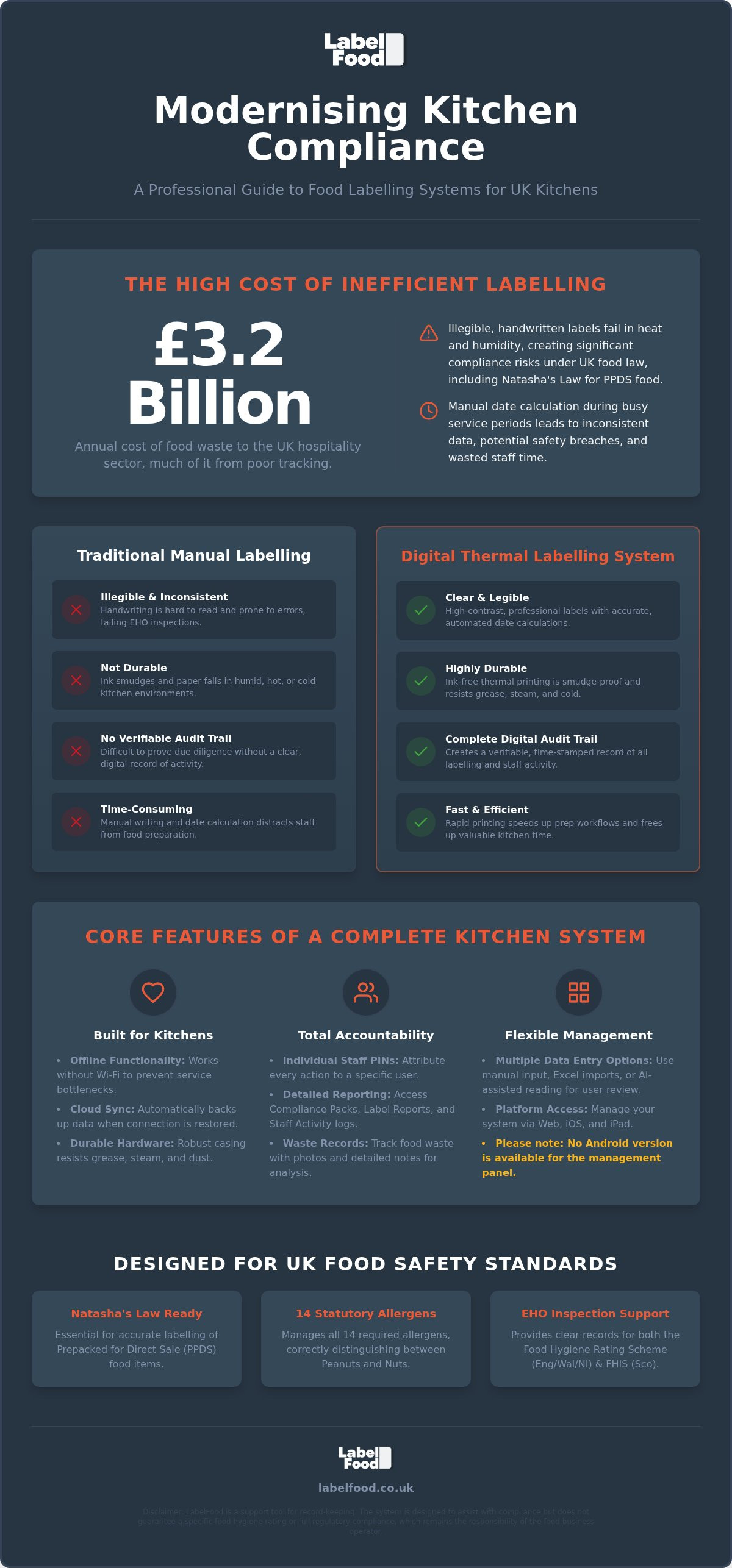
Food waste costs the UK hospitality sector an estimated £3.2 billion per year. This is a direct hit to your bottom line. A thermal food label printer UK helps mitigate this loss through precise shelf-life tracking. Digital systems replace the guesswork of manual date calculation. They provide the data needed to adjust ordering and prep levels based on actual usage patterns. Every label printed contributes to a larger data set that reveals operational inefficiencies. This moves your kitchen from reactive guesswork to data-driven management.
Recording Food Waste with Digital Logs
Paper waste sheets are obsolete. They're often incomplete, illegible, or lost during a busy service. Integrated food waste recording software allows staff to log spoilage directly through the system. This includes photo and note capabilities to document the exact reason for waste. Individual PINs for every staff member improve accountability. You can see which shifts or stations are generating the most waste. This data allows kitchen managers to target training where it's needed most. Analysing these digital logs helps you buy only what you need and prep only what you sell.
Streamlining Prep Workflows
Operational speed shouldn't come at the cost of accuracy. Automated date calculation removes the need for mental maths during intense shifts. This eliminates dangerous errors in "use-by" or "best-before" dates. Staff can print multiple labels for a batch in seconds. This reduces labour time compared to manual stickers. Standardised labels ensure every staff member understands the status of prep items at a glance. It creates a unified language across the kitchen. The system works offline with cloud syncing; service never stops if the Wi-Fi drops. This reliability is essential for maintaining momentum during peak hours.
Reporting tools like the Compliance Pack and Staff Activity reports provide granular data for internal audits. You have a permanent digital record of labelling history and waste patterns. This level of detail is a stabilising force in a high-pressure environment. It supports your food safety management system by providing verifiable records of staff behaviour. If you're ready to implement a complete labelling and waste management system, you can view our food labelling solutions to find the right fit for your site.
The LabelFood Printer SV2: A Complete Kitchen Compliance System
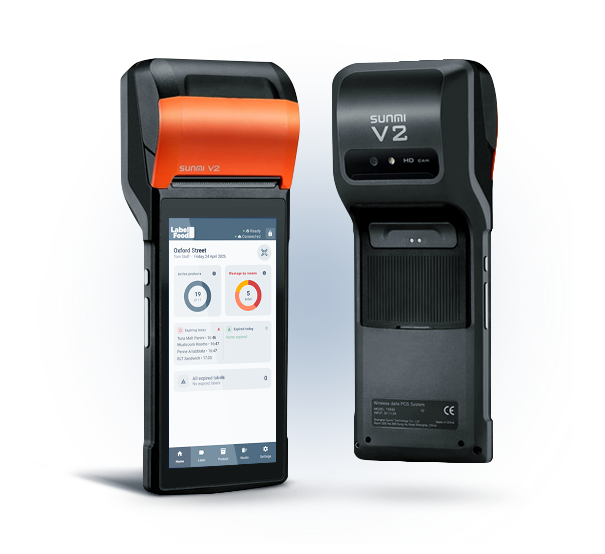
Hardware alone cannot solve the complexities of modern food safety. The LabelFood Printer SV2 is the physical anchor for a comprehensive management system. It is built specifically for the UK hospitality environment. This thermal food label printer UK solution provides the reliability of offline functionality. Syncing occurs automatically when a connection is restored. This ensures that your kitchen never stops during a peak service period. It is a dedicated tool for operators who require a stabilizing force in a high-pressure workspace.
Integrated Cloud Management Dashboard
Control starts at the management panel. You can organise your entire product catalogue from a central web or iOS interface. This system does not support Android devices. For rapid setup, use the AI-assisted onboarding tools. You can upload menus via photo or PDF. The AI extracts the data for your manual review and editing. It is not an autonomous publisher. Once your data is verified, you can distribute it to multiple sites instantly. This ensures brand-wide consistency and compliance across your entire estate. You maintain total control over your allergen information and product data from a single point of entry.
Professional Standards and EHO Readiness
Maintaining digital kitchen compliance records is the most effective way to demonstrate due diligence to inspectors. The SV2 system generates detailed Label Reports and Staff Activity logs. These reports show exactly who printed which label and when. This level of transparency is vital for internal audits and EHO visits. You can customise labels to fit specific packaging or branding requirements. This includes clear emphasis on the 14 statutory allergens to meet PPDS standards. The system treats peanuts and tree nuts as separate categories to ensure legal accuracy.
LabelFood is a support tool. It helps you maintain high food hygiene standards but does not guarantee a specific rating or regulatory compliance. It is a record-keeping system designed to simplify the administrative burden of kitchen management. The SV2 includes robust reporting tools like the Compliance Pack. These provide the verifiable evidence needed for a professional kitchen operation. By centralising your allergen and product data, you reduce the risk of manual error and improve operational stability. It is the definitive answer to the challenge of manual kitchen record-keeping.
Establishing a Modern Kitchen Standard
Transitioning from manual labelling to a digital system is a strategic move for long-term operational stability. Thermal technology provides the absolute legibility required for UK allergen regulations, specifically for Prepacked for Direct Sale (PPDS) items. Beyond legal compliance, these systems offer the granular data necessary to address the significant costs associated with food waste. A dedicated thermal food label printer UK acts as the physical foundation for this digital transition. It ensures that your records are accurate, legible, and easily accessible during an inspection.
The LabelFood SV2 system is designed for the specific rigours of a professional kitchen. It combines standalone hardware with secure cloud integration to ensure your service never stops. You gain access to dedicated UK-based kitchen support and a system built to support Natasha’s Law requirements. This is not just a hardware upgrade; it's a commitment to precision and efficiency. You can request a demo of the LabelFood SV2 system to see how it fits your specific site. Modernising your kitchen management doesn't have to be complex. With the right tools, you can achieve total control over your compliance and waste records today.
Frequently Asked Questions
Does Natasha’s Law apply to all food sold in my restaurant?
No. It applies only to Prepacked for Direct Sale (PPDS) food. This is food packed on the premises before a customer selects or orders it. Items prepared and sold immediately or made to order do not fall under this specific regulation. For London operators, identifying which items are PPDS is the first step toward legal accuracy. A digital system helps manage these requirements by automating full ingredient lists and allergen emphasis.
Can I use a standard office thermal printer for food labels?
Standard office hardware is not designed for the rigours of a commercial kitchen. A dedicated thermal food label printer UK features a robust casing that resists grease, steam, and moisture. Office printers often fail in high-humidity environments. They also lack compatibility with food-grade adhesives required for cold storage. Using hardware built for the industry ensures operational stability and prevents service bottlenecks caused by frequent equipment failure.
What are the 14 allergens I need to list on my labels?
UK law requires the declaration of 14 statutory allergens. These are celery, cereals containing gluten, crustaceans, eggs, fish, lupin, milk, molluscs, mustard, peanuts, sesame, soybeans, sulphur dioxide and sulphites, and tree nuts. You must recognise peanuts and tree nuts as two distinct categories in your records. Digital systems automate the bolding of these allergens. This ensures your labels meet the clear legibility standards required by the Food Standards Agency.
Do thermal labels survive in a freezer or microwave?
Thermal labels are highly effective in freezers when paired with the correct adhesive. They remain legible and secure in temperatures well below zero. However, because the technology uses heat-sensitive coating, a microwave's intense heat will cause the entire label to turn black. For items intended for microwave heating, ensure labels are placed on outer packaging or use heat-resistant materials. Always verify that your label rolls are rated for your specific storage conditions.
How does digital labelling help with EHO inspections?
Digital systems provide a verifiable audit trail for EHO inspections. They replace illegible hand-written stickers with clear labels from a thermal food label printer UK. In London, inspectors look for consistent record-keeping and evidence of due diligence. Features like staff PIN attribution and automated date calculation demonstrate control over your food safety management system. Whilst the system doesn't guarantee a specific rating, it provides the reporting tools needed for compliance.
Is the LabelFood system compatible with Android tablets?
No. The system is not compatible with Android. The LabelFood management panel is available exclusively via web browsers and iOS or iPad devices. This specific focus allows for a more stable and integrated user experience. Kitchen managers can manage their product catalogues and view compliance reports from any iPad or desktop computer. This ensures that the digital management layer remains as reliable as the physical hardware in a high-pressure environment.
How does the AI menu onboarding work?
AI menu onboarding is a tool designed to speed up the initial setup of your product catalogue. You upload your existing menus as photos or PDF files. The system then extracts the text and allergen data. Crucially, the AI functions as a drafting tool for user review and editing. It never publishes data autonomously. This ensures that the final product data remains under the total control and expertise of the kitchen manager.
Can I track food waste through the label printer system?
Yes. Waste tracking is a core feature of the LabelFood system. Staff log spoilage directly through the interface using individual PINs for attribution. These records include photos and notes to document exactly why items were discarded. This data syncs to the cloud management dashboard. It allows London-based operators to identify patterns in food waste and adjust ordering or prep levels. This digital documentation is more reliable than traditional paper waste sheets.