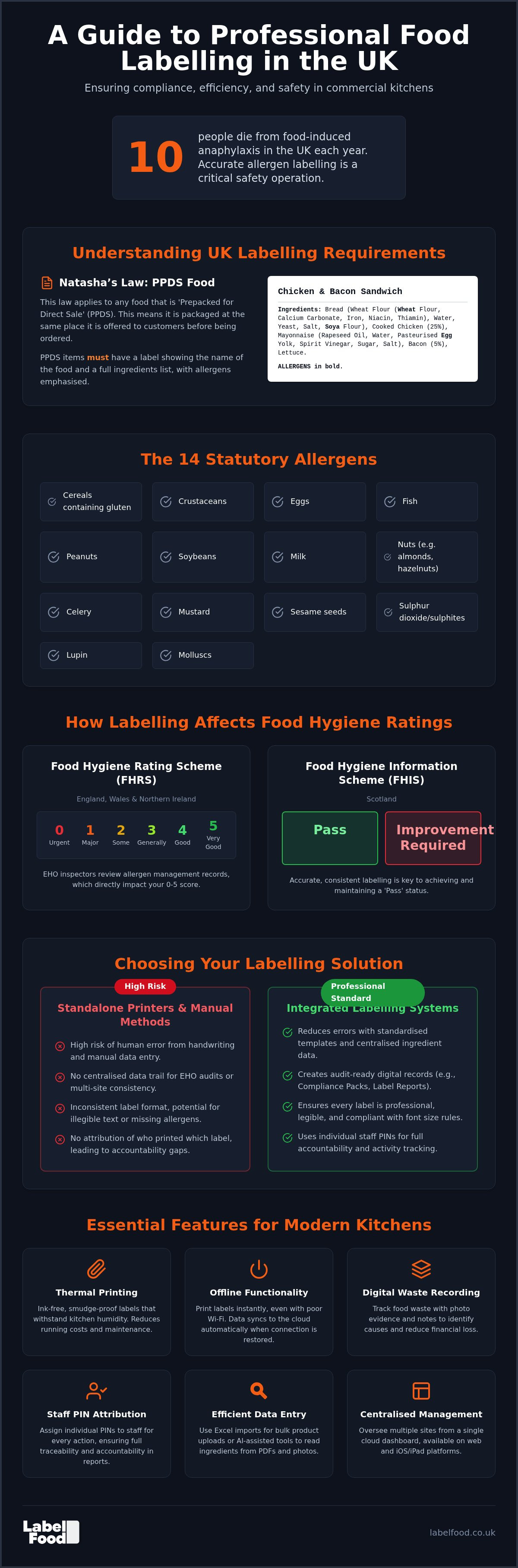
Approximately 10 people die in the UK from food-induced anaphylaxis each year. It is a sobering statistic that defines the high stakes of modern food service. For commercial kitchen operators, allergen management is not just a checkbox; it is a critical safety operation. You likely feel the daily pressure of managing 14 statutory allergens whilst trying to maintain a fast prep-to-shelf workflow. Manual labelling is slow. It leads to errors. It puts your business at risk during EHO inspections.
Finding a reliable sandwich labeling machine UK is the first step toward reclaiming control. This guide explores how to implement a system that ensures Natasha’s Law compliance for all prepacked for direct sale (PPDS) food. We focus on pragmatic solutions that replace manual writing with professional, clear labels. You will learn how to achieve audit-ready records and reduce food waste through better visibility. The goal is total precision without sacrificing speed.
We examine the 2026 regulatory environment, the necessity of staff attribution via individual PINs, and the efficiency of cloud-synced data management. This is your roadmap to a more disciplined, compliant, and efficient kitchen environment. Discover how to move from chaotic manual logs to a unified, professional system.
Key Takeaways
- Understand the legal distinction between general allergen rules and specific Natasha’s Law requirements for prepacked for direct sale (PPDS) food.
- Select a sandwich labeling machine UK that offers thermal printing and offline functionality to ensure reliability in high-pressure kitchen environments.
- Implement digital waste recording with photo evidence and notes to improve visibility and reduce food loss across your operation.
- Utilise individual staff PINs and the Compliance Pack tool to maintain accurate, audit-ready records for EHO inspections.
- Centralise multi-site management using a cloud dashboard available on web and iOS platforms for real-time oversight.
Understanding Sandwich Labelling Requirements in the UK
UK food law is precise. The primary legislation is the retained EU Food Information to Consumers (FIC) Regulation 1169/2011. This framework aligns with international food labelling regulations to ensure consumers receive accurate information. For sandwich retailers, the most critical definition is Prepacked for Direct Sale (PPDS). This refers to food prepared and packaged on the same premises before a customer selects it. If you bag a sandwich before it is ordered, it is PPDS.
Compliance records directly influence your hygiene status. In England, Wales, and Northern Ireland, the Food Hygiene Rating Scheme (FHRS) issues a 0 to 5 score. Scotland uses the Food Hygiene Information Scheme (FHIS), which provides a "Pass" or "Improvement Required" status. EHO inspectors look for consistency. Manual labelling is a high-risk strategy. It relies on staff memory and legible handwriting. In a high-pressure kitchen, these are the first things to fail. Using a dedicated sandwich labeling machine UK eliminates these variables.
Natasha’s Law and Your Kitchen Workflow
Natasha’s Law mandates that all PPDS food must display a full ingredients list with allergens clearly emphasised. This is not optional. Every ingredient must be listed in descending order of weight. A digital sandwich labeling machine UK integrates this requirement into your existing workflow. It prevents the common errors found in hand-written labels, such as missing minor ingredients or illegible allergen warnings. By using a standardised digital template, you ensure the mandatory information meets the required 1.2mm x-height font size every time.
The 14 Statutory Allergens: A UK Standard
You must manage 14 statutory allergens under UK law. This includes the specific separation of peanuts and tree nuts. A professional labelling system allows you to bold or highlight these allergens automatically. This level of detail is difficult to maintain manually across multiple sites. Digital systems provide a central source of truth. When a recipe changes, the update is pushed to every printer in the network. This ensures your customers see the same, accurate information regardless of which branch they visit. It provides the stabilising force needed in a professional kitchen environment.
Choosing the Right Sandwich Labelling Machine: Key Criteria
Hardware choice determines long-term reliability. Thermal printing is the industry standard for a reason. It requires no ink ribbons or cartridges. This reduces ongoing costs and prevents the risk of labels fading or smudging in humid environments. A professional sandwich labeling machine UK must also feature a robust housing to withstand the physical demands of a commercial workspace. Plastic generic alternatives often fail under the heat and moisture of a busy kitchen.
Connectivity is a common weak point in hospitality. Kitchens with thick walls or basement locations frequently suffer from spotty Wi-Fi. Your system must offer offline functionality. Labels should print instantly regardless of internet status, with data syncing to the cloud once the connection is restored. This ensures your product catalogue is always up to date across all devices without interrupting the morning prep shift.
Integrated Systems vs Standalone Printers
A standalone printer is a fragmented tool. It produces a label but creates no data trail. An integrated system connects the printer to a cloud management dashboard. This allows for individual staff PINs to ensure clear attribution of work. It also enables automated Compliance Packs and Label Reports. This structure provides the oversight needed to manage the 14 statutory allergens effectively. It follows the principles of the foundational EU food information regulation, ensuring consumers receive accurate, standardised data every time.
Data Entry and Management Efficiency
Managing a large product catalogue manually is a significant drain on management time. Modern systems allow for Excel imports to populate hundreds of items in seconds. For new menu launches, you can use AI-assisted tools to read PDFs or photo menus. This AI acts as a digital assistant for user review and editing; it never publishes data autonomously. This ensures the kitchen manager remains the final authority on ingredient accuracy.
The management panel should be accessible where you work. A professional sandwich labeling machine UK system prioritises web and iOS/iPad applications for high-performance oversight. Note that professional-grade systems often omit Android support to maintain a more secure and stable environment. If you want to see how these features streamline a busy service, explore our food labeling solutions today.
Ease of use is the final metric. A junior chef should be able to select a product and print a label in three taps. Complexity leads to avoidance. Simplicity leads to compliance. When the machine is easy to operate, it becomes a stabilising force rather than a bottleneck during the lunchtime rush.
Comparing Professional Labelling Solutions for 2026
Selecting a sandwich labeling machine UK requires a comparison of long-term utility versus short-term cost. Generic hardware often uses plastic housings that degrade in professional kitchens. Professional-grade machines use robust materials designed for heat and humidity. This choice impacts durability. It also impacts the clarity of mandatory information required by official UK food labelling guidance. Clear, legible text is non-negotiable for EHO inspections. A professional system provides a stabilizing force in high-pressure environments.
Hardware Durability in Commercial Environments
Thermal printing is the standard for high-volume sandwich production. It eliminates the need for ink, which prevents smudging and reduces maintenance. A compact footprint is also essential. Most prep stations are crowded. A machine that occupies minimal space whilst maintaining high print speeds allows for a faster prep-to-shelf workflow. Clarity remains consistent across thousands of labels. This reliability is vital during the morning rush when speed is the priority.
Software and Reporting Features
Basic printers only produce simple dates. A professional sandwich labeling machine UK must offer automated date calculation. This removes the risk of mental arithmetic errors by staff. Individual PINs provide clear attribution through Staff Activity reports. This creates a culture of accountability. The Compliance Pack tool is a specific feature of advanced systems. It compiles all necessary records into an audit-ready format. This visibility is essential when demonstrating your food safety management procedures to an inspector.
Software accessibility varies significantly between providers. Some third-party solutions rely on Android tablets. These often lack the security and stability of iOS or iPadOS platforms. A professional system prioritises web and iOS management. This ensures a consistent user experience. Partnering with a dedicated UK provider also ensures your system stays aligned with local regulatory changes. You receive updates that reflect UK law, not generic global standards. This provides the peace of mind required in a high-pressure hospitality environment. It ensures your records remain accurate and accessible whenever they are needed.
Maximising Efficiency: Waste Recording and Workflow
Efficiency in a commercial kitchen extends beyond how quickly you can pack a sandwich. Profitability is often dictated by how effectively you manage what remains on the shelf at the end of service. Integrating waste recording directly into your daily labelling routine converts a mandatory compliance task into a powerful financial oversight tool. A professional sandwich labeling machine UK acts as the primary data entry point for this process, ensuring that every discarded item is accounted for in real time.
Digital Prep Date Labels vs Traditional Day Dots
Manual day dots are a legacy system with high failure rates. Handwritten dates are frequently illegible or miscalculated, especially during high-pressure prep shifts. digital food prep labels eliminate these mental arithmetic errors by automating shelf-life calculations. This ensures that every sandwich displays an accurate "use by" or "best before" date based on pre-set kitchen standards. For an EHO inspector, this digital clarity demonstrates a disciplined approach to food safety management that manual stickers cannot match. It provides a stabilising force that prevents out-of-date stock from reaching the customer.
Staff Accountability and Attribution
Transparency in the kitchen requires individual accountability. Professional systems use individual staff PINs to track every action. When a team member prints a label or logs a wasted item, the system records the attribution. This data is essential for identifying training gaps or prep-level inconsistencies. By using integrated food waste recording software, staff can document the reason for waste using photos and notes. Capturing a photo of a damaged delivery or noting a specific equipment failure provides the context that a simple tally sheet lacks. It transforms a list of numbers into an actionable management report.
The return on investment for digital waste logs is immediate. Instead of guessing stock requirements, managers can analyse hard data to optimise ordering. This visibility allows you to adjust prep levels for specific days of the week, directly reducing food costs. It creates a culture of precision where every ingredient is accounted for. To begin streamlining your kitchen operations and reducing unnecessary loss, view our complete range of food labeling solutions. This data-driven approach ensures your kitchen remains both compliant and profitable.
The LabelFood System: Precision for UK Kitchens
The LabelFood system is a unified solution for commercial food service. It replaces fragmented tools with a single source of truth. At the centre of this operation is the sandwich labeling machine UK, providing the physical output required for daily service. This is not just hardware. It is an integrated network that connects prep stations to a central management layer. It provides the stabilizing force needed to manage complex regulations across multiple sites.
The system prioritises stability and security. The management panel is available exclusively on Web and iOS/iPad platforms. This focus ensures a reliable environment for managing sensitive allergen data. By omitting Android support, the system maintains a higher standard of software performance. Managers can oversee multi-site operations from a single dashboard, pushing menu updates to every kitchen instantly. This ensures total control over the information displayed to your customers.
Implementing the SV2 Printer in Your Kitchen
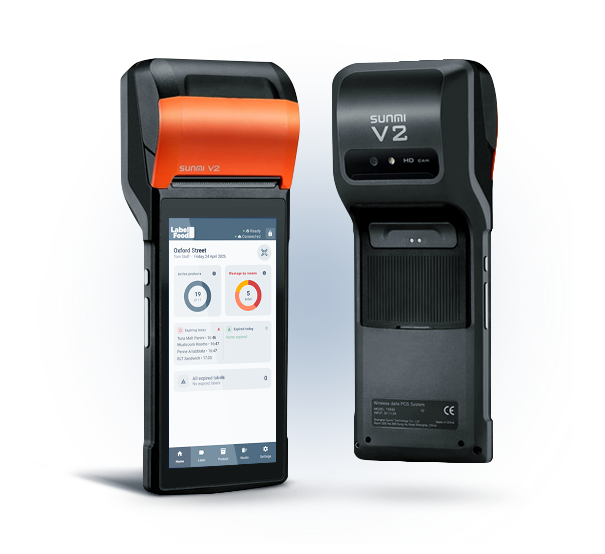
The LabelFood Printer SV2 is designed for immediate deployment. It functions as a standalone hub. Once product data is synced from the cloud management dashboard, the device operates independently. This offline capability is essential for kitchens where internet connectivity is unreliable. The hardware remains functional, labels print without delay, and data syncs automatically when the connection returns. This prevents bottlenecks during the morning prep shift.
Setup is accelerated through AI-assisted menu onboarding. This tool reads existing menus, spreadsheets, or PDFs to populate your product catalogue. It is a management aid for user review and editing. The AI does not publish data autonomously; the kitchen manager remains the final authority on ingredient accuracy. This ensures that complex product lists are digitised quickly without sacrificing oversight. It is a pragmatic approach to data entry for busy operators.
Achieving Audit-Ready Standards
EHO inspections require clear, accessible evidence of food safety management. The system provides this through specific reporting tools. The Label Report and Compliance Pack compile all necessary records into a professional format. These tools document that your natasha’s law labelling requirements are met consistently across every batch. Digital records remove the ambiguity of manual logs and handwriting errors.
The system supports your pursuit of a high Food Hygiene Rating in England, Wales, and Northern Ireland, or a Pass status in Scotland. It provides the visibility needed to identify and correct issues before an inspection occurs. By centralising allergen management and staff activity via individual PINs, you create a disciplined environment focused on precision. This is the definitive answer to the complexities of modern kitchen compliance. It ensures your records are always ready for review.
Securing Your Kitchen’s Operational Future
Maintaining compliance in a high-pressure environment requires more than just intent; it requires the right tools. Transitioning from manual writing to a digital sandwich labeling machine UK eliminates the variability of human error. You move from reactive management to proactive oversight. By centralising your allergen data and automating shelf-life calculations, you ensure every item meets the standards required by Natasha’s Law and EHO inspectors. This is about establishing a disciplined, frictionless workflow.
The LabelFood system provides the definitive answer to these challenges. With individual staff PIN attribution and integrated food waste recording with photos, you gain total visibility over your kitchen’s output. Our specialised UK compliance reporting tools ensure you are always audit-ready. This level of precision protects your customers and your business reputation. It's time to replace fragmented processes with a unified, professional solution.
Explore the LabelFood Printer SV2 System to streamline your kitchen today. Take control of your compliance records and focus on delivering quality food with absolute peace of mind.
Frequently Asked Questions
What is Natasha’s Law and how does it affect sandwich labelling?
Natasha’s Law requires all prepacked for direct sale (PPDS) food to display a full ingredients list with allergens clearly emphasised. For sandwiches made and packed on-site, this means every ingredient must be listed in descending order of weight. A digital sandwich labeling machine UK ensures these details are printed clearly, meeting the mandatory minimum font size requirements of 1.2mm x-height. This removes the risks associated with manual handwriting.
Do I need a separate printer for allergen labels in the UK?
You don't need a separate device for allergen information. A unified labelling system handles product names, full ingredient lists, highlighted allergens, and date coding on a single label. This consolidation reduces kitchen clutter and ensures all mandatory information is grouped correctly for the consumer. It provides a professional appearance whilst maintaining high standards of accuracy for your EHO audit records.
Can a sandwich labelling machine work without an internet connection?
The LabelFood Printer SV2 is designed with offline functionality to ensure service never stops. Your product data is stored locally on the device, allowing you to print labels instantly during internet outages. Once your connection is restored, the machine automatically syncs all staff activity and waste records to the cloud management dashboard. This prevents bottlenecks in kitchens with unreliable Wi-Fi and ensures a sandwich labeling machine UK remains a reliable tool.
What are the 14 allergens I need to list on my sandwich labels?
UK law identifies 14 major allergens that must be declared: celery, cereals containing gluten, crustaceans, eggs, fish, lupin, milk, molluscs, mustard, peanuts, sesame, soybeans, sulphur dioxide and sulphites, and tree nuts. Peanuts and tree nuts are treated as separate categories. Your labelling system must bold or highlight these ingredients within the full list to stay compliant with current food information regulations.
Is the LabelFood system compatible with Android tablets?
The LabelFood system is not compatible with Android devices. The management panel and application are developed exclusively for Web browsers and iOS or iPadOS platforms. This focus ensures a more secure and stable environment for managing sensitive compliance data. By using dedicated hardware and Apple’s ecosystem, the system maintains high performance levels in demanding commercial kitchen environments where reliability is the primary requirement.
How does digital waste recording help my kitchen save money?
Digital waste recording provides the hard data needed to optimise stock ordering and daily prep levels. By logging every discarded item with photos and notes, you identify exactly why loss occurs. Managers can analyse these patterns through the cloud dashboard to reduce over-ordering. This visibility transforms waste from an invisible cost into an actionable metric for increasing your kitchen's overall profitability.
What is the difference between PPDS and non-PPDS food labelling?
Prepacked for direct sale (PPDS) food is packaged on-site before a customer selects or orders it. This category requires full ingredient and allergen labelling under Natasha’s Law. Non-PPDS food includes items made to order or sold loose. Whilst non-PPDS food still requires allergen transparency, it does not mandate a full printed ingredient label on the packaging, though information must be easily available upon request.
Can I import my existing product list from Excel into the labelling system?
You can populate your product catalogue quickly using Excel imports or AI-assisted menu onboarding. The cloud management dashboard allows for bulk data entry, which is essential for multi-site operations with large menus. The AI tool reads your existing PDFs or photos to draft product entries for your review and editing. This ensures you maintain total control over data accuracy without the need for time-consuming manual typing.