An unannounced eho inspection should be the most boring event in your kitchen's calendar. For many operators, the arrival of an officer triggers immediate stress over missing temperature logs or incomplete allergen labels. You know that a single oversight can drop your food hygiene rating and impact footfall overnight. Managing compliance through manual paperwork is a drain on your preparation time. It's a high-pressure environment where precision matters, yet the administrative burden often feels disconnected from the reality of a busy service.
This guide provides a pragmatic strategy for navigating inspections through robust food safety management and digital record-keeping. You'll learn how to meet the 14 statutory allergen requirements and maintain audit-ready records that satisfy the Food Hygiene Rating Scheme in England, Wales, and Northern Ireland, or the Food Hygiene Information Scheme in Scotland. We will address the complexities of labelling, including how Natasha's Law applies specifically to food prepacked for direct sale. We'll outline how to transition from chaotic folders to a streamlined, digital system. By the end, you'll have a clear framework to achieve a 5-star rating whilst reclaiming time for your kitchen's daily operations.
Key Takeaways
- Understand the legal powers of an eho and why unannounced inspections are a standard part of UK food safety enforcement.
- Learn how to build a robust Food Safety Management System (FSMS) using HACCP principles to ensure your kitchen remains audit-ready.
- Identify the physical standards required for cleaning and temperature logs to maintain consistent hygiene levels.
- Follow a step-by-step guide to conducting a mock audit to find and fix compliance gaps before the inspector arrives.
- Explore how digital labelling tools provide verifiable evidence through automated reporting like the Compliance Pack and Staff Activity logs.
Understanding the Role of the Environmental Health Officer (EHO)
An Environmental Health Officer (EHO) is a local authority professional responsible for enforcing food safety legislation. They act as the front line of public health protection. Their primary goal is to ensure that food businesses operate safely and do not pose a risk to the consumer. The role of the eho is to protect public health through a balanced approach of strict legislative enforcement and practical food safety guidance. It's a combination of policing and partnership.
You must recognise their legal authority. Inspectors have the right to enter food premises at any reasonable time without prior notice. If you are trading, you are subject to inspection. They have the power to take photographs, seize samples, and review all digital or physical records. Understanding this power helps you prepare. An inspection is a verification of your professional standards. It's not a personal critique but a necessary audit of your operation.
What an EHO Checks During an Unannounced Visit
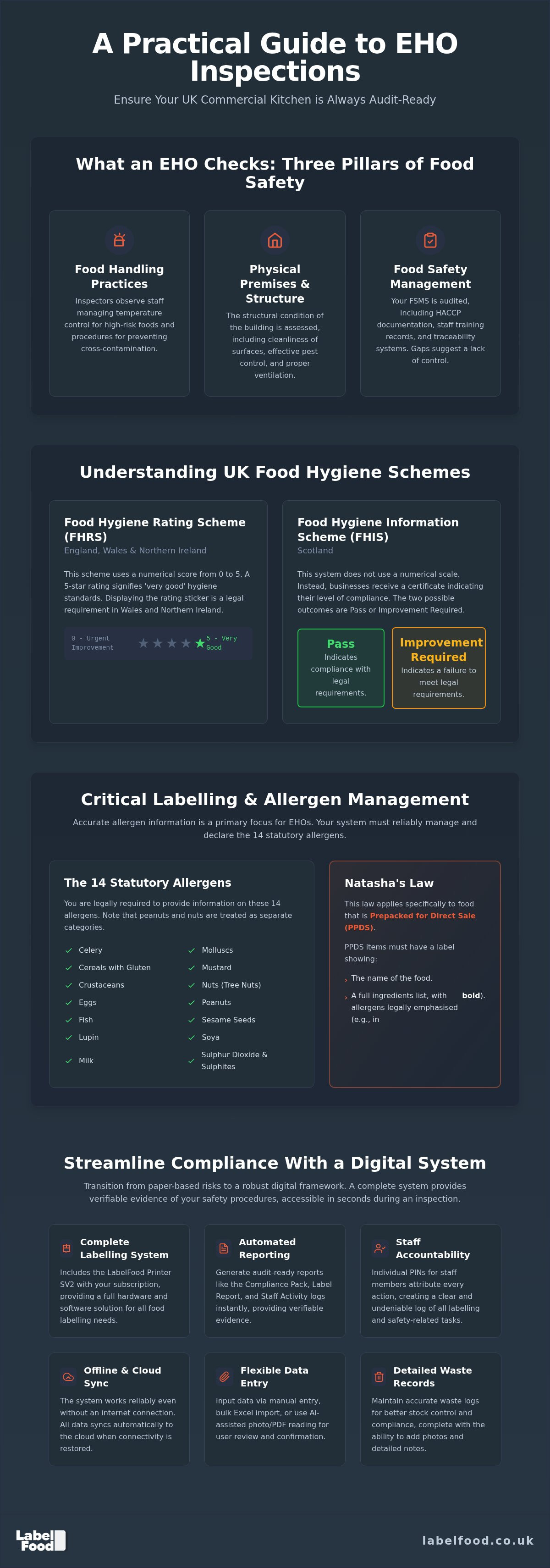
The inspection focuses on three distinct pillars of food safety. First, they observe food handling practices. This includes how staff manage temperature control for high-risk foods and how they prevent cross-contamination. Second, they assess the structural condition of the building. They look for effective pest control, proper ventilation, and the cleanliness of surfaces. Finally, they audit your management systems. They will demand to see your HACCP documentation and training records. Gaps in these records suggest a lack of control over your kitchen environment.
The Difference Between UK Food Hygiene Schemes
Compliance requirements differ depending on your location. In England, Wales, and Northern Ireland, local authorities use the Food Hygiene Rating Scheme (FHRS). This results in a score from 0 to 5. A 5-star rating indicates very good standards, whilst a 0 means urgent improvement is necessary. In Wales and Northern Ireland, displaying your rating sticker at the entrance is a legal requirement. In England, display remains voluntary but is highly recommended for commercial reputation.
Scotland operates under the Food Hygiene Information Scheme (FHIS). This system does not use a numerical scale. Instead, businesses receive a "Pass" or an "Improvement Required" certificate. Understanding these regional nuances is vital. Displaying the correct information ensures you meet local transparency standards and maintain customer confidence. Regardless of the scheme, the objective remains the same: proving that your kitchen is safe, organised, and under control.
Organising Your Food Safety Management System (FSMS)
Your Food Safety Management System (FSMS) is the backbone of your operation. It's a legal requirement to have a documented system based on Hazard Analysis and Critical Control Point (HACCP) principles. An eho uses this documentation to judge your "confidence in management." If your records are chaotic, the inspector assumes your kitchen is too. Consistency in record-keeping is more important than the sheer volume of data. It's better to have simple, daily logs that are 100% complete than complex folders with missing weeks. Official food handling and physical premises standards demand that these systems are not just present, but actively followed and regularly reviewed to reflect changes in your menu or staff.
Digital vs Paper-Based Compliance Records
Paper records are a liability in a high-pressure kitchen. Folders get stained, pages go missing, and handwriting is often illegible. Traditional "day dots" and manual prep labels are prone to human error. Digital systems solve these physical risks. Cloud-syncing ensures that your data is safe even if hardware is damaged. Staff accountability improves when every entry is tied to an individual PIN. This creates an undeniable activity log that is easy to scan during an audit. Transitioning to digital kitchen compliance records makes your data audit-ready in seconds. It removes the friction of manual filing.
Accurate Labelling for Natasha's Law and Allergens
Allergen management is a critical focus for any eho in 2026. You must accurately identify and label the 14 statutory allergens, treating peanuts and nuts as separate categories. For food prepacked for direct sale (PPDS), Natasha's Law requires the specific name of the food and a full list of ingredients with allergens emphasised. Manual labelling for complex ingredients is slow and risky. The LabelFood Printer SV2 automates this process. It ensures every label is legible and compliant with current UK standards. When using AI-assisted tools for menu onboarding, remember these are designed for user review and editing rather than autonomous data publishing.
Managing these requirements doesn't have to be a full-time job. Using a complete food labelling system allows you to focus on service whilst the software handles the audit trail. This proactive approach turns a stressful inspection into a routine verification of your existing standards.
Managing Physical Premises and Food Handling Standards
Physical standards are the most visible indicators of your kitchen's safety. An eho will immediately notice the cleanliness of your floors, the state of your grout, and the organisation of your storage. It's not enough to clean; you must prove it happened. Documented cleaning schedules are essential. These lists must be specific. They should detail what needs cleaning, how to clean it, and how often. Every task requires a staff signature upon completion. This creates a chain of accountability that an inspector can verify in minutes. Consistency here suggests a disciplined operation.
Structural integrity is equally important. Surfaces must be smooth, washable, and in good repair. Cracked tiles or frayed seals are more than just an eyesore. They are bacteria traps. Cross-contamination prevention requires physical discipline. Use colour-coded equipment for different food groups. Zone your preparation areas to keep raw and ready-to-eat foods separate. These physical barriers are the foundation of your Food Safety Management System (FSMS). If your physical layout doesn't support safe handling, your documentation won't save your rating.
Temperature Controls and Monitoring
Temperature management is a non-negotiable legal requirement. Cold storage must remain at 8°C or below. Hot holding must stay above 63°C. You must record these temperatures at least twice daily. Accuracy is paramount. Calibrate your temperature probes at regular intervals using the boiling water and ice point methods. Record these calibration results in your logbook. If a cooling unit fails, you need a documented plan. Your corrective action logs should show exactly what happened to the food and how you fixed the equipment. This transparency builds trust during an audit.
Pest Control and Structural Documentation
A pest infestation is an automatic failure. You must maintain a comprehensive pest control file. This includes your contract with a professional service and their regular visit reports. Don't wait for a contractor to find issues. Regularly inspect your premises for gaps under doors or holes in walls. Seal potential entry points for rodents and insects immediately. Ensure your kitchen has adequate lighting and ventilation. Poor visibility leads to missed dirt. Poor ventilation causes grease buildup and condensation. Both are red flags for an eho. Your structural documentation should reflect a proactive maintenance schedule, proving that you control your environment rather than just reacting to problems.
How to Conduct a Mock EHO Audit in Your Kitchen
A mock eho audit is your most effective defence against a low rating. It identifies weaknesses before an inspector does. This process should be systematic and unannounced to your staff. It replicates the pressure of a real visit. Follow these five steps to verify your kitchen's readiness.
- Step 1: Physical Walkthrough. Enter the kitchen during a busy service. Observe food handling in real-time. Check for cross-contamination risks and staff hygiene habits.
- Step 2: Log Review. Examine the last 30 days of temperature and cleaning records. Look for missing entries or unrealistic data. Gaps suggest a failure in your management system.
- Step 3: Staff Quiz. Ask individual team members to name the 14 statutory allergens. Test their knowledge of emergency procedures, such as what to do during a power cut.
- Step 4: Report Generation. Access your management dashboard. Pull a Compliance Pack and a Label Report. This proves your data is organised and retrievable.
- Step 5: Corrective Action. Document every failure found during the mock audit. Record the specific corrective actions taken to resolve them. This demonstrates a proactive management culture.
Staff Training and PIN-Attributed Activity
Accountability is the foundation of a safe kitchen. Every team member must hold the appropriate food hygiene certificate. Digital systems enhance this by using individual PINs for every task. When a staff member prints a label or signs off a cleaning task, it is attributed to them. You can use Staff Activity reports to identify who needs further training. This data-driven approach removes guesswork. It ensures every person on the line understands their responsibility toward the final hygiene rating.
Reviewing Food Waste and Compliance Reports
Compliance extends to how you handle spoiled or out-of-date items. Using food waste recording software provides a transparent trail of kitchen efficiency. High-quality waste records include photos and notes, offering evidence of why food was discarded. Analysing these trends helps you spot safety issues, such as recurring equipment failure or over-ordering. It turns waste data into a tool for better kitchen management.
Ready to simplify your audit process? You can get your kitchen audit-ready with the LabelFood system today.
Streamlining Compliance with the LabelFood System
The LabelFood system provides a complete record-keeping solution designed for the pace of a modern commercial kitchen. It's built to withstand the physical demands of food preparation whilst ensuring that every data point required by an eho is easily accessible. By moving away from manual folders, you create a centralised hub for your food safety management. The system integrates hardware and software to provide total oversight of your operations. It acts as a silent partner in your kitchen, ensuring that your records are audit-ready at any moment.
This approach transforms how you handle audits. Instead of searching for lost paperwork during an inspection, you provide clear, digital reports. The system includes specific tools like the Compliance Pack, Label Report, and Staff Activity logs. These documents offer a transparent view of your kitchen's adherence to your internal safety protocols. It's about precision and reliability. Having these records at your fingertips makes the inspection process routine rather than a source of stress.
Professional Labelling with the LabelFood Printer SV2
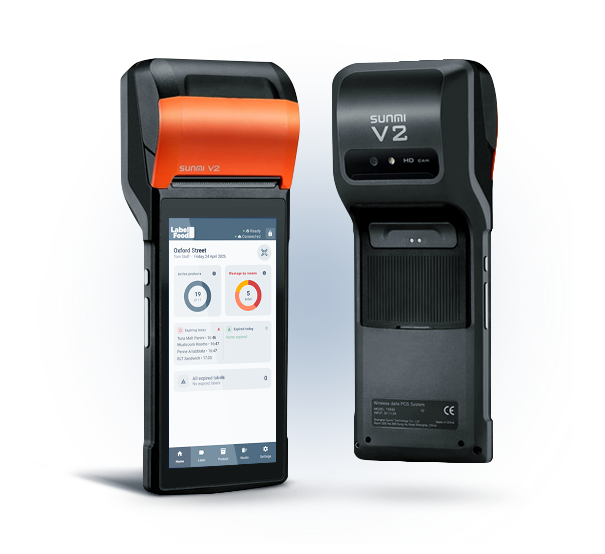
The LabelFood Printer SV2 is a standalone device that operates offline with cloud syncing. This ensures that your labelling process continues even if your internet connection fails. The hardware is built for the rigours of a professional workspace. One of its primary benefits is automated date calculation. This eliminates the manual errors often associated with handwritten prep labels. For businesses managing natasha’s law labelling requirements, the SV2 prints clear, professional ingredient lists for prepacked for direct sale (PPDS) food. Every label is legible and provides the specific information required by current UK legislation.
Real-Time Reporting via the Cloud Management Dashboard
Total oversight is achieved through the Cloud Management Dashboard, available on web and iOS/iPad only. There is no Android version. This platform allows kitchen managers to monitor activity across multiple sites from a single interface. You can track staff performance through individual PIN-attributed logs, ensuring that every task is accounted for. For rapid setup, the system offers AI-assisted menu onboarding. This tool reads photos or PDFs of your menu to populate your product catalogue. Crucially, this AI is a support tool; all data must be reviewed and edited by a user before it is published. This ensures that your allergen and ingredient information remains accurate and under your direct control. By centralising your data, you maintain a consistent standard across your entire business.
Securing Your 5-Star Standards for 2026
Maintaining a safe kitchen requires consistent discipline and precise documentation. Proactive mock audits and strict physical standards prevent small oversights from becoming major failures. Moving from paper-based folders to digital record-keeping removes the risk of lost or illegible logs. It ensures your data is always audit-ready. An eho visit is a verification of your daily professional standards. It should be a routine event rather than a source of panic.
By implementing a system that automates date calculations and tracks staff activity through individual PINs, you eliminate human error. This creates a stable environment where compliance is a constant. The LabelFood system is a complete solution trusted by UK commercial kitchens to manage these complex requirements efficiently. The LabelFood Printer SV2 is included with your subscription, providing durable hardware and instant Compliance Pack reporting for effortless audits.
You can take total control of your kitchen's data and reclaim your prep time. Book a demo of the LabelFood Printer SV2 system to streamline your food safety management. Professional standards are within reach.
Frequently Asked Questions
How often do EHO inspections happen in the UK?
Inspection frequency is determined by the risk category assigned to your business, ranging from A to E. Category A businesses represent the highest risk and receive inspections every six months. Category E businesses are the lowest risk and may only be visited every three years. In London, local authorities prioritise inspections based on the type of food handled and your previous compliance history. Your specific cycle depends entirely on these risk factors.
Do EHOs need to give notice before an inspection?
No, an eho has the legal right to enter your food premises at any reasonable time without prior notice. They typically arrive unannounced during trading hours to observe the true state of your kitchen operations. Refusing entry to an authorised officer is a criminal offence. You must ensure your kitchen is always audit-ready, as unannounced visits are the standard enforcement method for UK food safety legislation.
What is the difference between a 1-star and a 5-star hygiene rating?
A 5-star rating indicates that your food hygiene standards are very good across food handling, structural integrity, and management confidence. A 1-star rating means major improvement is necessary, often due to poor record-keeping or hygiene breaches. In a competitive London market, these ratings are public and directly influence customer footfall. A high rating proves you have total control over your environment, whilst a low rating signals systemic management failures.
Can an EHO shut down my business immediately?
Yes, if an inspector identifies an imminent risk to public health, they can serve a Hygiene Emergency Prohibition Notice. This notice requires you to cease trading immediately until the risk is removed. Common triggers for immediate closure include serious pest infestations, lack of hot water, or dangerous structural conditions. For non-imminent risks, they may serve an Improvement Notice, which allows you to continue trading whilst fixing specific compliance issues within a set deadline.
What are the 14 statutory allergens I need to label?
You must identify celery, cereals containing gluten, crustaceans, eggs, fish, lupin, milk, molluscs, mustard, peanuts, sesame, soya, sulphur dioxide, and nuts. It is a legal requirement to treat peanuts and nuts as separate categories. Your staff must be able to provide accurate allergen information for every dish. Using a digital labelling system ensures these allergens are consistently identified and emphasised on your prep labels, reducing the risk of human error during service.
Does Natasha’s Law apply to all food sold in my restaurant?
No, Natasha’s Law specifically applies to food that is prepacked for direct sale (PPDS). This includes items packaged on-site before a customer orders them, such as sandwiches or salads kept in a display fridge. It does not apply to food ordered from a menu and served immediately. For PPDS food, you must provide a label with the full product name and a complete ingredients list, with the 14 statutory allergens emphasised in the text.
How can digital records help me during an EHO visit?
Digital records provide a verifiable, time-stamped trail of your food safety activities. During an eho inspection, you can quickly generate a Compliance Pack or Staff Activity report from your management dashboard. This proves that temperature checks and cleaning tasks were completed as required. Digital logs eliminate the risk of lost or illegible paper records. They demonstrate to the inspector that you maintain high professional standards through a modern, organised management system.
What happens if I fail an EHO inspection?
Failing an inspection results in a low hygiene rating and likely an Improvement Notice detailing the necessary changes. You must resolve these issues within a specific timeframe or face further enforcement action, including potential fines or prosecution. In London, you may have to pay a fee for a re-rating visit. Recording food waste with photos and notes provides evidence of your corrective actions, helping you prove to the inspector that you have addressed the failures.