A single manual entry error on a sandwich label isn't just a mistake. It's a legal and safety liability your kitchen cannot afford. In the high-pressure environment of a professional UK kitchen, maintaining total PPDS compliance is a non-negotiable priority. You need a Natasha's Law label printer that works as hard as your chefs. Relying on handwritten notes or fragile hardware leads to the exact fines and risks you want to eliminate.
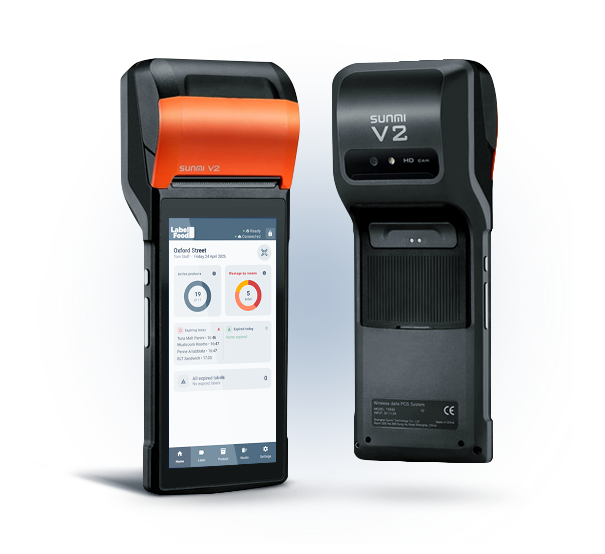
Managing 14 allergens across every pre-packed item is a complex task. You need a system that's reliable, kitchen-proof, and simple for staff to operate. This guide helps you choose a professional labelling system that ensures total compliance and streamlines your operations. We examine why standalone terminals like the LabelFood SV2 are now the industry standard. You'll learn how cloud-based management secures your data and how the right hardware reduces food waste across your business.
Key Takeaways
- Eliminate manual entry errors and legal risks by understanding the specific PPDS requirements for your food business.
- Choose a dedicated Natasha's Law label printer that functions as a standalone terminal to save space and survive harsh kitchen conditions.
- Streamline operations with cloud-based dashboards that centralise allergen data and push instant updates to the prep line.
- Identify the essential hardware specifications, such as thermal printing and durable casing, needed to maintain label legibility in cold storage.
- Maximise ROI by integrating food waste recording with your labelling system to improve both safety and profitability.
Understanding PPDS: Why Your Kitchen Needs a Natasha's Law Label Printer
Operational reliability is the foundation of a successful kitchen. Since October 2021, Natasha's Law has mandated that all food businesses in the UK provide full ingredient lists and highlighted allergens on Prepacked for Direct Sale (PPDS) food. This isn't a recommendation. It's a strict legal requirement. Manual labelling is no longer a viable strategy. It is prone to human error. It creates risks that lead to catastrophic allergen incidents. A dedicated Natasha's Law label printer removes these variables. It ensures every label is professional, legible, and audit-ready.
Kitchen safety is built on precision. Manual entry is the enemy of precision. Hand-writing ingredients or using basic stickers creates gaps in your safety net. A professional system closes those gaps. It provides a single source of truth for your allergen data. When your kitchen uses a digital system, you gain total control. You eliminate the guesswork that causes non-compliance. Every sandwich, salad, and snack leaving your prep station becomes a testament to your commitment to safety.
What Qualifies as PPDS Food?
PPDS refers to food packaged at the same site where it is sold, before the customer selects it. This distinction is critical. If a chef makes a sandwich and places it in a display fridge for later purchase, it is PPDS. Common examples include boxed salads in grab-and-go units, wrapped pastries in a cafe display, and pots of fruit prepared on-site. Internal prep labels used for stock rotation differ from customer-facing PPDS labels. PPDS labels must be comprehensive. They require every single ingredient to be listed in descending order of weight. This level of detail is impossible to maintain accurately without a Natasha's Law label printer.
The Legal Risks of Non-Compliance
Non-compliance carries severe consequences. Local authority inspections can result in unlimited fines. Beyond the financial impact, the reputational damage of a safety breach is often permanent. Compliance requires technical precision. You must highlight the 14 major allergens, typically by bolding them within the ingredient list. A digital system automates this formatting. It creates a permanent record of every label printed. This provides a clear audit trail for Environmental Health Officers (EHOs). If a supplier changes a recipe, you update the cloud dashboard once. The change pushes to the kitchen immediately. This ensures your labels are always accurate. It eliminates the danger of outdated printed stock or staff forgetfulness.
Core Features of a Professional Food Labelling System
Generic office label makers fail in professional kitchens. They aren't built for the grease, heat, or rapid pace of a prep line. A dedicated Natasha's Law label printer functions as a standalone terminal. It doesn't require a fragile tablet or a bulky PC to operate. This independence is vital. It saves valuable counter space. It removes the connectivity headaches common with multi-device setups. Reliability is the priority. Your equipment should stabilise your operations, not complicate them.
Hardware vs. Software: The Unified Approach
Separating your hardware from your software creates operational friction. You need a unified ecosystem. The LabelFood Printer SV2 provides this essential integration. It combines a heavy-duty terminal with a sophisticated cloud management dashboard. You manage your entire product database from a central office. The kitchen staff simply select and print. This ensures absolute consistency across every site. Whether you manage a single kitchen or a chain of London delis, your ingredient lists remain identical and accurate. Professional systems also automate the most tedious parts of compliance. They align with the official FSA guidance on PPDS labelling by automatically bolding the 14 regulated allergens. There is no manual formatting. There is no risk of a chef forgetting to highlight a specific ingredient.
User Interface and Speed
Speed defines your kitchen's success. A professional Natasha's Law label printer features a high-impact touchscreen designed for the reality of food prep. It responds to gloved hands. It resists moisture and debris. One-touch printing allows staff to generate labels for high-volume items, such as sandwiches or salads, in seconds. Wireless connectivity ensures the terminal stays synced with your cloud data. Any recipe changes made by management appear on the kitchen screen instantly. This frictionless flow keeps your team focused on production rather than troubleshooting software.
Managing ongoing costs is equally important. Professional food systems use thermal printing technology. This removes the need for expensive ink or toner cartridges. You only buy the labels. The result is a lower total cost of ownership and zero downtime caused by empty ink supplies. Labels remain crisp and legible even in chilled display units. If you want to eliminate human error and accelerate your workflow, upgrading to dedicated food labelling solutions is the most pragmatic choice for your business.
Standalone vs. PC-Linked Printers: Which Suits Your Kitchen?
Kitchen space is a premium asset. Every square inch must contribute to production. When selecting a Natasha's Law label printer, the fundamental choice lies between standalone terminals and PC-linked units. PC-linked printers require a local computer or laptop to function. This is impractical for most kitchens. Computers are magnets for flour, grease, and moisture. They require cooling fans that pull in airborne debris. They occupy valuable bench space that should be used for prep. Standalone units like the SV2 eliminate this burden entirely. They operate as a single, compact device. No external PC is required.
Reliability is a safety requirement. PC-linked systems introduce multiple failure points. If the computer crashes, the printer stops. If the connection cable fails, your compliance ends. Standalone systems are engineered for the harsh reality of a cooking environment. They resist the heat and humidity that destroy standard office hardware. They provide a stabilising force on your prep line. Your staff shouldn't have to leave the kitchen to print a label in a back office. They need a tool that works exactly where the food is packed.
The Case for Standalone Solutions
Standalone terminals reduce your 'tech footprint' to a minimum. You gain a cleaner, more organised workspace. There are fewer cables to manage and fewer components to clean. Hygiene is a critical factor. A single, sealed touchscreen is far easier to sanitise than a computer keyboard and mouse. By choosing a dedicated Natasha's Law label printer, you simplify your infrastructure. You remove the complexity that leads to staff frustration and operational delays. It's a pragmatic solution for a high-pressure environment.
Managing Multiple Sites
For operators with multiple locations, consistency is the ultimate challenge. Allowing individual branches to manage their own ingredient lists is a recipe for non-compliance. Local 'ad-hoc' changes create data silos. They lead to allergen discrepancies between sites. To maintain total control, multi-site operators must use professional allergen management software in the UK to sync data centrally.
A cloud-integrated system ensures that your safety standards are identical across every branch. You update a recipe in your head office. The new allergen data pushes to every standalone terminal instantly. Whether a customer buys a sandwich in Soho or South Kensington, they receive the same level of protection. This centralised autonomy allows you to scale your business without increasing your risk profile. It provides the peace of mind that every label printed across your entire estate is accurate, compliant, and audit-ready.

Choosing the Right Hardware: Durability and Compliance Standards
A professional kitchen is a hostile environment for electronics. Heat, steam, and airborne grease destroy standard hardware within months. Your Natasha's Law label printer must be built to survive these conditions. It requires high-impact polycarbonate or stainless steel casing. These materials protect sensitive internal components from oil splashes and flour dust. They also allow for rigorous cleaning. Hygiene is non-negotiable. Fragile office plastics simply won't suffice in a high-pressure workspace.
Legibility is a legal requirement. PPDS labels often contain long lists of ingredients in small fonts. If the text smudges or fades, you are no longer compliant. Direct thermal printing is the industry standard for a reason. It eliminates the need for ink ribbons or toner cartridges. This reduces ongoing costs. It also ensures labels remain crisp in chilled environments. Labels printed via direct thermal won't run when exposed to fridge condensation or oils. High-resolution printing, typically 203 DPI or higher, ensures that even the smallest allergen warnings remain perfectly readable for your customers.
Environmental Resilience
Kitchens are filled with 'gremlins'. Flour dust enters cooling fans. Steam corrodes circuit boards. Standard office printers are not sealed against these threats. A professional unit is designed with a minimal tech footprint and sealed interfaces. Speed is also a factor. Easy-load label rolls are essential. Your staff shouldn't struggle with complex threading during a busy lunch service. They need to swap rolls in seconds and get back to prep. For mobile stations, consider units with robust battery options. This allows you to print anywhere in the kitchen without trailing cables or searching for a power outlet.
Label Quality and Adhesion
The printer is only half the solution. The labels themselves must perform. They need to stick to containers that are cold, damp, or slightly oily. Standard adhesives fail in the fridge. They peel off, leaving your products unlabelled and non-compliant. You must choose between permanent and removable adhesives based on your workflow. Permanent labels are ideal for disposable packaging. Removable options are better for reusable containers. They must peel away cleanly without leaving a sticky residue. This maintains the professional appearance of your kitchenware and prevents bacterial growth on old adhesive.
Precision hardware ensures your safety standards never slip. If you are ready to secure your kitchen's future, explore our range of food labeling solutions today.
Deploying the LabelFood SV2: Total Compliance and Waste Management
The LabelFood SV2 is more than a Natasha's Law label printer. It functions as a complete kitchen compliance hub. While allergen safety is the priority, the system offers wider operational advantages. You can integrate food waste recording software directly into your workflow. This integration boosts your bottom line by identifying exactly where losses occur. You gain total visibility over your inventory. It transforms a mandatory safety task into a profit-protection strategy.
Automation eliminates the 'day dot' confusion that often plagues busy prep lines. The SV2 automatically calculates and prints prep date labels based on your specific shelf-life rules. This removes the risk of staff miscalculating expiry dates. Accuracy becomes the default. By centralising these processes, you future-proof your business against evolving UK food safety regulations. You stay prepared for future audits and legislative shifts before they happen. It's a stabilizing force in an unpredictable industry.
Beyond Natasha's Law: Waste Reduction
Efficiency drives profitability. You use the cloud dashboard to track which items are frequently wasted. This data allows for precise adjustments to your prep volumes. Digital logs replace messy paper records. They are easier to manage and far more reliable during health inspections. Accurate labelling also extends shelf-life awareness amongst your staff. When every container has a clear, professional label, stock rotation becomes a frictionless habit. You reduce food waste and improve your kitchen's overall behaviour through better data visibility.
Getting Started with LabelFood
Implementation is fast and decisive. You can set up your Natasha's Law software for small kitchen operations in a single afternoon. The SV2 interface is intuitive. Chefs learn the system in minutes. There is no complex software training required. Your team stays focused on the food, not the technology. To secure your compliance and streamline your prep line, requesting a demo or a site audit for your London business is the logical next step. Total control is within reach.
Secure Your Kitchen's Compliance Future
Total PPDS compliance requires more than just a sticker. It demands a robust, integrated system. You've seen why standalone hardware outlasts generic office tools in heat and grease. You understand how cloud-based data ensures consistency across every London site. A professional Natasha's Law label printer is the stabilising force your prep line needs. It removes human error. It automates the complex task of allergen highlighting. It protects your brand and your customers simultaneously.
The LabelFood SV2 is built specifically for UK commercial kitchens. It's already trusted by hospitality businesses across London. This system reduces label errors by 90%. It simplifies your workflow whilst ensuring every ingredient list is audit-ready. Don't risk non-compliance fines or manual entry risks. Request a Demo of the LabelFood SV2 Printer System to see the difference in your own workspace. Achieving total safety and operational efficiency is a direct path to long-term success.
Frequently Asked Questions
What information must be on a Natasha's Law label?
A compliant label must display the full name of the food and a comprehensive ingredients list. You are legally required to highlight any of the 14 regulated allergens, such as celery, gluten, or crustaceans, whenever they appear in the list. This formatting must be clear and distinct, typically achieved by bolding the text to ensure customers can identify risks at a glance.
Do I need a special printer for Natasha's Law compliance?
While the law does not mandate a specific brand, a dedicated Natasha's Law label printer is essential for operational reliability. Standard devices often lack the software integration needed to automate allergen bolding or manage complex ingredient databases. Using a professional terminal ensures your labels are always legible, durable, and fully compliant with PPDS standards without manual formatting errors.
Can I use a standard office printer for food labels?
Standard office printers are unsuitable for commercial food environments. They are vulnerable to heat, steam, and grease, which lead to hardware failure within months. Additionally, inkjet labels smudge when exposed to fridge condensation or oils. Professional thermal printers eliminate these risks. They use heat-sensitive technology that requires no ink and produces smudge-proof text that stays readable in the fridge.
How do I highlight allergens on my labels automatically?
Automatic highlighting is managed through integrated cloud software. You enter your ingredients into a central database, and the system identifies and bolds regulated allergens across your entire menu. This removes the risk of staff forgetting to highlight specific ingredients manually. When you update a recipe in the office, the changes push to your kitchen terminal instantly.
What is PPDS and does it apply to my cafe or restaurant?
Prepacked for Direct Sale (PPDS) refers to food packaged on the same premises from which it is sold before being ordered by the customer. This includes sandwiches, salads, or bakery items prepared on-site and placed in display fridges for grab-and-go purchase. If your cafe or restaurant pre-packages food for display, Natasha's Law applies to your business.
Is the LabelFood SV2 printer easy to set up for non-technical staff?
The LabelFood SV2 is designed for immediate deployment. The intuitive touchscreen interface mirrors modern smartphone logic, allowing chefs to select and print labels in seconds. Most teams require only a few minutes of training to master the basic functions. The setup process is streamlined to ensure your kitchen stays focused on food production rather than IT troubleshooting.
Does the system work for businesses with multiple locations?
The system is engineered for scalability across multiple sites. You manage all product data centrally via a cloud dashboard, ensuring that every branch prints identical, compliant labels. This centralised control prevents local errors and ensures your safety standards remain consistent across your entire estate. It provides total oversight from a single management login.
How does digital labelling help with food waste management?
Digital labelling systems provide real-time data on production and expiry. By recording what is printed and what is discarded, you identify patterns of over-production through the management dashboard. This transparency allows for precise adjustments to prep volumes. Accurate shelf-life labelling also ensures staff use stock in the correct order, which significantly reduces avoidable food waste.