Hospital admissions for severe food allergies in the UK have tripled over the last 20 years. For a high-pressure commercial kitchen, this isn't just a health concern; it's a massive legal liability. Relying on manual processes to manage complex ingredient data is a gamble you can no longer afford to take. Implementing a rigorous Natasha's Law audit checklist is the only way to ensure your labels remain accurate. The margin for error has disappeared.
You likely find that manual labelling is slow and notoriously prone to mistakes. It's inefficient. It's risky. It's difficult to track every minor ingredient change across multiple suppliers whilst maintaining a fast-paced service. This guide provides a comprehensive strategy designed to automate your compliance and eliminate human error. You will learn how to centralise control over your ingredient data and reduce the time spent on daily labelling. We provide the roadmap to pass your next inspection with zero non-compliances by replacing unreliable paper logs with digital precision. Master your food safety protocols and secure total peace of mind for 2026.
Key Takeaways
- Identify exactly which menu items qualify as Prepacked for Direct Sale (PPDS) to ensure your kitchen meets 2026 regulatory standards.
- Implement a 5-step Natasha's Law audit checklist to verify ingredient accuracy and manage supplier data with absolute precision.
- Transition from high-risk manual labelling to automated digital systems to eliminate human error during high-pressure prep shifts.
- Establish a culture of compliance by conducting mock audits and providing staff with centralised access to real-time allergen information.
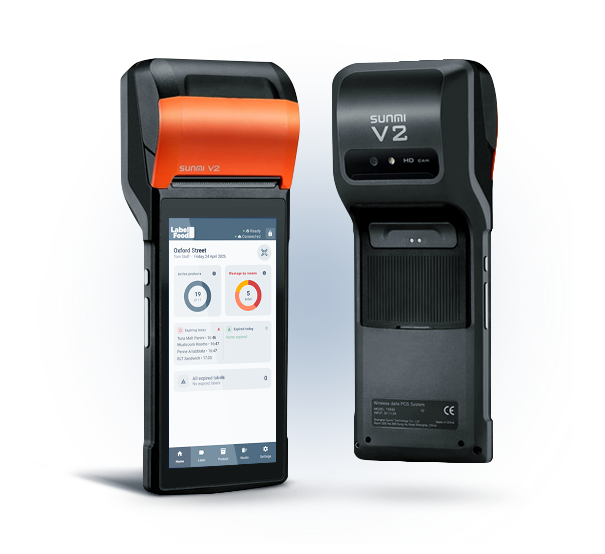
- Deploy the LabelFood Printer SV2 to synchronise cloud-based ingredient data directly with your hardware for a seamless, audit-ready workflow.
Understanding the Scope: Is Your Kitchen Natasha's Law Compliant?
The Food Information (Amendment) (England) Regulations 2019, widely known as Natasha's Law, remains the definitive standard for food safety in the UK. By 2026, the grace period for manual errors has ended. Environmental Health Officers (EHOs) now expect a level of accuracy that paper systems struggle to provide. Understanding the scope of this law is the first step in building an effective Natasha's Law audit checklist. It's about more than just listing ingredients; it's about total transparency and precision.
The law focuses on food that is Prepacked for Direct Sale (PPDS). This classification is the primary trigger for specific labelling requirements. If your kitchen prepares food on-site and packages it before a customer places an order, you must comply. The legislation ensures that customers with food allergies have access to clear, reliable information at the point of choice. In a high-pressure kitchen environment, identifying which items fall under this category is essential for maintaining compliance and protecting your patrons.
Defining PPDS in Your Specific Environment
Prepacked for Direct Sale (PPDS) food is defined by two specific criteria: where it is packaged and when it is packaged. If food is packaged before the customer orders it on the same premises from which it is sold, it is PPDS. This distinction is critical. A sandwich made to order does not require a full ingredient label; a sandwich made at 8:00 am and placed in a display fridge does. Any item fully or partly enclosed in packaging that cannot be altered without opening it must be labelled. Common examples in London kitchens include:
- Grab-and-go salads and grain bowls prepared for lunch service.
- Boxed pastries or cakes prepared in-house and displayed on counters.
- Pre-bagged rolls, baguettes, or wraps.
- Pot desserts or fruit snacks packaged for self-service.
Your Natasha's Law audit checklist must begin with a clear audit of every item packaged on-site. If it's in a container before the customer asks for it, it needs a label.
The Legal Risks of Incomplete Labelling
Non-compliance in 2026 carries severe consequences. Financial penalties are significant, but the reputational damage is often permanent. A single labelling error can lead to a failed audit, directly impacting your "Scores on the Doors" rating. In a competitive market, a low hygiene score is a public signal of operational failure. It erodes trust and drives customers elsewhere.
EHOs are increasingly focused on the reliability of your data. They look for consistency across your entire menu. If your records rely on handwritten notes or outdated printed sheets, you are vulnerable. Digital records are now the expected standard for demonstrating due diligence. Failure to declare any of the 14 major allergens correctly is not just a regulatory breach; it is a fundamental threat to customer safety. Precision isn't optional. It's a requirement for survival.
The Essential Natasha's Law Audit Checklist: 5 Critical Steps
Compliance is built on repeatable systems. A Natasha's Law audit checklist provides the structure needed to survive an unannounced EHO visit. It moves your kitchen from a state of reactive panic to proactive control. By following these five critical steps, you eliminate the ambiguity that leads to failed inspections. Precision is your best defence.
Step one is a full ingredient audit. You must list every component in descending order of weight. This includes the sub-ingredients found in pre-made sauces or spice blends. Step two requires constant supplier verification. Ingredients change frequently. You must manage cross-contamination risks by tracking these shifts in real time. Manual tracking is dangerous. A digital food labelling solution centralises this data, ensuring your printer always reflects the current recipe.
Menu and Ingredient Verification
Analyse your recipes with total precision. You must identify the 14 mandatory allergens amongst your ingredients. These include celery, gluten, eggs, and nuts. Be cautious with 'may contain' statements. Use them only when cross-contamination is a documented risk. Overuse can be seen as a failure to manage your kitchen environment properly. Your records must prove that you have accounted for every possible allergen source in the building.
Labelling Accuracy and Formatting Standards
Legality depends on visibility. Allergens must be emphasised using bold, italics, or a contrasting colour. The font must be legible. Specifically, the x-height must be at least 1.2mm for standard packaging. The product name must be clear and prominent. If a customer cannot read the label easily, you are in breach of the law. Automation is the only way to guarantee these formatting rules are applied to every single label without fail.
Step four involves your team. Review training records and competency logs. Every staff member must understand how to handle PPDS items correctly. Finally, step five is a hardware check. Inspect your labelling equipment and stock levels. Compliance stops the moment you run out of labels or your printer fails. Maintain a buffer of supplies to prevent operational gaps. A robust Natasha's Law audit checklist ensures that your hardware is as ready as your staff.
Beyond the Paper: Digitising Your Allergen Management
Paper systems are a liability in a modern kitchen. Relying on handwritten "day dots" or manual logs creates a fragmented compliance record that is difficult to verify during an inspection. A Natasha's Law audit checklist is only effective if the data supporting it is accurate and accessible. Transitioning to a digital system removes the guesswork. It replaces human frailty with technological precision. In a high-pressure environment, automation is the only way to guarantee that every label meets the strict Natasha's Law labelling requirements without exception.
Digital systems do not get tired. They do not forget to highlight allergens when a shift gets busy. By digitising your allergen management, you create a robust barrier against the common errors that trigger EHO warnings. This isn't just about speed; it's about building a defensive wall of data that proves your commitment to safety. When an inspector asks for your records, a digital log provides an instant, chronological history of every label printed. It is the definitive proof of due diligence.
The Failure Points of Manual Hand-Writing
Handwritten labels are notoriously unreliable. Poor handwriting often leads to customer confusion, which is a direct safety risk. Staff frequently omit specific allergens or fail to emphasise them correctly whilst rushing through prep. Inconsistency is another major failure point. Different prep teams might use different terminology for the same ingredient, leading to a chaotic and non-compliant display. These small, individual errors aggregate into a significant legal risk. Manual systems rely on 100% staff perfection, which is an unrealistic expectation in a commercial kitchen. Digital automation eliminates these variables entirely.
Implementing Cloud-Based Product Data
Centralisation is the key to scalable compliance. Using a cloud management dashboard allows you to manage your entire menu from a single interface. When a supplier changes an ingredient, you update the record once. This change instantly synchronises across every printer in your network. For businesses with multiple London sites, this "Global Update" capability is essential. It ensures that every location is printing the same accurate data simultaneously.
This digital infrastructure serves as your "single source of truth." It removes the need for local managers to maintain their own spreadsheets or paper folders. During an audit, you can demonstrate exactly when an ingredient was changed and why. This level of transparency is exactly what EHO inspectors look for in 2026. It shows total control over your supply chain and your labelling output. By integrating your Natasha's Law audit checklist with a digital dashboard, you move from hoping for compliance to guaranteeing it.
Preparing Your Staff for a Food Safety Inspection
Compliance is a collective responsibility. It is not just the manager's job. In the fast-paced London hospitality sector, high staff turnover is a reality that can undermine your safety protocols. You need a system that remains robust even when your team changes. Establishing a culture of compliance ensures that every staff member, from prep chefs to front-of-house, understands the critical nature of allergen labelling. It's about creating a standard that is followed without exception, every single shift.
A mock audit is the most effective way to test your readiness. Use your Natasha's Law audit checklist to conduct unannounced internal inspections. Select five random items from your display fridge. Verify the label against your master ingredient list. Check for allergen emphasis and font legibility. If your staff can't explain why a specific item is labelled as PPDS, your training has a weak point. Identify these gaps before an EHO does. To ensure your hardware is as prepared as your team, consider upgrading to a professional food labelling solution that automates these checks.
Training for Operational Consistency
Training must be continuous. It is not a one-off event. Regular allergen awareness workshops are essential for all prep staff. These sessions should cover the 14 mandatory allergens and the specific risks of cross-contamination. Standard Operating Procedures (SOPs) for labelling PPDS items must be clearly displayed in the kitchen. These SOPs should be the definitive guide for every staff member. Don't just tell them what to do; test their knowledge. Use competency logs to track who has completed training and when. This documentation is vital for proving due diligence during an audit.
Real-Time Record Keeping for Auditors
Modern UK food safety inspectors prefer digital records. They are cleaner, more accurate, and harder to falsify. A digital system provides an audit trail that paper logs cannot match. It tracks exactly who printed which label and at what time. This level of accountability encourages staff to take ownership of the labelling process. Maintaining a history of ingredient changes ensures full traceability across your entire menu. When an inspector asks for proof of your compliance history, you should be able to provide it instantly.
An 'Audit Folder', whether digital or physical, should be readily accessible. It must contain your training logs, supplier verification records, and your completed Natasha's Law audit checklist for the past six months. Transparency builds confidence with auditors. If you can demonstrate a chronological history of ingredient updates and staff training, you show total control over your operation. This level of preparation turns a high-stress inspection into a routine verification of your excellence.
Achieving Total Compliance with LabelFood Solutions
A checklist is a static document. It's a starting point. To maintain 100% accuracy in a live kitchen, you need a system that enforces your Natasha's Law audit checklist automatically. The LabelFood Printer SV2 is the industry benchmark for this level of precision. It moves beyond manual entry, ensuring that every label printed is legally compliant and audit-ready. This isn't just about printing; it's about establishing a foolproof infrastructure for food safety that protects both your customers and your business reputation.
By integrating your ingredient data with dedicated hardware, you remove the possibility of staff using the wrong font size or forgetting to bold an allergen. The system handles the technicalities whilst your team focuses on prep. This level of automation is why professional kitchens are moving away from generic office equipment in favour of specialised Natasha's Law label printers. It's the most pragmatic way to guarantee that your daily operations match your safety policies.
The LabelFood Printer SV2: Built for Audits
The SV2 is designed for the harsh realities of a commercial kitchen. It operates as a standalone unit, meaning you don't need to worry about complex third-party tablet integrations or fragile Bluetooth connections that fail mid-shift. The hardware is durable, built to withstand the heat and moisture of a busy workspace. Most importantly, it uses pre-formatted templates. These templates are hard-coded to meet UK legal standards. They ensure that ingredient lists are in descending order of weight and that all 14 mandatory allergens are emphasised correctly. When an EHO walks in, your labels provide the immediate proof of compliance they require.
Scaling Compliance Across London Locations
Managing a single kitchen is a challenge; managing dozens across London requires centralised control. Our Cloud Management Dashboard allows you to oversee 1 to 100 kitchens from a single interface. You can rollout menu changes or update allergen information across your entire estate instantly. This prevents the "local non-compliance" that often occurs when site managers are left to update their own records. It ensures a single source of truth for your entire brand.
Beyond labelling, the system allows you to integrate Food Waste Recording. This improves kitchen efficiency and provides a clearer picture of your stock management whilst you stay compliant. With UK-based support and a system designed specifically for the 2026 regulatory environment, you aren't just buying a printer. You're investing in a stabilising force for your operation. Every print becomes a completed line item on your Natasha's Law audit checklist, providing total peace of mind for you and safety for your customers.
Secure Your Kitchen with Digital Precision
Compliance in 2026 demands more than just awareness; it requires a systematic approach to data management. You've identified your PPDS items and established a culture of safety amongst your staff. Now, you must bridge the gap between policy and practice. A manual Natasha's Law audit checklist is a vital tool, but it's only as reliable as the hardware that executes it. Transitioning from paper logs to a centralised digital system eliminates the human error that leads to legal liability.
LabelFood provides the stability your operation requires. Our system is designed specifically for UK Food Information Regulations. Leading London commercial kitchens already rely on our hardware to maintain a 100% compliance record for our cloud users. Don't gamble with your hygiene rating. Start automating your safety protocols. Book a Demo of the LabelFood SV2 Printer and Cloud Dashboard to see how we simplify your workflow. Take control of your kitchen today. Total compliance is within reach.
Frequently Asked Questions
Is a Natasha's Law audit mandatory for small cafes in London?
Compliance is mandatory for every food business selling Prepacked for Direct Sale (PPDS) items, regardless of size or location. Environmental Health Officers in London include allergen labelling checks as part of their standard food hygiene inspections. Small cafes must meet the same rigorous standards as national chains to avoid improvement notices or financial penalties. Proof of due diligence is expected during every routine visit.
What are the 14 allergens that must be emphasised on PPDS labels?
The 14 major allergens are celery, cereals containing gluten, crustaceans, eggs, fish, lupin, milk, molluscs, mustard, tree nuts, peanuts, sesame seeds, soybeans, and sulphur dioxide or sulphites. These specific ingredients must be clearly emphasised on your labels using bold text, italics, or contrasting colours. This ensures they are immediately visible to any customer checking for potential triggers.
Can I still use hand-written labels if I include all the ingredients?
Handwritten labels are technically legal but represent a significant operational risk. Poor legibility or a simple oversight during a busy shift can lead to non-compliance and customer danger. Digital systems are the preferred professional standard because they ensure every label is legible, accurate, and formatted correctly. Relying on handwriting often fails the scrutiny of a modern safety inspection.
How much does a Natasha's Law compliant labelling system cost in 2026?
System costs vary depending on your kitchen's output and the level of automation required for your menu. You should evaluate the investment against the high cost of manual labour and the potential for heavy legal fines. Professional systems provide long-term value by reducing waste and ensuring your business remains audit-ready without constant manual oversight.
What happens if an EHO finds a mistake on my allergen labels?
An Environmental Health Officer can issue an immediate improvement notice or pursue a formal prosecution depending on the severity of the error. Mistakes directly impact your "Scores on the Doors" rating, which can cause permanent reputational damage. Using a Natasha's Law audit checklist helps you identify and correct these errors internally before an official inspector discovers them.
Do I need to list ingredients for food that is not prepacked?
Full ingredient lists are only a legal requirement for food that is prepacked for direct sale. For non-prepacked food, such as meals cooked to order in a restaurant, you must still provide allergen information. This can be delivered orally by staff or in writing on a menu or noticeboard. However, the 14 major allergens must always be identifiable upon request.
How often should I update my Natasha's Law audit checklist?
You should update your Natasha's Law audit checklist whenever you change a supplier or introduce new menu items. Ingredients in bulk-bought products can change without notice, making regular verification essential. Monthly internal audits are recommended to ensure your digital database remains a perfect reflection of the physical ingredients currently in your kitchen store.
Can the LabelFood SV2 printer handle both allergen and waste management labels?
Yes, the LabelFood SV2 is designed as a multi-functional standalone solution for commercial environments. It manages Natasha's Law compliance labels and food waste recording through the same interface. This centralises your kitchen's labelling tasks into one durable device, improving overall efficiency whilst maintaining a high standard of regulatory compliance.