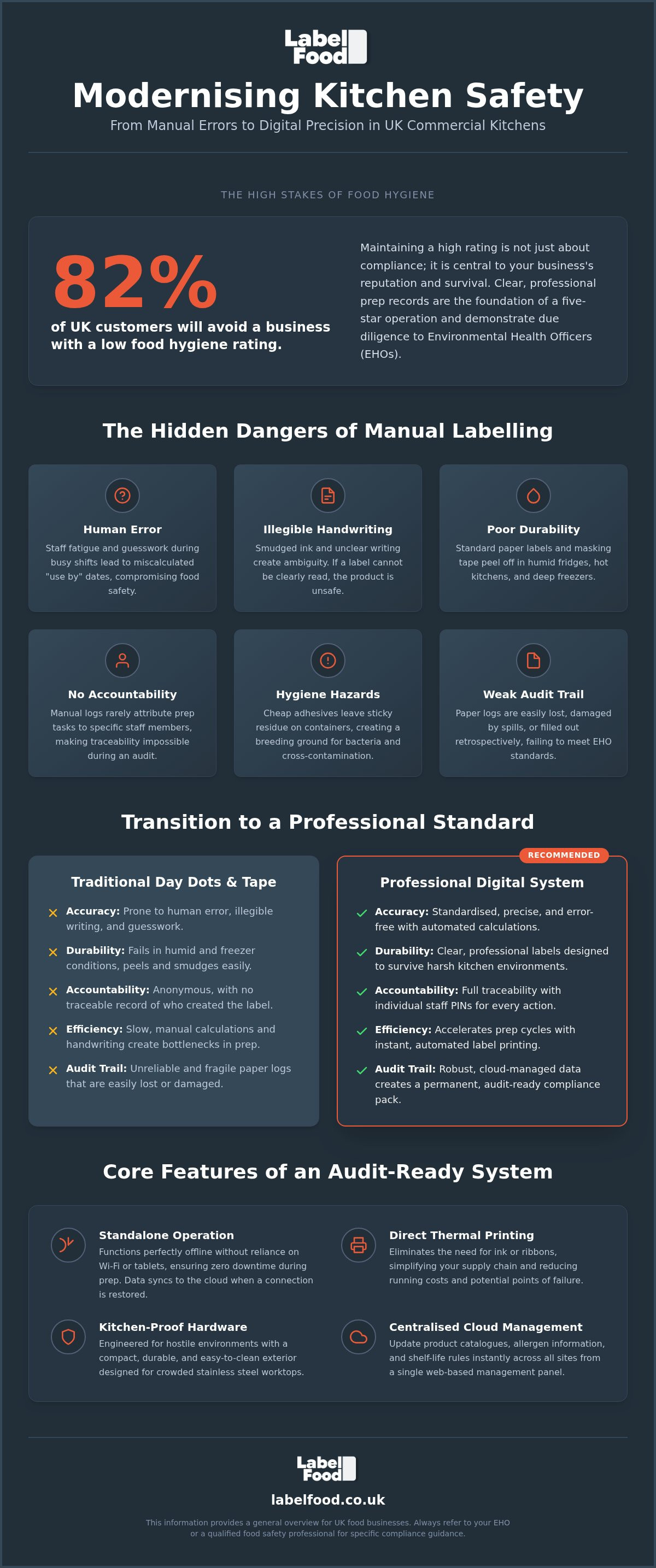
Did you know that 82% of UK customers will walk away from a restaurant with a low hygiene rating? It's a sobering figure that places food safety at the very centre of your business's survival. In a high-pressure environment, the difference between a five-star rating and a compliance failure often comes down to the clarity of your prep records. Maintaining a professional standard isn't just about the food; it's about the data behind it.
Manual labelling is a persistent bottleneck. Illegible handwriting on prep containers and labels that peel off in the freezer aren't just frustrating; they're a liability. You likely recognise the risk when staff miscalculate shelf-life during a frantic lunch service. Transitioning to a professional kitchen date label printer eliminates these human errors immediately. It replaces guesswork with precision, ensuring every container is marked with clear, durable, and accurate information that stands up to scrutiny.
This article explains how to move from unreliable paper logs to a digital labelling system that supports EHO compliance. You'll learn how to automate shelf-life calculations and maintain the audit-ready records required for modern inspections. We will cover the essential hardware and software needed to transform your kitchen into a model of efficiency, safety, and total regulatory confidence.
Key Takeaways
- Eliminate compliance risks by replacing unreliable manual "day dots" with a professional digital record system.
- Understand why a standalone kitchen date label printer is essential for maintaining operational speed in humid kitchen environments.
- Automate shelf-life calculations to remove human error and accelerate the daily prep cycle for your team.
- Compare the total cost of ownership between traditional labelling and digital systems to maximise your kitchen's budget.
- Build a robust, audit-ready compliance pack using cloud-managed data that simplifies the EHO inspection process.
The Risks of Manual Food Date Labelling in Commercial Kitchens
A kitchen date label printer is more than a convenience. It is a critical compliance tool. In a professional UK kitchen, food safety relies on the absolute accuracy of prep records. Manual systems, such as handwritten masking tape or generic "day dots," introduce unnecessary variables. They depend on the legibility of a chef's handwriting and their ability to perform mental arithmetic during a frantic prep shift. When these systems fail, the consequences range from avoidable food waste to severe regulatory penalties.
The primary role of a digital system is to standardise output. It removes the ambiguity of smudged ink and peeling stickers. If a label cannot be read, the product is unsafe. Professional hardware ensures that every container is marked with clear, durable data that survives the transition from a hot kitchen to a deep freezer.
Human Error and Food Safety Hazards
Staff fatigue is a reality in commercial catering. During busy shifts, the risk of miscalculating "use by" dates increases significantly. If a team member misinterprets Expiration date standards, the safety of the entire batch is compromised. Manual labelling offers no safety net. There is no automated calculation to catch a mistake before the label is applied.
Accountability is also a major concern. Manual systems rarely include staff attribution. Without individual PINs or digital tracking, you cannot identify who prepared a specific item or when the record was created. Physical hazards are equally problematic. Cheap adhesives often leave a sticky residue on containers. This residue becomes a breeding ground for bacteria and increases cross-contamination risks during subsequent use.
EHO Inspections and Professional Standards
Environmental Health Officers (EHOs) look for a "due diligence" defence. Clear, printed labels demonstrate that your kitchen operates with discipline. In England and Wales, a high Food Hygiene Rating depends on robust management systems. While Scotland uses the Food Hygiene Information Scheme, the expectation for clear, traceable labelling remains a universal standard across the UK.
Digital records are now the preferred audit standard. Paper logs are easily lost, damaged by spills, or filled out retrospectively. A kitchen date label printer linked to a cloud dashboard creates a permanent, unalterable record of all prep activity. This transparency simplifies inspections and proves to auditors that your kitchen maintains the highest professional standards at all times.
Essential Features of a Professional Kitchen Date Label Printer
A commercial kitchen is a hostile environment for electronics. High temperatures, steam, and airborne grease destroy standard hardware within months. A dedicated kitchen date label printer must be engineered for these specific conditions. It isn't just about printing a sticker; it's about absolute reliability under pressure. Professional standards require hardware that acts as a stabilizing force, not another point of failure in a busy service.
Hardware Durability and Connectivity
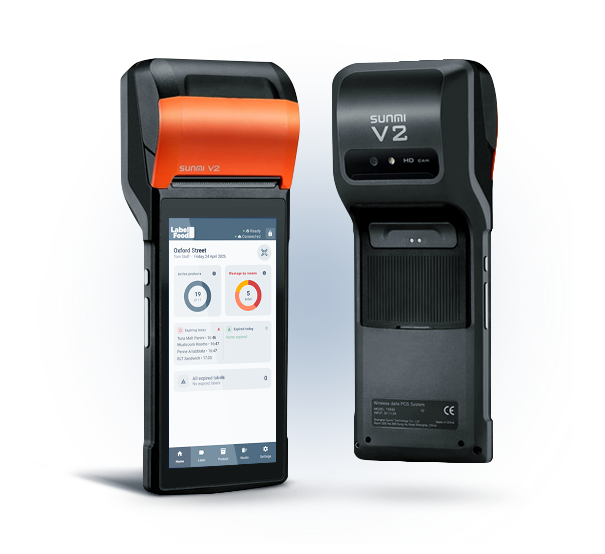
Standalone functionality is a non-negotiable requirement. Tablet-dependent setups introduce too many variables. If the Wi-Fi drops or the third-party tablet battery dies, your labelling stops. The LabelFood Printer SV2 operates with total autonomy. It functions perfectly offline during internet outages and syncs with the cloud once the connection returns. This ensures zero downtime during prep. Direct thermal technology is the industry standard for these devices. It eliminates the need for ink ribbons or cartridges. This simplifies your supply chain. One less consumable to manage. One less reason for the printer to stop working.
Space is a premium asset on any prep station. A compact, small-footprint design is essential to fit onto crowded stainless steel benches. The exterior must be durable and easy to clean to maintain hygiene compliance. Understanding Food Product Dating is vital for safety, but applying that knowledge requires a tool that survives the physical realities of the workspace.
Software Integration and Data Management
Hardware is only as effective as the data behind it. Managing menu changes across multiple sites is impossible with manual logs or disconnected devices. A web-based management panel allows for instant, centralised updates to product catalogues. AI-assisted onboarding tools now handle the heavy lifting of importing menu data and allergen information. This reduces the setup time from days to minutes. It ensures that every site uses the same accurate shelf-life calculations.
Accountability is built into the software layer. Individual staff PINs track every label printed, creating a transparent record of activity. This isn't about surveillance; it's about precision. When an EHO asks who prepared a specific batch, you have the answer in seconds. This level of control is why many operators are moving toward a complete food labelling system to unify their compliance efforts. It replaces fragmented processes with a single, authoritative digital record.
Comparing Digital Labelling Systems with Traditional Day Dots
Traditional day dots are a false economy. They appear cheap on a purchase order. In practice, they drain profit through hidden labour costs and compliance risks. A kitchen date label printer provides a data-rich alternative to simple colour coding. While day dots only indicate a day of the week, digital labels provide specific timestamps, staff IDs, and detailed ingredient lists. This clarity is the professional standard for modern UK kitchens.
Speed of application is a major differentiator. Selecting individual dots from a dispenser or writing on masking tape is slow. Printing a batch of labels takes seconds. Digital labels also utilise industrial-grade adhesives. They survive the transition from the hot pass to the freezer without curling or falling off. This reliability ensures a continuous audit trail. It prevents the "mystery container" problem that leads to unnecessary food disposal.
Accuracy and Regulatory Compliance
Accuracy is non-negotiable in food safety. Digital systems automatically calculate secondary shelf life once a product is opened. This eliminates mental arithmetic and the risk of human error during busy shifts. It also ensures you meet natasha’s law labelling requirements for PPDS items. Every label highlights the 14 statutory allergens in bold. This level of detail is impossible with manual dots. It protects your customers and your business simultaneously. It proves your commitment to safety during every EHO inspection.
Operational Efficiency and Waste Reduction
Morning setup becomes faster and more disciplined. You no longer waste time on manual date checking. Clear, printed labels allow for instant visual verification of stock levels and expiry dates. These systems also integrate seamlessly with food waste recording software. This connection identifies loss patterns in real-time. You see exactly what is being thrown away and why. It improves kitchen morale. Staff feel supported by professional tools that simplify their workload. Organisation becomes an automatic byproduct of the system.
How to Organise Your Kitchen Prep Workflow with Digital Labelling
Efficiency in a commercial kitchen is a product of structure. Integrating a kitchen date label printer into your daily prep cycle transforms stock management. It moves the kitchen from reactive, inconsistent labelling to a proactive, synchronised workflow. This transition requires a logical approach to data and staff habits to ensure total compliance.
Setting Up the Product Catalogue
A well-organised product catalogue is the foundation of speed. Group items by prep station or ingredient category, such as "Garde Manger" or "Sauces." This allows chefs to find specific products in seconds. For initial setup, use Excel imports to batch-upload large menus. This is far more efficient than manual entry. While AI-assisted menu onboarding handles the heavy lifting, a final human review ensures that shelf-life parameters match your specific kitchen standards.
During high-volume shifts, utilise bulk printing features. If you are portioning 50 salmon fillets, print 50 labels in one action. This eliminates the friction of manual dating. At the management level, use the system for total oversight. Generate a Compliance Pack or a Label Report to verify that all prep was recorded accurately. These digital records are instantly available for EHO review, proving your commitment to safety.
Waste management also becomes a digital task. Record food waste at the point of disposal using the printer's interface. Adding photos and notes provides context for why items were discarded. This data flows into your dashboard, helping you identify loss patterns that paper logs often obscure. To implement these workflows effectively, consider the LabelFood Printer SV2 as your central compliance hub.
Maintaining High Professional Standards
Discipline is maintained through accountability. Train your team to use individual staff PINs for every print job. This isn't about surveillance; it's about precision. Review the Staff Activity report weekly to identify training gaps or inconsistencies in labelling behaviour. It allows for targeted coaching rather than general reminders. It ensures that every team member understands their role in the safety chain.
Finally, treat the hardware as part of the kitchen. Incorporate printer maintenance into the daily closing checklist. A simple wipe-down ensures the device remains hygienic and free from grease build-up. This small step protects your investment and ensures the system is ready for the next service. Consistent maintenance mirrors the high standards you expect in every other area of food preparation.
The LabelFood Printer SV2: A Unified System for Kitchen Compliance
The LabelFood Printer SV2 is the established commercial kitchen labeling system UK standard. It represents a shift from fragmented tasks to a unified compliance strategy. By using a subscription model, your kitchen receives the hardware and cloud software as a single package. This removes the barrier of high upfront costs. It guarantees that your equipment and safety protocols are always current.
Actionable data is the core of the system. Dedicated reporting tools like the Compliance Pack, Label Report, and Staff Activity logs provide total transparency. These reports act as a silent partner during audits. They prove that your kitchen follows a disciplined, professional routine. Every label printed is a record of safety. Every staff action is tracked for accountability.
Managing Natasha's Law is no longer a manual burden. The system automates PPDS labelling, ensuring full ingredient lists and highlighted allergens are present on every pack. This precision is essential for customer safety and legal protection. It ensures your kitchen stays ahead of evolving UK food regulations without slowing down your service.
A Complete Compliance Ecosystem
The LabelFood Printer SV2 acts as a standalone compliance hub. It handles the physical demands of the kitchen whilst maintaining a digital link to your management team. A cloud dashboard synchronises data across multiple sites in real-time. Update a shelf-life parameter in the office and every kitchen date label printer in your group updates immediately. This level of control is the new professional standard for audit readiness.
Implementing the System in Your Kitchen
Setup is frictionless. You can move from unboxing to printing labels in minutes. The interface is designed for chefs, not IT experts. To maintain operational continuity, the subscription includes a label roll supply service. You won't face downtime due to missing supplies. The transition to digital accuracy is a logical step for any serious operator. Book a demo of the LabelFood SV2 system to see how this kitchen date label printer secures your efficiency.
Secure Your Kitchen's Regulatory Future
The transition from manual day dots to a professional digital system is a logical step for any high-performing kitchen. You have seen how manual errors in shelf-life calculation and illegible handwriting create unnecessary risks during EHO inspections. By implementing a dedicated kitchen date label printer, you replace these vulnerabilities with absolute precision and automated compliance. It is the most reliable way to ensure your food safety standards remain unshakeable.
The LabelFood Printer SV2 provides the hardware reliability and cloud-based oversight needed to manage multiple sites with total confidence. Every subscription includes the SV2 hardware and access to the Cloud Management Dashboard. This system is trusted by professional UK kitchens to maintain audit readiness and streamline daily prep cycles. It acts as a silent partner, handling the complexities of Natasha's Law and shelf-life tracking so your team doesn't have to.
Take the first step toward a more efficient, compliant operation. Book a demo of the LabelFood SV2 system to see how we can transform your food safety standards. Your kitchen deserves the professional standard.
Frequently Asked Questions
What is a kitchen date label printer and how does it work?
A kitchen date label printer is a dedicated hardware device engineered to automate food safety records. It uses direct thermal technology to print durable, ink-free labels for prep containers. The system works by linking to a pre-configured product catalogue, which automatically calculates secondary shelf life based on your specific kitchen standards. This ensures every container has a clear, accurate, and legible date without relying on manual mental arithmetic.
Do I need a special printer to comply with Natasha’s Law?
Natasha's Law requires all Prepacked for Direct Sale (PPDS) items to feature a full ingredient list with the 14 major allergens clearly emphasised. A standard date dot cannot provide this level of detail. You need a professional system like the SV2 that integrates with your menu data to print comprehensive labels. This ensures your business remains compliant with UK labelling regulations whilst protecting your customers from serious health risks.
Can I use a standard office printer for food date labels?
Standard office printers are unsuitable for commercial kitchen environments. They lack the heat and moisture resistance required to survive near a hot pass or in cold storage. Additionally, office ink and toner can smudge or bleed, compromising the legibility of safety data. A professional kitchen date label printer uses industrial-grade adhesives and direct thermal printing to ensure labels remain attached and readable from the freezer to the service line.
How does a digital labelling system help with EHO inspections?
A digital system provides a "due diligence" defence by creating unalterable, audit-ready records. Environmental Health Officers (EHOs) prioritise clear, professional labelling over handwritten logs. Using a kitchen date label printer allows you to generate Compliance Packs and Label Reports instantly. This transparency proves that your kitchen maintains a disciplined routine and follows a robust Food Safety Management System, which is essential for achieving a top hygiene rating.
What are the 14 allergens required on UK food labels?
Under UK law, you must declare 14 specific allergens: celery, cereals containing gluten, crustaceans, eggs, fish, lupin, milk, molluscs, mustard, peanuts, sesame, soybeans, sulphur dioxide or sulphites, and tree nuts. A professional labelling system handles this automatically by highlighting these ingredients in bold on every label. This removes the risk of staff omitting a critical allergen during a busy shift, ensuring your PPDS items are always legally compliant.
Does the LabelFood system work without an internet connection?
Yes, the LabelFood Printer SV2 is designed for total operational continuity. It functions perfectly without an active internet connection, allowing your team to continue labelling during a network outage. Once the connection is restored, the device automatically synchronises all print data and food waste records with the Cloud Management Dashboard. This ensures your digital audit trail remains complete without interrupting the flow of a high-pressure service.
Can I track food waste through my date label printer?
Food waste recording is a core feature of the LabelFood system. You can record discarded items directly through the SV2 printer interface, adding specific reasons and photo evidence at the point of disposal. This data is then aggregated in your dashboard to help identify loss patterns and improve stock management. It turns a compliance task into a powerful tool for reducing costs and improving kitchen efficiency.
Is the LabelFood software available for Android devices?
The LabelFood management dashboard is primarily accessed via a web-based portal or a dedicated iOS management panel. This allows multi-site operators to control product catalogues and review compliance reports from any location. The SV2 hardware itself acts as the primary interface in the kitchen, providing a standalone solution that doesn't require third-party tablets or mobile devices to function during the daily prep cycle.