Manual handwriting is no longer a viable kitchen strategy; it's a liability. With 54% of UK food and drink businesses now prioritising technology to combat skills shortages, relying on a felt-tip pen is an expensive risk. If you're looking for how to automate food prep labels, the shift starts with removing the human error variable. Inconsistent scrawls and missed allergen details don't just slow down your service. They jeopardise your compliance with Natasha's Law and create avoidable food safety risks during every shift.
The morning prep rush is chaotic enough without the added pressure of manual date calculations. You need a kitchen that runs like clockwork, where food safety is a silent, automated standard rather than a source of constant worry. This guide will show you how to digitise your workflow to eliminate handwriting, ensure absolute compliance, and slash labour costs. We'll walk through the hardware essentials and cloud management steps required to build an audit-ready system that protects your customers and your bottom line.
Key Takeaways
- Eliminate the "hidden tax" of manual handwriting by switching to digital thermal printing for instant, accurate labels.
- Guarantee Natasha’s Law compliance with automated systems that highlight allergens in bold and manage PPDS requirements effortlessly.
- Master how to automate food prep labels through a logical 5-step transition from manual lists to a centralised cloud dashboard.
- Choose standalone hardware like the SV2 to maintain kitchen focus and reliability without the distractions or fragility of tablet-based apps.
- Reduce food waste and improve stock tracking by digitising your kitchen’s operational data for better EHO audit readiness.
Why Manual Food Prep Labelling is Costing Your Kitchen
Automated food prep labelling is the use of digital thermal printers to generate accurate, compliant stickers in seconds. It represents a fundamental shift from manual error to digital precision. For many UK operators, the decision to upgrade is driven by the sheer inefficiency of the status quo. Handwriting is not just slow; it is a source of operational friction that erodes profit margins over time.
The "Hidden Tax" of manual labelling is often overlooked in daily P&L reviews. Every minute a chef spends squinting at a calendar to calculate a use-by date is a minute lost to service. These small fragments of time aggregate into hundreds of lost labour hours every year. When managers ask how to automate food prep labels, they are looking to reclaim that lost time and reinvest it into the quality of the food.
The Labour Cost Breakdown
Whilst 15 minutes of handwriting might seem negligible during a slow shift, it shrinks to just 2 minutes with automated printing during a rush. This efficiency allows staff to focus on high-value prep rather than repetitive administration. Reducing these tedious, manual tasks also improves kitchen morale. It removes a common point of frustration, helping to lower staff turnover in an industry where retention is a constant challenge.
Traditional "Day Dots" are no longer sufficient for modern UK food labelling regulations. These legacy systems rely entirely on human memory and manual calculation. Both are prone to failure during high-pressure service. Illegible handwriting leads to unnecessary food waste when staff discard items they cannot identify. Worse, it creates allergen risks that can lead to severe legal penalties. Understanding how to automate food prep labels removes the guesswork by pulling data directly from a pre-configured cloud database.
EHO Audits and Professionalism
Digital labels create an immediate compliance-first impression for inspectors. They signal that your kitchen prioritises precision and safety over convenience. Unlike handwritten ink that often fades, smudges, or peels in high-humidity kitchen environments, thermal labels remain crisp and legible. This system standardises output across multiple sites, ensuring brand consistency and providing a clear, digital audit trail. It transforms a messy, inconsistent process into a professional, reliable operational standard that protects both the customer and the business.
Selecting the Right Automation Hardware and Software
Selecting the right system involves more than just picking an app. You need a solution that survives the physical reality of a busy kitchen. Heat, steam, and grease are constant threats. Consumer tablets often fail under these conditions. Screens crack. Charging ports clog. Bluetooth connectivity drops at the worst possible moment. These are risks you cannot afford when compliance is on the line.
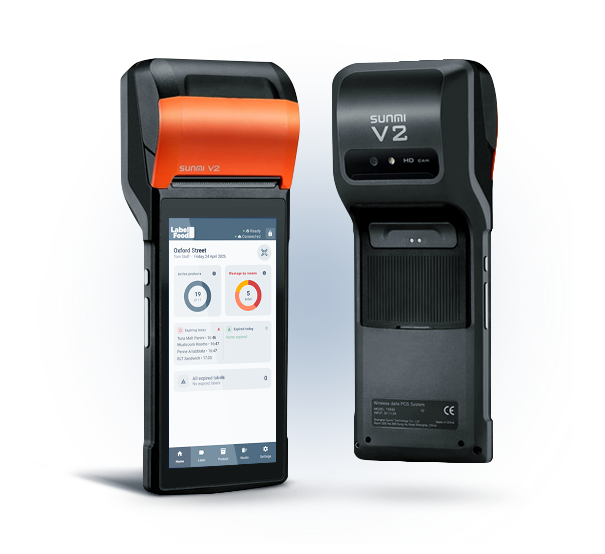
Dedicated hardware like the SV2 eliminates these points of failure. It is a standalone system. No tablet is required. No pairing is necessary. You simply turn it on and print. This reliability is why professionals choose purpose-built tools over generic consumer hardware. When researching how to automate food prep labels, focus on systems with reinforced polycarbonate casings. They are built for the rigours of the line. A dedicated label food printer ensures that your labelling station is always ready, acting as a stabilising force in a high-pressure environment.
Thermal printing technology is the industry standard for a reason. It uses heat rather than ink or toner. This is critical. Ink smudges in humid environments. Toner runs out during the lunch rush. Thermal labels remain crisp and legible, which is a key requirement mentioned in the official UK government overview of food safety. If a label isn't legible, it isn't compliant.
Why Dedicated Hardware Matters
Standalone printers reduce operational friction. They operate independently of external devices. This removes the "middleman" of a tablet or smartphone. There is no software update to crash the connection. There is no fragile screen to shatter. By removing the need for Bluetooth pairing, you eliminate the most common technical support issue in digital kitchens. You want a tool that works every time the button is pressed.
The Role of the Cloud Dashboard
Hardware provides the output, but the Cloud Management Dashboard provides the control. This is where you centralise your product data. You can update an allergen or a shelf-life date once and sync it to every printer in your estate instantly. This scalability is vital. Whether you manage one café or a national chain, the dashboard ensures total consistency across all sites.
Centralising your data prevents "rogue" labels. It ensures that every site follows the same safety protocols. This level of control is a major factor in the food labeling system ROI. It reduces waste by ensuring dates are always calculated correctly. It protects your brand by ensuring every label meets professional standards. Automation is about peace of mind. It allows you to manage your inventory with absolute precision.
How to Automate Food Prep Labels: A 5-Step Plan
Transitioning from manual scrawls to a digital system requires a methodical approach. It is not merely about plugging in a device; it is about building a reliable operational framework. When you understand how to automate food prep labels, you move from a reactive kitchen to a proactive one. This 5-step plan ensures a seamless integration that protects your margins and your customers.
Step 1 & 2: Preparing Your Data
Success begins with a comprehensive audit. Review your entire prep list. Organise every ingredient into logical categories such as Proteins, Sauces, and Garnish. This structure prevents menu clutter on the printer screen. You must then assign precise "Use By" and "Best Before" rules to every item based on your HACCP guidelines. Do not leave this to staff discretion.
Once your list is defined, map all allergen data to each specific product. This is non-negotiable for Natasha's Law compliance. Centralise this information in your Cloud Management Dashboard. This dashboard acts as the single source of truth for your entire estate. An update made here reflects on every printer instantly. It ensures total data consistency across multiple sites without manual intervention.
Step 3 & 4: Implementation and Training
Deploy your standalone hardware, like the LabelFood Printer SV2, directly in the prepping centre. It must be positioned exactly where the work happens. Minimalist interfaces are essential for fast staff adoption. A "click-and-print" workflow reduces the cognitive load on chefs during a busy shift. They shouldn't have to think about the technology. They should only have to use it.
Set up specific user permissions within the dashboard. This maintains data integrity by preventing unauthorised changes to shelf-life dates or allergen information. Training should focus on speed and accuracy. Because the system is standalone, there is no Bluetooth pairing or tablet troubleshooting to teach. Staff simply select the item and print. It is a frictionless process designed for high-pressure environments.
The final step is integrating Food Waste Recording. This feature allows you to monitor and reduce food loss by tracking what is discarded. It provides the data needed to adjust prep levels and improve stock management. Learning how to automate food prep labels is the first step toward a more efficient, audit-ready kitchen. By following this plan, you transform your labelling station into a comprehensive kitchen management tool. It is the definitive answer to the complexities of modern food safety.

Ensuring Compliance with Natasha’s Law and EHO Standards
UK kitchens operate under some of the most rigorous food safety requirements in the world. Natasha’s Law mandates that all Prepacked for Direct Sale (PPDS) foods must carry a full ingredients list. This list must specifically emphasise the 14 major allergens. Relying on manual handwriting for these complex requirements is a significant risk. Mistakes are inevitable during a busy service. In contrast, knowing how to automate food prep labels ensures that your grab-and-go items meet every legal standard without manual input.
Automation removes the "human error" variable from your compliance strategy. When a chef selects a product on the SV2, the system pulls the exact ingredient profile from your Cloud Management Dashboard. There is no risk of a chef forgetting to list an ingredient or failing to highlight an allergen. The labels are generated with absolute precision, providing a professional standard that protects your customers and your business. To maintain this level of accuracy, many operators are turning to food labeling solutions that integrate hardware and software into a single, reliable workflow.
Natasha’s Law: Beyond the Basics
Automated systems take the complexity out of allergen management. They automatically bold the 14 major allergens as required by law. This ensures that every label is compliant before it even leaves the printer. Clear, standardised labelling also reduces the risk of cross-contamination by providing staff with unmistakable visual cues. For a deeper look at managing these requirements across multiple sites, see our guide on allergen management software UK.
Audit Readiness and Digital Records
Environmental Health Officers (EHOs) prioritise consistency and traceability. Paper logs are often incomplete, smudged, or missing. Digital history replaces these unreliable records with a clear, unalterable audit trail. Automated timestamps provide definitive proof that your kitchen follows strict First In, First Out (FIFO) rules. You can track exactly when a batch was prepped and when it expires. Automated labels provide total traceability for every prep batch by recording the exact user, time, and ingredient profile used.
This digital transition makes inspections frictionless. Instead of searching through folders of paper, you can demonstrate compliance with a few clicks. The system records every label printed, creating a robust "due diligence" defence. It shows that you have a controlled, professional system in place. Modern kitchens don't leave safety to chance. They use technology to make compliance an inevitable part of the daily routine.
Streamlining Operations with the LabelFood SV2 System
The LabelFood SV2 system is the professional standard for UK operators who want to eliminate the chaos of manual labelling. It is a standalone powerhouse. It was engineered specifically for the rigours of the line. Unlike generic printers that require external apps, the SV2 operates independently. This removes the distraction of consumer tablets. It keeps your chefs focused on the food. By implementing this level of automation, kitchens can see productivity improvements of up to 30%. Understanding how to automate food prep labels is not just about stickers; it's about reclaiming your kitchen's efficiency.
The SV2 Advantage
Space is at a premium in London kitchens. The SV2 features a compact footprint that fits into even the most restricted prepping centres. Its built-in touchscreen removes the need for external devices or unreliable Bluetooth pairing. You get a unified system that works right out of the box. For a full breakdown of the hardware capabilities, view the technical specifications for the LabelFood Printer SV2. This reliability provides the peace of mind that comes with knowing your compliance is handled by a dedicated tool.
Reducing Waste and Increasing Profit
Automation extends beyond the initial prep cycle. The SV2 includes integrated food waste recording. This turns your printer into a powerful cost-saving tool. Staff can record exactly why items are being discarded directly on the device. This data syncs to your cloud dashboard, allowing you to adjust prep levels based on real-world usage. It transforms a simple labelling task into a high-level management insight.
Using digital food waste recording software allows you to identify trends and stop profit from leaking out of your bins. It provides the visibility needed to manage stock with absolute precision. When you learn how to automate food prep labels with an integrated waste module, you gain total control over your inventory. This is backed by London-based support and cloud management. You aren't just buying a printer; you're installing a silent, expert partner that ensures your success.
Future-Proof Your Kitchen Operations
Digitising your prep workflow is no longer a luxury. It is a fundamental requirement for operational safety. You've identified the risks of manual handwriting and the hidden costs of labour inefficiency. Transitioning to a digital standard ensures your kitchen remains audit-ready and profitable. By implementing a clear plan for how to automate food prep labels, you remove the guesswork from allergen management and stock rotation. The result is a more disciplined, high-performance environment.
The shift to a standalone system provides the absolute reliability required on the kitchen floor. No tablet or PC is required for operation. This removes common points of failure and keeps your team focused on the pass. Trusted by London’s busiest commercial kitchens, the SV2 is specifically designed for UK Natasha’s Law compliance. It acts as a stabilising force in a high-pressure workspace.
Upgrade your kitchen with the LabelFood SV2 Printer and take total control of your compliance. Efficiency is an inevitable outcome when you have the right tools in place.
Frequently Asked Questions
Do I need an internet connection to print food prep labels?
No, the SV2 printer does not require a constant internet connection to function on the line. It stores your product data locally. You only need a connection to sync new menu items or update shelf-life rules from the cloud dashboard. This ensures your kitchen remains operational even if your Wi-Fi drops during a busy service.
How does an automated system help with Natasha’s Law?
The system automates the bolding of the 14 major allergens and prints full ingredient lists as required by UK law. By pulling data directly from a centralised dashboard, it removes the risk of staff forgetting to highlight a specific allergen on a handwritten label. It ensures every PPDS item is 100% compliant before it reaches the customer.
Can I customise the labels with my restaurant logo?
Yes, the cloud dashboard allows for total brand customisation. You can upload your restaurant logo, choose specific fonts, and organise the layout to match your brand identity. This standardisation ensures that your labels look professional and consistent across every site in your estate, whether you operate one café or a national chain.
Is it difficult to train staff on a digital labelling system?
Training is exceptionally fast because the interface is designed for high-pressure environments. Most staff master the "click-and-print" workflow in under five minutes. Because the SV2 is a standalone device, there are no tablets to pair or complex apps to navigate. It is a purpose-built tool that fits naturally into existing prep routines.
How much time can a kitchen save by automating prep labels?
Automating your workflow can reduce a 15-minute manual handwriting task to just 2 minutes of digital printing. Over a single week, this reclaims hours of labour that can be reinvested into food quality and service. Learning how to automate food prep labels is one of the most effective ways to increase overall kitchen productivity and reduce administrative friction.
What happens if my menu changes frequently?
Menu updates are instantaneous. You simply update the product details in the cloud management dashboard and push the changes to your printers. Every device in your kitchen updates within seconds. This agility is vital for seasonal specials or rapid allergen changes, ensuring your team never prints outdated or incorrect information.
Does the SV2 printer require expensive ink cartridges?
No, the SV2 uses direct thermal technology which requires no ink or toner. It uses heat to create the image on the label. This eliminates the cost of replacement cartridges and ensures you never run out of ink during a rush. The only consumables required are the label rolls themselves, making it a highly cost-effective solution for busy kitchens.
Are the labels waterproof and heat-resistant?
Yes, the labels are engineered for the rigours of a professional kitchen. They are moisture-resistant and designed to withstand the humidity of a prep station and the cold of a walk-in freezer. They won't smudge, peel, or fade when exposed to steam or condensation. This durability ensures that your safety data remains legible for the duration of the product's shelf life.