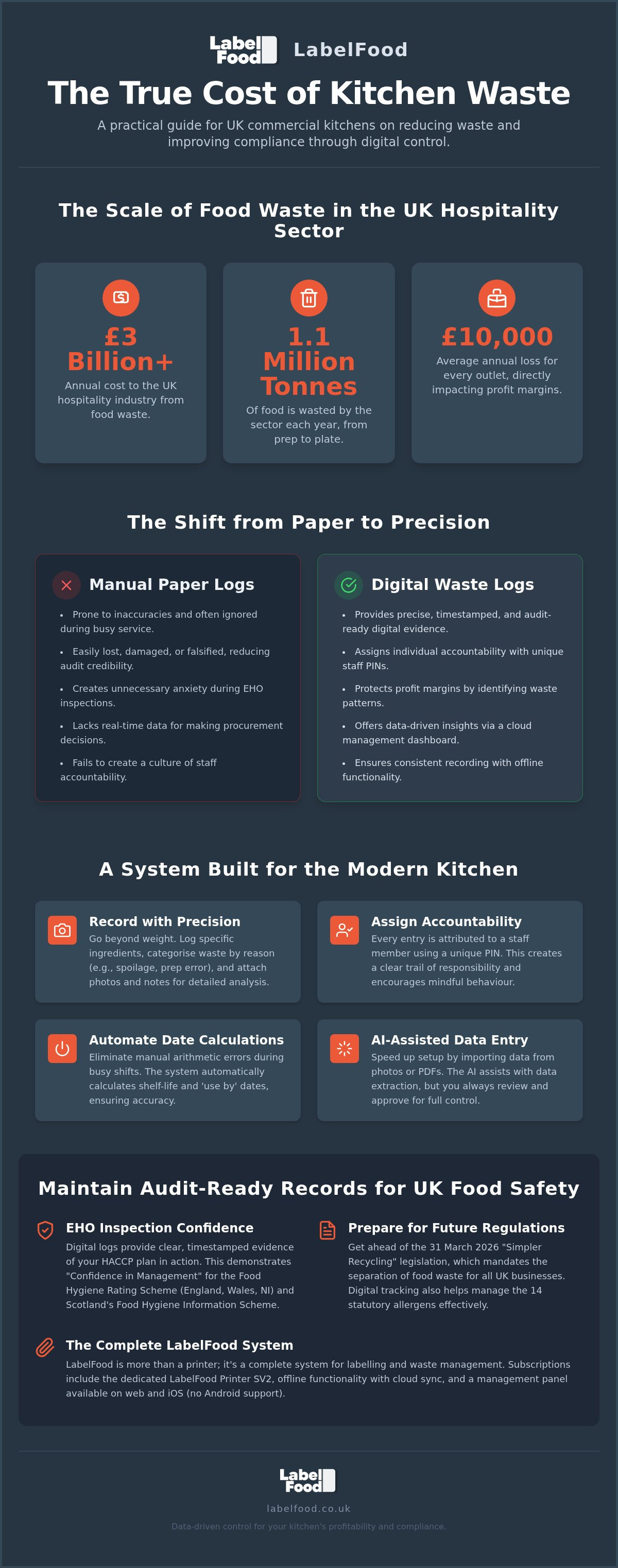
The UK hospitality sector produces 1.1 million tonnes of food waste every year. This volume costs the industry over £3 billion annually, representing an average loss of £10,000 for every outlet. You're likely aware that high ingredient costs are eroding your margins, yet manual paper logs remain a persistent bottleneck. They're often inaccurate, easily ignored during a busy service, and create unnecessary anxiety during EHO audits.
Adopting professional food waste log software transforms this liability into a streamlined digital asset. It's a pragmatic step to stabilise your kitchen operations and recover lost profits. This guide explains how to implement a digital system to reduce waste costs, maintain audit-ready records, and improve staff accountability through individual tracking. We'll examine the specific regulations affecting UK kitchens and the practical steps required to move from paper to a more efficient, data-driven workspace. You'll learn how to use digital records to gain total control over your inventory and compliance status.
Key Takeaways
- Understand how digital recording protects your profit margins and provides audit-ready evidence for EHO inspections.
- Learn to implement food waste log software to replace inefficient paper systems with precise, PIN-attributed digital entries.
- Discover how to use automated date calculations and AI-assisted data entry to eliminate manual arithmetic errors during busy shifts.
- Establish a clear protocol for staff accountability by defining specific waste categories and assigning individual staff PINs.
- Explore the benefits of a unified system using the LabelFood Printer SV2 and a cloud dashboard accessible on web and iOS devices.
The Financial and Regulatory Impact of Food Waste in UK Kitchens
Food waste log software is a digital tool for recording every discarded ingredient and prepared item in a professional environment. It replaces the inconsistent habit of using paper logs or relying on memory. By capturing data at the point of disposal, kitchens gain a precise view of their inventory losses. This transition from traditional paper "day dots" to digital compliance records is now a necessity for modern kitchen management. It provides a level of oversight that manual systems simply cannot match.
The financial impact of food waste in the United Kingdom is significant. The hospitality sector produces 1.1 million tonnes of waste annually, costing the industry over £3 billion. For the average outlet, this equates to a loss of £10,000 every year. These figures represent more than just the cost of raw ingredients; they include wasted labour and energy. Implementing food waste log software allows you to see exactly where these pounds are disappearing. High ingredient costs are currently eroding margins across the UK. Reducing waste is the most direct way to protect your bottom line and recover lost capital.
Meeting UK Food Hygiene Standards
Digital logs are essential for satisfying EHO inspectors during food hygiene audits. In England, Wales, and Northern Ireland, the Food Hygiene Rating Scheme (FHRS) rewards "Confidence in Management." Scotland operates under the separate Food Hygiene Information Scheme, but the requirement for robust record-keeping remains identical. Digital records demonstrate that your HACCP plan is active and monitored. Paper logs are often viewed as less reliable because they are easily falsified, stained, or lost. A digital system provides a transparent, timestamped history of your kitchen's behaviour. It shows inspectors you're in control of your stock rotation and shelf-life management, including the handling of the 14 statutory allergens.
The Real Cost of Kitchen Waste
True waste costs are often hidden in prep areas. While plate waste is visible to front-of-house staff, prep waste from over-ordering or poor storage is frequently overlooked. You need to calculate the loss by combining ingredient costs with the labour required to process them. Digital tracking identifies these patterns. If you're consistently binning a specific product, your procurement needs adjustment. This data-driven approach stops unnecessary expenditure before it happens. It also ensures you're ready for the 31 March 2026 "Simpler Recycling" legislation, which mandates the separation of food waste for all UK businesses. Using food waste log software turns a regulatory burden into a management advantage.
How Food Waste Log Software Operates in a Professional Environment
Professional food waste log software operates as a central nervous system for kitchen efficiency. It eliminates the guesswork of manual tallying. Data entry is handled through manual input or AI-assisted reading of PDFs and photos. Crucially, the AI functions as a tool for user review and editing. It never publishes data autonomously. This ensures the head chef or manager maintains total control over the accuracy of every record.
Accountability is the foundation of a successful system. Every entry requires an individual staff PIN for attribution. This creates a clear trail of responsibility. It stops the anonymous waste culture that often exists with paper logs. Managers can see exactly who recorded an item and the reason for the disposal. This level of detail is essential for multi-site operations managed via a cloud-based dashboard. These management panels are available on web and iOS only, providing real-time oversight from any location. No Android version is currently supported.
Kitchens are frequently situated in areas with poor connectivity, such as basements or reinforced structures. Professional systems must include offline functionality to remain reliable. Data is stored locally on the device during the shift. It syncs automatically with the cloud management dashboard once a connection is re-established. This ensures no data is lost during the high-pressure environment of a busy service.
Recording Waste with Precision
Recording the weight of a bin bag is insufficient for meaningful change. You need specific context. Adding photos and notes to waste entries allows for detailed management review later. You can categorise waste by specific reasons like spoilage, prep error, or expired shelf life. This aligns your operations with the UK government's food waste hierarchy, which focuses on prevention. If a manager sees a photo of a burnt batch of prep, they can address the specific training gap. Integrating these tools with a complete food labelling system ensures every item is tracked from arrival to disposal.
Reporting and Staff Activity Tools
The "Staff Activity" report identifies where additional training is required. If one team member consistently records high volumes of prep waste, you can step in to improve their knife skills or portion control. For external audits or EHO inspections, the "Compliance Pack" generates a comprehensive record of your kitchen's history. You can also analyse the "Label Report" to compare the volume of prep labels printed against the amount of waste recorded. This ratio is a vital indicator of your kitchen's overall efficiency and profitability.
Digital vs Manual Systems: Evaluating Your Kitchen Requirements
Speed is the primary differentiator between manual recording and digital systems. Writing on paper sheets takes time that busy kitchen staff don't have. Entries are often scribbled or delayed until the end of a shift. This leads to inaccurate data. Professional food waste log software captures information in seconds. It allows staff to return to their prep work immediately. The transition from mental arithmetic to automated calculation removes the risk of human error in shelf-life tracking. You no longer rely on a junior chef to correctly calculate a three-day expiry during a high-pressure service.
The Limitations of Paper Logs
Paper logs are fundamentally unsuitable for grease-heavy kitchen environments. They become illegible or physically damaged over time. Aggregating this data for monthly cost reports is a labour-intensive process. It often involves hours of manual data entry into spreadsheets. There's also the risk of "retrospective filling." Staff may fill in missing entries just before an audit to avoid trouble. This undermines the integrity of your records and puts your hygiene rating at risk. Modern initiatives like Guardians of Grub emphasise the need for accurate, real-time tracking to truly impact waste reduction. Digital systems ensure that every entry is timestamped and verified at the moment of disposal, providing a transparent history for EHO inspectors.
Why Integrated Hardware Matters
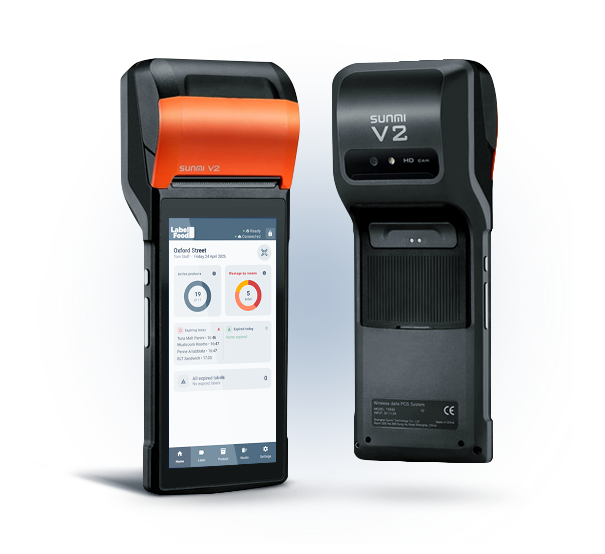
Dedicated hardware like the LabelFood Printer SV2 offers durability that consumer tablets lack. Consumer devices are fragile and often serve multiple purposes. They get lost, run out of battery, or are used for non-work tasks. A standalone system is more reliable because it stays in one place and is built for the physical realities of a professional workspace. The SV2 printer communicates directly with the waste log, reducing the number of steps required to document discarded items. This integration ensures that labelling and waste management are part of a single, frictionless workflow. It prevents the "lost tablet" scenario and keeps the focus on kitchen compliance. By using food waste log software on dedicated hardware, you ensure the system is always ready when the kitchen is at its busiest. This reliability is essential for maintaining a stable, efficient operation across multiple sites.
Establishing a Waste Recording Protocol for Your Staff
Implementing food waste log software requires a structured approach to ensure staff adoption. A protocol transforms the software from a tool into a daily habit. Start by defining waste categories specific to your menu. Common categories include out-of-date stock, over-production, and preparation errors. Clear definitions prevent confusion during busy shifts. They ensure that the data you collect is consistent and actionable. Without these categories, your reports will lack the detail needed for effective decision-making.
Assign each team member an individual PIN. This ensures every entry is attributed to a specific person. It fosters a culture of accountability and stops the anonymous waste culture that often exists with paper logs. Integrate the logging process into existing workflows. Staff should record waste immediately after completing prep or at the end of their shift. Making it a mandatory step in the "close-down" procedure ensures data completeness. A system is only as good as the information entered into it.
Review your data weekly. Use the cloud management dashboard to identify recurring patterns. If a specific ingredient is consistently wasted, you must adjust your procurement levels. This data is also a powerful training tool. Use specific examples from the logs to coach staff on portion control or improved butchery techniques. It turns abstract losses into concrete learning opportunities for the whole team. This proactive management style is what separates profitable kitchens from those struggling with high costs.
Staff Training and Onboarding
Skepticism is common when introducing new technology to a busy kitchen. Address this by demonstrating how the digital system saves time compared to manual paperwork. Use the AI-assisted menu onboarding to populate your product catalogue quickly. This reduces the initial setup burden for the team. Remember that the AI functions as a tool for user review and editing. It never publishes data autonomously. The kitchen manager's role is to monitor the Staff Activity logs. This ensures everyone is participating correctly and identifies who might need more support with the new system.
Maintaining Audit Readiness
A well-maintained digital Compliance Pack is your best defence during an inspection. Ensure all staff are trained to use the system accurately. This includes linking waste logs to Natasha’s Law labelling requirements for PPDS items. When you record a wasted batch of prepacked food, the system maintains a clear link to the original labelling data. This level of detail satisfies EHO requirements and demonstrates total control over your stock. To streamline your kitchen operations and improve your audit readiness, consider a complete food labelling system that integrates waste recording.
Integrated Labelling and Waste Management with LabelFood
LabelFood is a complete food labelling system designed to stabilise kitchen operations. It integrates physical hardware with a cloud management dashboard. This creates a unified environment for compliance and cost control. You can manage your product catalogue through manual entry, Excel imports, or AI-assisted photo reading. The AI functions as a support tool for user review and editing. It does not publish data without your oversight. This ensures legal accuracy remains in the hands of the kitchen manager.
The system is built for the specific needs of UK commercial kitchens. The management panel is available on web and iOS/iPad only. There is no Android version. This focus on specific platforms ensures a stable and reliable user experience. Data entry is frictionless, allowing you to move from menu onboarding to active waste tracking in minimal time. By centralising your records, you gain a definitive answer to the complexities of modern food safety and waste reduction.
The LabelFood Printer SV2
The LabelFood Printer SV2 is a standalone device included with subscriptions. It is built for the rigours of a professional kitchen environment. Unlike generic consumer hardware, it resists the heat and moisture of a prep area. The printer eliminates manual errors in prep date and allergen labelling. It correctly identifies the 14 statutory allergens, treating peanuts and nuts as separate categories. This integration with food waste recording software ensures every prep item is tracked. If a labelled item is discarded, it is recorded with photos and notes. This provides total oversight of your inventory lifecycle.
Cloud Management and Reporting
The cloud management dashboard centralises your product data in one secure location. It facilitates multi-site oversight for managers overseeing several kitchens. You can manage allergen management software UK requirements alongside your waste logs. This creates a cohesive narrative of kitchen compliance. Professional reports, such as the Compliance Pack and Staff Activity logs, drive business efficiency. They provide the data needed to improve sustainability and protect margins. Using professional food waste log software as part of this integrated system ensures your kitchen is always audit-ready. It provides the peace of mind required to focus on service rather than paperwork.
Protecting Your Margins Through Digital Oversight
Recovering the average £10,000 lost annually to kitchen waste requires more than just better intentions. It demands a system that bridges the gap between physical prep and digital recording. Transitioning to professional food waste log software replaces the inaccuracy of paper sheets with precise, PIN-attributed data. This shift ensures every discarded item is documented with photos and notes, providing a definitive record for management review and EHO inspections. By centralising your records, you eliminate the risk of lost paperwork and retrospective filling.
The LabelFood system is designed specifically for the rigours of UK commercial kitchens. It includes the LabelFood Printer SV2 and specialised Compliance Pack reporting to help you maintain a stable, efficient operation. You can manage multi-site inventory and staff activity through a secure cloud dashboard accessible on web and iOS. Taking control of your waste is a pragmatic step toward long-term profitability and operational excellence. Request a LabelFood Printer SV2 and Software Demo to see how integrated labelling and recording can stabilise your kitchen. You have the tools to turn waste data into a strategic advantage.
Frequently Asked Questions
Is food waste recording mandatory for UK restaurants?
Food waste separation becomes mandatory for all UK businesses on 31 March 2026 under Simpler Recycling legislation. Additionally, a new Digital Waste Tracking System (DWTS) will be phased in starting October 2026. While recording specific volumes is currently a best practice for margin protection, these upcoming regulations make digital record-keeping an essential part of future-proofing your business. Adopting food waste log software now ensures your kitchen is prepared for these statutory changes.
How does digital waste log software improve my Food Hygiene Rating?
Digital records support your Confidence in Management score, which is a critical component of the Food Hygiene Rating Scheme. Inspectors look for evidence that your HACCP plan is active and that stock rotation is monitored. While software cannot guarantee a specific rating, it provides timestamped, unalterable evidence of your kitchen's compliance habits. This transparency is often viewed more favourably than paper logs, which are prone to damage or retrospective filling.
Can the software track waste across multiple kitchen locations?
The system is designed for multi-site oversight through a central Cloud Management Dashboard. Managers can monitor waste patterns and staff activity across several locations from a single login. This allows for benchmarking between sites and identifying which kitchens require additional training or procurement adjustments. Centralising this data ensures that standards remain consistent across your entire estate, regardless of the physical distance between your individual kitchen teams.
Do I need an internet connection to record food waste in the kitchen?
You don't need a constant internet connection to record waste in the kitchen. The system includes offline functionality that allows staff to log discarded items during a shift even in areas with poor connectivity. All data is stored locally on the device and syncs automatically with the cloud dashboard once a connection is re-established. This ensures that your food waste log software remains reliable in basement kitchens or reinforced structures.
How does the software handle Natasha’s Law and PPDS labelling?
The system provides specific labelling for prepacked for direct sale (PPDS) food to meet Natasha's Law requirements. It recognises all 14 statutory allergens, including the distinction between peanuts and nuts. When you record waste, the software links the entry to the original prep label. This creates a cohesive record of the item's lifecycle from the moment it was packed until it was discarded, ensuring your records are audit-ready for any inspection.
Is there an Android version of the LabelFood management panel?
There is no Android version of the LabelFood management panel. The platform is available exclusively on web browsers and as a dedicated app for iOS and iPad devices. This focus on specific operating systems allows for a more stable and secure environment for managing your kitchen data. By limiting the platform to iOS and web, we ensure that the software remains optimised for the high-performance requirements of professional kitchen management and multi-site oversight.
How do individual staff PINs improve kitchen accountability?
Individual staff PINs create a clear trail of accountability by attributing every waste entry to a specific team member. This stops the culture of anonymous waste that often occurs with paper logs or shared accounts. Kitchen managers can use the Staff Activity report to identify specific training needs, such as improving portion control or butchery techniques. This data-driven approach fosters a more disciplined environment where staff take ownership of their prep and disposal habits.
Can I import my existing product list into the waste log software?
You can populate your product catalogue using manual input, Excel imports, or AI-assisted photo and PDF reading. The AI tool is designed to help you onboard your menu quickly by reading existing documents, though all data remains subject to user review and editing before being published. This flexibility ensures that you can transition from your current system to digital recording without the burden of extensive manual data entry for every single ingredient.