Up to 20% of all food purchased by UK commercial kitchens ends up in the bin. This isn't just a waste of ingredients; it's a direct 15% hit to your purchasing budget often caused by manual errors and poor visibility. Relying on handwritten day dots and memory is a high-risk strategy that leaves your business vulnerable to failed audits. Implementing professional food labelling hardware UK is the most effective way to eliminate these risks and secure your operation.
You know the frustration of deciphering illegible handwriting on allergen labels or the fear of a compliance breach during a surprise inspection. It's time to replace outdated manual systems with precision technology. This guide outlines the essential hardware required to automate your safety protocols, ensure Natasha’s Law compliance, and streamline your prep workflows. You will discover how to achieve a faster, professional, and audit-ready kitchen environment whilst significantly reducing food waste.
Key Takeaways
- Transition from manual "day dots" to digital automation to ensure total Natasha’s Law compliance and eliminate human error.
- Identify the essential food labelling hardware UK kitchens require to produce professional, legible labels that meet local council standards.
- Evaluate hardware durability and learn how to optimise station placement for maximum workflow efficiency in high-pressure environments.
- Discover methods to simplify staff training and automate food prep labels to eliminate illegible handwriting and wasted time.
- Compare standalone consoles against tablet-based systems to determine the most reliable and space-efficient solution for your kitchen footprint.
The Evolution of Food Labelling Hardware in the UK
The traditional commercial kitchen was once defined by rolls of coloured "day dots" and felt-tip pens. This manual approach is no longer sustainable. Modern UK food labelling legislation has shifted the burden of proof from "best effort" to absolute precision. For many operators, the transition to digital food labelling hardware UK isn't just about speed; it's about survival during a local authority inspection. Manual labels are the primary cause of non-compliance. Smudged ink, incorrect date calculations, and missing allergen data create immediate red flags for Environmental Health Officers (EHOs).
Digital hardware creates a single source of truth. By centralising data, kitchens eliminate the "telephone game" between the head chef's recipes and the junior porter's handwriting. Every label produced is a direct reflection of the master ingredient list. This ensures that the information on the pack matches the actual contents of the dish, every single time. It provides a level of stabilizing authority that manual systems simply cannot match.
From Handwritten Labels to Digital Precision
Handwriting is a liability in a high-pressure kitchen. It's inconsistent. It's often illegible. Human error in calculating shelf life leads to unnecessary food waste or, worse, dangerous serving practices. Digital hardware removes the mental maths. The system calculates use-by dates automatically based on pre-set shelf-life rules. This shift towards standalone hardware means kitchens don't need a bulky PC or a vulnerable Wi-Fi connection to remain operational. You gain a professional, consistent output that protects your brand and your customers. Consistency becomes the default setting.
Meeting Natasha's Law with Dedicated Hardware
Since October 2021, Natasha’s Law has mandated full ingredient lists on all Prepacked for Direct Sale (PPDS) foods. This requirement made standard office printers and manual stickers obsolete. Office printers aren't built for the grease and heat of a kitchen; they fail when you need them most. High-resolution thermal printing is the professional standard. It produces crisp, durable text that remains legible even in damp refrigeration units. Dedicated hardware ensures you can fit complex allergen data onto small labels without sacrificing clarity. This level of detail is essential for mastering how to automate food prep labels whilst maintaining total safety.
Core Hardware Components for Commercial Kitchens
Professional food labelling hardware UK systems are built for the environment they inhabit. They must withstand grease, steam, and fluctuating temperatures. According to official UK government guidance, mandatory information must be clear and indelible. Standard office equipment fails this test. You need a dedicated setup that integrates the printer, the software, and the correct label media into a single, reliable workflow. This hardware acts as the physical anchor for your entire food safety management system.
Thermal Printing Technology Explained
Direct thermal printing is the industry standard for a reason. It uses heat-sensitive paper rather than ink or toner. This removes the risk of chemical contamination and ensures labels don't smudge when handled by kitchen staff with damp hands. Direct thermal is faster and more reliable than thermal transfer for daily prep. It has fewer moving parts and requires no ribbons. Maintenance is straightforward. Clean the print head regularly with an alcohol swab to prevent residue build-up. This keeps your allergen text sharp and your barcodes scannable.
Standalone vs. Integrated Systems
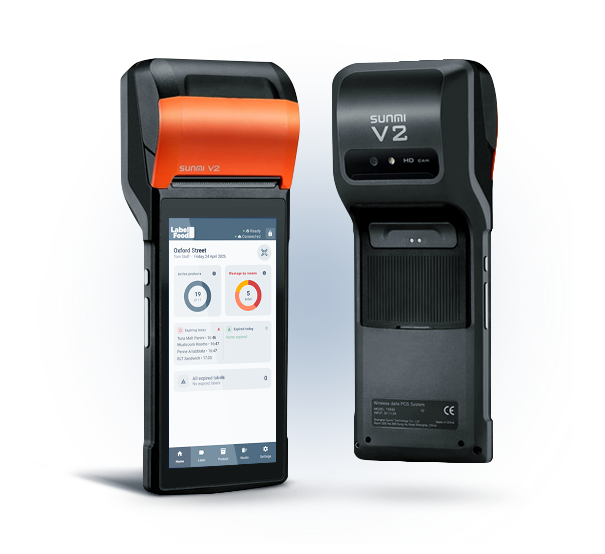
Many kitchens struggle with "tech clutter." Tablet-based systems often require separate printers, mounting brackets, and a web of charging cables. This creates more points of failure and occupies valuable prep space. A dedicated unit like the LabelFood Printer SV2 solves this by housing everything in one robust footprint. It's a standalone solution. Staff don't have to navigate external apps or handle fragile tablets. They just touch the screen and print. This simplicity drives staff adoption. If a tool is easy to use, it gets used correctly every time.
Connectivity is the final piece of the hardware puzzle. Modern systems must offer Wi-Fi or Ethernet to sync with a central dashboard. This allows you to update ingredient lists or shelf-life rules across multiple sites instantly. Combine this with food-grade, moisture-resistant label stock to ensure your data stays attached to the container, even in the freezer or a high-humidity walk-in. Investing in the right food labelling solutions ensures your kitchen remains audit-ready without adding unnecessary complexity to your prep routine.
Evaluating Hardware Reliability and Compliance Standards
Hardware reliability isn't a luxury. In a commercial kitchen, it's a necessity. Your choice of food labelling hardware UK must handle heat, steam, and grease without flinching. It serves as the physical foundation of your safety protocol. If the hardware fails, your compliance chain breaks. This leads to manual workarounds, increased error rates, and potential audit failures. Professional equipment is designed to survive the Saturday night rush whilst maintaining absolute precision.
Local authority inspections focus on clarity and accuracy. If your printer fails or produces faded, illegible text, you aren't compliant. Meeting UK food labelling requirements requires hardware that maintains high-resolution output throughout its entire lifespan. Speed also determines operational success. During peak service, staff can't wait for a slow machine. Professional units print dozens of labels per minute. This keeps the prep line moving and ensures every container is marked before it hits the fridge. Efficiency and safety go hand in hand.
Durability in High-Pressure Environments
Commercial kitchens are hostile to electronics. Standard devices succumb to humidity and spills within months. Investing in industrial build quality is a critical factor in food labeling system ROI. Using high-impact plastics and sealed components ensures longevity. You need a small benchtop footprint that doesn't sacrifice strength. The hardware must withstand daily sanitisation with industrial cleaners without degrading the internal components or the touchscreen interface.
Software Integration and Data Security
Hardware is only as good as the data it carries. Professional systems use cloud synchronisation to push allergen updates across your entire estate instantly. This ensures your staff always print the most current information. Data security is equally vital. Automatic firmware updates protect the system from digital vulnerabilities. Cloud backups ensure that even if a power cut occurs, your compliance history and ingredient databases remain intact. You get total control and zero data loss. The system works as a silent, reliable partner in your kitchen management.

Integrating Hardware into Professional Kitchen Workflows
Success depends on where you place your tools. A printer hidden in a back office is a compliance risk. You must position your food labelling hardware UK at the primary prep station. This proximity ensures staff apply labels immediately after a container is filled. It eliminates the "label it later" habit that often leads to audit failures. For catering groups, this physical integration allows for total standardisation. You can push identical label templates to every site via the cloud dashboard. This ensures safety and brand consistency across your entire estate whilst removing the need for manual intervention.
Staff training is another critical factor. High turnover in UK kitchens means you need systems that are "plug and play." Professional hardware uses intuitive touchscreens and visual icons. This reduces training time from hours to minutes. New team members become productive and compliant on their first shift. They don't need to memorise shelf-life rules or allergen lists; the hardware provides the definitive answer. It acts as a silent supervisor on the prep line.
Streamlining Prep and Date Labelling
Manual date calculation is a bottleneck. It's prone to mental fatigue and human error. By using pre-set shelf-life templates, you can reduce the time spent on "day dotting" by up to 70%. Staff simply select the item from the screen and the hardware calculates the expiry instantly. This is a vital step in how to automate food prep labels. It removes the guesswork from complex, multi-ingredient recipes. Accuracy becomes an automated result rather than a manual chore. You save time and improve safety simultaneously.
Digital Waste Recording via Hardware
Food waste management is no longer optional. As of 31 March 2026, mandatory food waste separation for businesses in England is in full effect. Professional hardware bridges the gap between inventory management and disposal. Integrated screens allow chefs to log waste the moment it's cleared from a station. This creates a real-time audit trail for sustainability and financial reporting. You identify exactly where your budget is leaking. Accurate labelling ensures you use stock before it expires, but when waste does occur, the hardware ensures it's documented. This data allows you to adjust par levels and reduce future costs.
Maximise your kitchen's potential and secure your compliance by switching to our integrated food labelling solutions.
The LabelFood SV2: A Standalone Solution for Compliance
The SV2 is the definitive answer to food labelling hardware UK requirements. It operates as a fully standalone console. You don't need external tablets, messy wires, or third-party apps to stay compliant. This unit is the leading food label printer London hospitality leaders rely on for high-volume service. It features a large, responsive touchscreen designed for industrial use. Data flows seamlessly from your cloud dashboard to the printer. This ensures every allergen label and ingredient list is accurate without manual data entry. You eliminate the risk of human error at the source. It is a stabilising force in any high-pressure environment.
Autonomous operation is the core strength of the SV2. It removes the friction of managing multiple devices. Your staff don't have to navigate complex software or worry about connectivity drops between tablets and printers. The system is built for speed and reliability. Once configured via the cloud dashboard, it functions as a dedicated compliance station. It provides the definitive answer to allergen management and shelf-life tracking. You gain total control over your kitchen's output with minimal effort. It is the expert tool that ensures your operation remains frictionless and audit-ready at all times.
Designed for the UK Hospitality Sector
British kitchens have unique demands and rigorous standards. The SV2 arrives pre-loaded with UK-specific templates that meet all current regulatory requirements. It handles high humidity and temperature fluctuations without failure. This isn't a generic printer adapted for food; it's a dedicated tool built for the sector. You gain access to local expertise and professional support from the LabelFood team. Scalability is built-in. Whether you run a single site or a national catering group, the hardware integrates effortlessly. Control remains centralised whilst operation stays local and efficient. It is designed to handle the unique rigours of a British commercial kitchen.
Take the Next Step Toward Total Compliance
Transitioning from paper logs to a unified digital system is a strategic move. It protects your business from the legal and financial fallout of non-compliance. The long-term benefits are clear. You get faster workflows, reduced food waste, and total peace of mind during audits. Investing in professional food labelling hardware UK today secures your kitchen’s future. It is the most reliable way to master complex regulations like Natasha’s Law. Precision becomes your standard. Stop relying on outdated manual processes and start automating your kitchen safety protocols for a more efficient tomorrow.
Explore the LabelFood Printer SV2 and secure your kitchen compliance.
Future-Proof Your Kitchen with Automated Compliance
Transitioning to digital automation is no longer a luxury; it's a necessity for operational safety. Manual labelling creates vulnerabilities that your business can't afford. By adopting professional food labelling hardware UK kitchens ensure total Natasha’s Law compliance and eliminate the risks of illegible handwriting. You gain a standalone system that works without external PCs or tablets, providing a single source of truth for every ingredient and expiry date.
Leading professional kitchens across London already rely on the LabelFood SV2 to maintain their standards. This hardware is designed specifically for UK regulations, offering a robust solution that handles both safety protocols and mandatory waste recording. You simplify staff training whilst creating a transparent audit trail for every item in your inventory. This isn't just about passing a surprise inspection. It's about building a faster, more profitable, and more reliable kitchen environment.
Take total control of your compliance today. Request a demo of the LabelFood SV2 Printer for your kitchen and see how easily you can automate your safety workflows. Your team deserves the best tools to succeed.
Frequently Asked Questions
Do I need a separate computer to run a food labelling printer?
No, you don't need a separate PC or tablet to operate professional food labelling hardware UK. Standalone units like the LabelFood SV2 feature integrated touchscreens and internal processing. This eliminates the need for external devices and reduces cable clutter on your prep stations. You manage everything directly from the console for a frictionless workflow.
Can food labelling hardware help my kitchen comply with Natasha’s Law?
Yes, dedicated hardware is the most reliable way to ensure Natasha’s Law compliance. It automates the printing of full ingredient lists and bolded allergens for Prepacked for Direct Sale (PPDS) items. This removes the risk of manual omission or illegible handwriting. Your labels remain professional, accurate, and audit-ready every time.
What is the best type of printer for a small cafe in London?
A standalone thermal printer is the professional choice for London cafes where space is at a premium. These units offer a small footprint without sacrificing functionality. They don't require ink ribbons or toner, making them efficient and low-maintenance. This allows you to produce high-resolution allergen labels in a compact, high-pressure environment.
How much time can my staff save by switching to automated labelling hardware?
Switching to automated systems can reduce the time spent on "day dotting" and prep labelling by up to 70%. Staff no longer need to calculate expiry dates manually or write out ingredients by hand. They simply select the product on the screen and print. This efficiency allows your team to focus on food preparation rather than administration.
Is thermal printing safe for use in a commercial kitchen environment?
Thermal printing is exceptionally safe and hygienic for commercial kitchens. It uses heat-sensitive paper instead of ink or toner, which eliminates the risk of chemical leakage or smudging. The labels are moisture-resistant and designed to stay attached to containers in both freezers and high-humidity walk-ins without degrading.
Can the same hardware be used for both prep labels and food waste recording?
Yes, the LabelFood SV2 integrates both prep labelling and food waste recording into one device. Staff can print safety labels during prep and log discarded items at the point of disposal using the same touchscreen interface. This creates a unified data stream for both compliance and financial reporting across your estate.
What happens if the internet goes down in my kitchen?
Your hardware will continue to function even if the internet connection is lost. Professional systems cache your product and allergen data locally on the device. Whilst you won't be able to sync new updates until the connection returns, your daily prep and printing workflows remain uninterrupted. Reliability is built into the system.
How do I update the allergen information on my printer?
You update allergen information through a centralised cloud management dashboard. Once you save the changes in the dashboard, the new data is pushed to your food labelling hardware UK automatically via Wi-Fi or Ethernet. This ensures every site in your business uses the most current, accurate information without manual intervention.