In 2025, allergen labelling errors triggered 85 food recalls across the UK. That is one alert every four days. For a commercial kitchen, these aren't just statistics. They are business-ending risks. You know the stress of manual labelling during a peak service. You've felt the confusion over Natasha's Law specifics. It's a high-pressure environment where one mistake leads to heavy fines or closure. Ensuring your kitchen is food labelling audit ready shouldn't be a source of constant anxiety.
We believe audit readiness is a byproduct of digital automation, not manual vigilance. You need a system that works as hard as your team. This guide provides the definitive, pragmatic checklist to ensure your commercial kitchen meets every UK regulatory standard for 2026. We will examine new mandates like folic acid fortification and EPR packaging deadlines. You'll learn how to replace messy paper logs with a streamlined, zero-error workflow that guarantees total control and peace of mind during any inspection.
Key Takeaways
- Understand why being food labelling audit ready is non-negotiable in 2026 and how to prepare for rigorous EHO inspections.
- Master core requirements for legal food names and QUID to eliminate common non-compliance traps in your kitchen.
- Identify specific pitfalls of Prepacked for Direct Sale (PPDS) to ensure every item carries a full, accurate ingredient list.
- Transition from manual logs to digital precision to eliminate calculation errors and accelerate prep workflows.
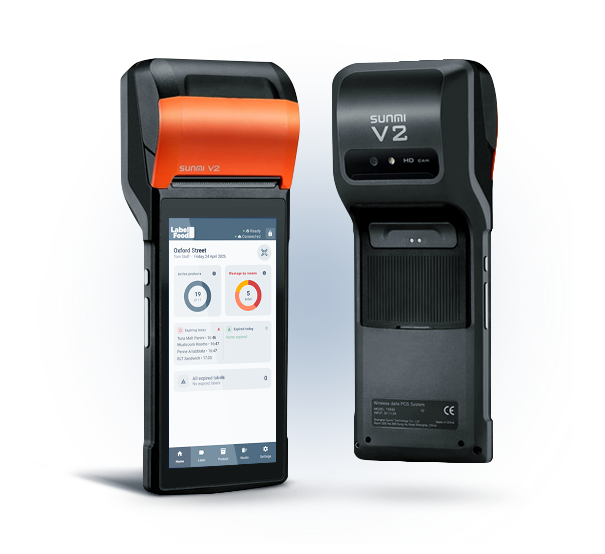
- Learn how the LabelFood Printer SV2 and Cloud Management Dashboard provide centralised control and permanent compliance.
Understanding the High Stakes of Food Labelling Audits in 2026
Being food labelling audit ready is not a goal for the week of an inspection. It is a permanent operational standard. It means every container in your walk-in, every grab-and-go sandwich, and every prep bowl is marked with accurate, legible, and legally compliant data. At any moment. Without exception. Audit readiness is the silent partner of a profitable kitchen. It prevents waste, protects lives, and ensures your business remains operational under the highest levels of scrutiny.
Environmental Health Officers (EHOs) in London and the wider UK act as the final word on safety. They don't just look for cleanliness. They scrutinise your data. They verify that your kitchen follows the complex web of international food labeling regulations that govern consumer safety. In 2026, the margin for error has vanished. New rules regarding HFSS advertising and mandatory folic acid fortification mean your ingredient lists must be more precise than ever. Compliance is no longer a simple paperwork exercise. It is a rigorous data management challenge.
The cost of failure is absolute. An allergen-related labelling error led to 85 recalls in 2025 alone. That is roughly one alert every four days. Beyond the immediate threat of heavy fines, a failed inspection destroys customer trust. In a digital age, a poor hygiene rating is a permanent stain on your reputation. It stays on your front door and in search results. Recovery is expensive and often impossible. Precision is your only defence.
The EHO Inspection: What to Expect
Expect precision. EHOs perform random spot checks on prep date labels to ensure shelf-life accuracy. They will pull Prepacked for Direct Sale (PPDS) items from your shelves to verify full ingredient lists. They will ask to see your food safety records. If your records are manual, they will look for gaps. If they are digital, they will test your system's integrity. Auditors want to see a unified system, not a collection of fragmented notes. They look for evidence of a controlled environment where being food labelling audit ready is part of the daily culture.
Common Reasons for Audit Failure
Failure often stems from the smallest details. Illegible handwriting on 'day dots' or masking tape is a primary culprit. If an auditor cannot read it, it isn't compliant. Missing mandatory allergen declarations on PPDS packaging is another critical error. Finally, inconsistent shelf-life data across different stations signals a lack of control. These are avoidable mistakes that lead to severe penalties. Consistency is the foundation of being audit ready. Without a standardised system, your kitchen is always one busy shift away from a major compliance breach.
The Mandatory Compliance Checklist: Are You Audit Ready?
To be food labelling audit ready, you need more than a date on a container. You need a standard. Auditors don't guess. They verify. They look for specific legal markers that prove your kitchen is in total control of its output. If one mandatory element is missing, the entire label is non-compliant. This isn't about bureaucracy. It's about data integrity and consumer safety.
Every label must start with the legal name of the food. This must be a clear, non-misleading description of what's inside. Avoid vague marketing terms. "Chef's Special" isn't a legal name. "Hand-dived Scallops with Lemon Butter" is. You must also include a Quantitative Ingredient Declaration (QUID). This is mandatory for any ingredient mentioned in the product name or emphasised on the packaging. If you sell a "Beef and Ale Stew", the percentage of beef must be clearly stated. Precision here is vital for transparency.
Durability marking is your next priority. You must distinguish between 'Use By' and 'Best Before' dates. 'Use By' is a safety limit. 'Best Before' is a quality indicator. Misapplying these terms is a common reason for audit failure. Pair this with specific storage conditions. Instructions like "Keep refrigerated below 5°C" or "Store in a cool, dry place" are mandatory for maintaining the safety profile of the food. Without these instructions, the durability date is technically invalid.
Essential Label Data Points
Every label requires the name and address of the UK Food Business Operator (FBO). For Natasha’s Law PPDS requirements, you must provide a full list of ingredients. All 14 major allergens must be emphasised, typically in bold or capital letters. Net quantity and country of origin must also appear where required by specific commodity regulations. Managing these variables manually is a recipe for error. Adopting automated food labelling solutions ensures every mandatory data point is locked in before the printer even starts.
Physical Label Durability and Legibility
A compliant label is a legible label. Steam, grease, and freezer temperatures destroy standard paper. Your labels must be moisture-resistant and temperature-stable to remain readable throughout the food's lifecycle. The text must meet the legal minimum of 1.2mm x-height for mandatory information. High contrast is also essential. Black text on a white background ensures rapid, error-free reading during a high-pressure service. If an auditor can't read it in five seconds, it isn't compliant. Standardise your font and layout to eliminate the 'calculation error' often found in handwritten notes.
Natasha’s Law and PPDS Requirements: Avoiding Pitfalls
Prepacked for Direct Sale (PPDS) remains the most scrutinised category in any food safety inspection. Under Natasha’s Law, which has been in force since October 2021, the requirements are absolute. If you package food before a customer orders it, it must carry a full ingredient list. No exceptions. Relying on "ask about allergens" signage is a high-risk strategy that fails the compliance test for PPDS items. To be food labelling audit ready, your kitchen must produce labels that provide total transparency for every individual item on display.
The core challenge is the level of detail required. You cannot simply list the main components. You must list every sub-ingredient, such as the emulsifiers in your bread or the preservatives in your mayonnaise. Within this list, you must clearly emphasise the 14 major allergens. These include celery, cereals containing gluten, crustaceans, eggs, fish, lupin, milk, molluscs, mustard, peanuts, sesame, soybeans, sulphur dioxide, and tree nuts. Failure to accurately capture this data is the leading cause of allergen alerts in the UK. Modern standards for accredited food safety audits now treat these labelling gaps as critical failures rather than minor observations.
Identifying PPDS Items in Your Kitchen
Precision starts with identification. PPDS items are those packaged on-site before the consumer selects them. This includes sandwiches and salads prepared in the morning for lunch service. It covers bakery items like croissants or muffins placed in bags before being displayed on the counter. Even small pots of sauces, dressings, or condiments pre-filled for takeaway service fall under these rules. If the food is inside packaging before the point of sale, it requires a compliant label. Review your entire product range to ensure no "hidden" PPDS items are slipping through the net.
Allergen Highlighting Rules
Legibility is just as important as accuracy. You must use a distinct visual style to highlight allergens within the ingredient list. Common methods include using bold text, contrasting colours, or underlining. Consistency is vital. If you use bold for "Milk" on one product, you must use it for "Wheat" on the next. This prevents customer confusion and demonstrates to auditors that you have a robust, repeatable system. For a deeper look at automating this process, see our Allergen Management Software UK: A Guide to Total Kitchen Compliance. Digital systems ensure these highlighting rules are applied automatically, removing the risk of human error during a busy prep shift.
Auditors look for a "fail-safe" culture. They want to see that your labelling process doesn't rely on the memory of a single staff member. By digitising your ingredient data, you ensure that every label printed is 100% accurate. This level of control is what makes a kitchen truly food labelling audit ready. It transforms compliance from a daily stress into a background process that protects both your customers and your business reputation.

Transitioning from Manual Errors to Digital Precision
Manual labelling is a liability. In a high-pressure kitchen, handwriting is the first thing to fail. It isn't just about messy ink. It's about data accuracy. One miscalculated 'Use By' date can trigger a total audit failure. Digital precision removes the human element from the equation. It ensures every container is food labelling audit ready without relying on a chef's mental maths during a peak service. Automation provides a stabilising force in an environment where mistakes are expensive.
Digital systems provide an automated audit trail that manual logs cannot match. When an auditor asks for evidence of compliance, you don't dig through folders of grease-stained paper. You pull a digital report. This transition to automation isn't just about avoiding fines. It's about ROI. Accurate shelf-life dating reduces unnecessary food waste. Faster prep workflows increase kitchen output. You gain total control over your inventory and your compliance status simultaneously. Efficiency and safety become the same goal.
The Risk of Handwritten Labels
Handwritten labels create friction. Inconsistent formatting confuses staff and auditors alike. Fading ink on thermal paper or peeling masking tape leads to immediate safety breaches. Then there is the time cost. A chef spending 20 minutes writing out dozens of labels per shift is a chef not cooking. This manual overhead is a drain on your margins. Standardised, printed labels eliminate these variables. They provide a clear, professional trail that auditors respect and staff can follow without hesitation.
Cloud-Based Data Management
Centralisation is the ultimate safeguard. Cloud-based systems ensure every site in your estate uses the same approved ingredient data. If a supplier substitutes an item, you update the ingredient list once in the dashboard. Every printer in every kitchen reflects that change instantly. This eliminates the risk of outdated labels lingering on shelves after a recipe change. For a deeper dive into these workflows, read The Essential Guide to Food Label Management Systems for UK Kitchens. It is the definitive resource for modernising your operation.
Stop gambling with manual processes. Every handwritten label is a potential point of failure. Transitioning to a standardised system is the only way to remain food labelling audit ready as UK regulations tighten. Protect your business and your customers by adopting professional food labelling solutions today. Precision is no longer optional; it is a requirement for survival.
Future-Proofing Your Kitchen with LabelFood Compliance Solutions
The path to becoming food labelling audit ready ends with the right infrastructure. Compliance is a moving target. UK regulations evolve, and your kitchen must adapt without pausing service. Reliance on generic tablets and consumer-grade printers is a gamble. These devices aren't designed for the heat, steam, and constant vibration of a professional kitchen. They lose connectivity. They require constant troubleshooting. LabelFood provides a dedicated, standalone ecosystem that acts as the "silent auditor" in your workspace, ensuring every label meets the highest legal standards automatically.
Standalone hardware is superior to tablet-and-consumer-printer setups for one reason: reliability. In a high-pressure environment, you cannot afford a "sync error" or a dead battery. The LabelFood system operates independently, providing a stabilising force that manual or fragmented digital setups cannot match. It integrates Food Waste Recording directly into the labelling workflow. This allows you to meet safety standards whilst identifying margin-killing waste patterns. You gain a comprehensive overview of your kitchen’s efficiency and sustainability in a single, unified system.
The LabelFood Printer SV2: Built for Kitchens
The SV2 is not a generic office tool. It is a purpose-built solution for the rigours of a professional London kitchen. It utilises thermal printing technology, meaning there is no ink to smudge or run. Labels remain crisp and legible from the prep table to the freezer, ensuring you are always food labelling audit ready during a spot check. The robust design is resistant to the moisture and grease that typically destroy consumer electronics. For more on this hardware, read LabelFood Printer SV2: The Standalone Solution for UK Kitchen Compliance. It is the definitive choice for kitchens that prioritise uptime.
Centralised Control with the Cloud Dashboard
The Cloud Management Dashboard is your centralised command centre. It simplifies complex UK labelling laws by automating the most difficult aspects of data management. You manage all product data, allergens, and waste logs from one screen. If a regulation changes, the software updates automatically. You don't need to retrain staff or manually edit dozens of recipes. When an auditor arrives, you can generate digital reports at the touch of a button. This provides immediate, undeniable proof of your compliance history. It replaces the stress of an inspection with the confidence of total data integrity.
Efficiency is the result of better tools. By removing the friction of manual labelling and the instability of consumer hardware, you free your team to focus on production. The LabelFood system ensures that your kitchen isn't just compliant today, but future-proofed against the regulatory shifts of 2026 and beyond. It is the expert in the room that provides the definitive answer to every compliance challenge.
Secure Your Compliance Strategy for 2026
Compliance is a moving target. In 2026, the margin for error in a commercial kitchen is non-existent. You've seen how manual errors lead to costly recalls and how Natasha's Law demands absolute precision for every PPDS item. Transitioning to a digital system isn't just an operational upgrade. It's a necessity for business survival. Achieving a food labelling audit ready status requires a shift from reactive vigilance to proactive automation.
The LabelFood SV2 printer and Cloud Dashboard provide the stabilising force your kitchen needs. This system is trusted by top UK hospitality brands to eliminate calculation errors and accelerate prep times. You get 100% Natasha's Law compliant labels and a permanent digital audit trail for every printed label. You gain total control over your inventory whilst ensuring every container meets rigorous UK standards. Take the guesswork out of your next inspection. Book a demo of the LabelFood SV2 and get your kitchen audit ready today. Precision and peace of mind are within reach.
Frequently Asked Questions
What are the most common food labelling mistakes auditors find?
Illegible handwriting and missing allergen declarations are the most frequent failures. Auditors often find 'day dots' with faded ink or masking tape labels that don't meet legibility standards. Another common error is the omission of sub-ingredients on PPDS items. If your mayonnaise contains mustard, that allergen must be highlighted on the final label. Digital systems eliminate these manual oversights by pulling data directly from a verified database.
Does Natasha’s Law apply to food prepared in front of the customer?
No, Natasha’s Law specifically targets Prepacked for Direct Sale (PPDS) food. If a customer orders a sandwich and you assemble it in front of them, it is not PPDS. However, if you prepare and package that same sandwich before the customer arrives, it requires a full ingredient list with allergens emphasised. To stay food labelling audit ready, you must clearly distinguish between made-to-order items and prepacked stock.
How often should I audit my own kitchen’s food labels?
You should conduct internal labelling audits at least once a month. This ensures your staff remain disciplined and your data stays current with supplier changes. Monthly checks allow you to identify inconsistent shelf-life dating or failing hardware before an EHO arrives. Regular self-auditing builds a culture of compliance. It transforms food labelling audit ready standards from a stressful event into a daily operational habit.
What font size is legally required for allergen information in the UK?
Mandatory information must be printed with a minimum x-height of 1.2mm. This ensures that ingredient lists and allergens are readable for all consumers. If the packaging surface is very small, the minimum x-height reduces to 0.9mm. Using a dedicated label printer ensures your text always meets these precise legal dimensions. It removes the risk of an auditor flagging illegible or undersized font on your packaging.
Can I use digital records instead of paper logs for an EHO audit?
Yes, EHOs accept and often prefer digital records. Digital logs are harder to falsify and easier to search during an inspection. You must ensure the data is accessible and that your team knows how to retrieve it on demand. Cloud-based dashboards provide a permanent, time-stamped trail of your labelling activity. This level of transparency demonstrates total control over your food safety management system.
What happens if an auditor finds an incorrect label in my kitchen?
The consequences range from informal advice to criminal prosecution. For minor errors, an EHO might issue an improvement notice. Serious allergen mislabelling can lead to immediate product seizures, heavy fines, or a significant drop in your Food Hygiene Rating. In extreme cases, business closure is a possibility. Accuracy is your only protection against these outcomes. One incorrect label is enough to trigger a full investigation into your processes.
Is a dedicated food label printer really necessary for a small cafe?
Legal requirements don't change based on the size of your business. A small cafe faces the same Natasha’s Law mandates as a national chain. Manual labelling is slow and prone to error, especially during a one-person shift. A dedicated printer provides a professional, compliant finish whilst saving hours of prep time. It is a stabilising tool that allows small teams to maintain elite standards without the overhead of a large compliance department.
How does the LabelFood SV2 handle shelf-life calculations?
The SV2 automates calculations based on rules you define in the Cloud Management Dashboard. When a staff member selects a product, the printer automatically adds the correct 'Use By' or 'Best Before' date. It accounts for both the total shelf life and the secondary life once opened. This eliminates mental maths and prevents 'calculation errors' on the kitchen floor. You get consistent, accurate dating across every shift and every site.