A handwritten food label is no longer a tool; it is a liability. In a high-pressure commercial kitchen, relying on a felt-tip pen to manage complex allergen data is a gamble you cannot afford to take. Manual errors lead to more than just messy stickers. They lead to failed EHO inspections, unnecessary waste, and serious safety risks under Natasha’s Law. Implementing a professional food label management system is the only way to eliminate these variables. It transforms a chaotic manual chore into a streamlined, digital workflow that guarantees precision every time.
The anxiety of an unannounced inspection and the frustration of slow prep cycles are challenges every operator knows well. You need a solution that acts as a silent partner in your success. This guide demonstrates how a digital system ensures total compliance with UK allergen laws while significantly accelerating your prep cycles. We will examine the transition to audit-ready digital records, the benefits of cloud-based data management, and the specific steps required to meet the July 2026 Food Labelling Revision 2 requirements for national chains and manufacturers.
Key Takeaways
- Automate Natasha’s Law compliance with a system that instantly identifies and bolds mandatory allergens.
- Understand how a digital food label management system synchronises cloud data with physical hardware to eliminate manual errors.
- Optimise kitchen margins by integrating digital food waste recording into your standard labelling workflow.
- Transition from unreliable paper logs to centralised, audit-ready digital records for effortless EHO inspections.
What is a Food Label Management System?
A food label management system is the backbone of a modern, compliant kitchen. It is a centralised digital platform designed to automate the creation and printing of accurate labels. Forget the days of searching for a working pen or deciphering a chef’s handwriting. This system replaces traditional "day dots" and handwritten stickers with standardised, legible thermal labels. It integrates recipe data, allergen profiles, and shelf-life calculations into a single, cohesive interface. By aligning with international food labelling regulations and UK-specific laws, it ensures your operation is always audit-ready.
The Shift from Manual to Digital Labelling
Manual processes are inherently flawed. Handwriting is slow and prone to error, especially during a frantic prep shift. Illegible dates and forgotten allergen warnings create significant safety risks and potential cross-contamination. A digital food label management system removes the human element from complex calculations. Thermal printing is instant. It takes seconds to produce a batch of labels that would take several minutes to write by hand. Beyond speed, digital systems provide an immutable audit trail. Every label printed is a data point that proves your commitment to safety. For multi-site operators, this technology ensures absolute consistency. A recipe update made in the cloud dashboard reflects across every kitchen site immediately. There are no delays and no miscommunications.
Core Components of a Professional System
A professional setup relies on three integrated pillars to ensure a frictionless workflow. When these components communicate perfectly, the risk of printing outdated information drops to zero.
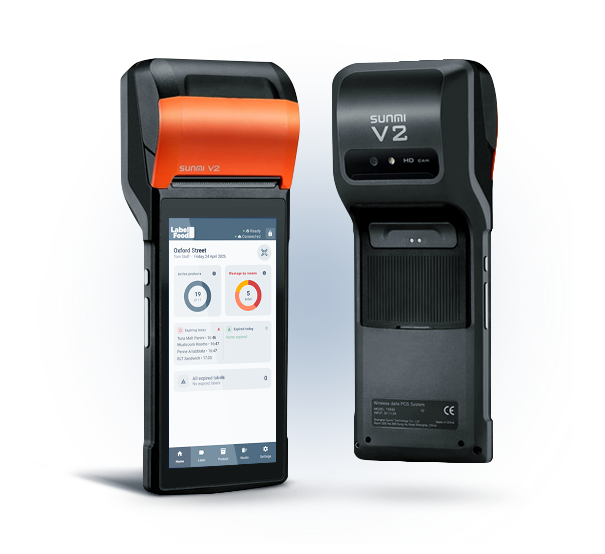
- Hardware: You need equipment built for heat, steam, and grease. The LabelFood Printer SV2 is a standalone solution designed specifically for the kitchen environment. It works independently without needing a constant PC connection, saving valuable counter space.
- Software: This is the brain of the operation. A Cloud Management Dashboard allows you to organise ingredients, set shelf-life rules, and manage compliance from any device. It stores your entire product database securely, making updates simple and instantaneous.
- Consumables: Precision requires the right materials. Professional systems use high-quality, food-safe adhesive labels. These are engineered to resist moisture and temperature fluctuations. They stay attached in the freezer but peel off cleanly in the dishwasher, leaving no sticky residue behind.
This isn't just about stickers. It's about total control over your production line. By digitising your labelling, you eliminate the ambiguity that leads to EHO points deductions. You gain a professional standard that protects your customers and your business reputation.
The Architecture of Modern Kitchen Labelling
A professional food label management system is more than a simple printer. It is a unified ecosystem where software and hardware work in tandem to protect your business. The cloud management dashboard serves as the central command centre for your entire operation. Here, you define your ingredients, allergens, and shelf-life protocols. Once saved, this data synchronises with the physical printer in the kitchen. This ensures every label produced is based on the most current recipe information. It eliminates the risk of staff using outdated prep sheets or incorrect allergen data. Consistency is maintained across one site or fifty.
Cloud Management Dashboards: The Brain of the Operation
Think of the dashboard as your digital safety net. It organises product lists and allergen profiles in a secure online centre. You can set global shelf-life rules that automatically calculate "use-by" dates the moment a label is printed. This removes mental maths from the prep line and prevents costly errors. Managing user permissions is equally vital. It ensures only authorised managers can edit sensitive ingredient data. This protects the integrity of your Natasha's Law compliance records and prevents accidental changes by junior staff. Data integrity remains absolute from the office to the pass.
The LabelFood Printer SV2: Built for the Heat of the Kitchen
Hardware in a commercial kitchen faces extreme conditions. Professional printers must be durable, splash-proof, and easy to sanitise. The LabelFood Printer SV2 is engineered specifically for these high-pressure environments. Because it uses thermal printing, there are no ink ribbons or expensive cartridges to replace mid-service. You'll never run out of ink during a busy Friday night prep cycle. The LabelFood Printer SV2 is a standalone solution that eliminates kitchen clutter by removing the need for a bulky PC or tablet at the prep station. This autonomy is essential for maintaining a clean and efficient workspace. Explore how our food labelling solutions can integrate into your existing setup.
Connectivity issues shouldn't stop your production line. A reliable system needs to function even during internet outages. Local storage on the device allows staff to continue printing labels using the last synchronised data. This resilience separates professional tools from consumer-grade gadgets. Reliability is non-negotiable when your business depends on accurate labelling to stay open. You gain a system that works as hard as your team does, regardless of the technical environment. Total control is the result of a perfectly balanced architecture.
Ensuring Compliance: Natasha’s Law and Allergen Safety
Compliance is the non-negotiable foundation of a professional kitchen. In the UK, the legal landscape shifted permanently in October 2021. A digital food label management system is now the standard tool for meeting these rigorous safety requirements. It removes the guesswork from allergen identification. The software cross-references your ingredients against the 14 mandatory allergens. It applies bold formatting to the label layout automatically. This ensures consistency regardless of who is operating the printer. Human error is a risk you cannot afford. Automation provides the certainty your customers and your insurers demand.
Managing PPDS (Prepacked for Direct Sale) Requirements
London’s competitive grab-and-go sector faces intense scrutiny from local authorities. If you prepare and pack food on-site before a customer selects it, you are selling PPDS products. This includes everything from sandwiches in a chiller to boxed pastries on a counter. Natasha’s Law mandates that these items carry a full ingredient list. Every allergen must be clearly emphasised. Manually writing these lists is impossible at scale. A digital system bakes this information into the printing process. You can update a recipe once in the cloud and see it reflected on every label instantly. Our Natasha’s Law Guide offers a comprehensive breakdown of these specific requirements. It is an essential resource for maintaining total kitchen compliance in a high-pressure environment.
Audit-Ready Records and Traceability
Paper-based safety logs are a liability. They are easily damaged, often incomplete, and difficult to search during a high-stakes inspection. Digital records provide a superior alternative. Every time a label is printed, the system logs the action. This creates an immutable digital paper trail. You can track exactly when an item was prepped and which allergens were declared. This data is invaluable during EHO inspections or when applying for BRCGS and SALSA certifications. It demonstrates a level of professional oversight that paper logs simply cannot match. You move from a reactive stance to a proactive one. You are always prepared for an audit. You are always ready to prove your commitment to public safety. This transition to digital traceability protects your brand reputation and ensures your operation remains a stabilizing force in the industry.

Beyond Labels: Integrating Waste Recording and Efficiency
Labelling is only half of the inventory cycle. To achieve total control, you must track what leaves the kitchen as waste. A professional food label management system acts as a dual-purpose tool. It manages the lifecycle of every ingredient from prep to disposal. Integrating waste recording into your labelling workflow eliminates the need for separate, fragmented systems. You gain a unified view of your kitchen’s performance. This integration transforms a simple safety requirement into a powerful engine for profitability. Efficiency is the objective. Data is the method.
Digital Food Waste Recording for Modern Kitchens
Traditional paper waste logs are unreliable and often ignored during busy shifts. Digital entries on a cloud dashboard ensure accuracy. Staff can log "thrown away" items in seconds using the same interface they use for printing. This data allows you to identify specific waste patterns. You can adjust ordering volumes and refine prep lists based on hard evidence rather than guesswork. Reducing food waste in a London restaurant directly protects your margins. Explore our comprehensive Food Waste Recording Software guide to see how digital logging stabilises your bottom line. Data-driven decisions replace gut feelings.
Improving Operational Speed and Accuracy
Efficiency is built on small, repeatable gains. Automated date calculation is a prime example. It saves chefs valuable minutes on every prep batch by removing the need for manual calendar checks. This speed is essential during peak hours. Beyond time savings, digital labels eliminate the "what date is that?" confusion caused by poor handwriting. Every staff member sees the same clear, standardised information. This clarity extends to your customers too. For grab-and-go items, a professional label improves brand perception. It signals quality and attention to detail. A cohesive aesthetic builds trust with your audience. You aren't just selling food; you are selling a professional standard.
Streamlining your workflow requires the right tools. When prep, labelling, and waste logging occur in one unified process, friction disappears. Your team focuses on service while the system handles the data. This level of automation is no longer a luxury for high-volume kitchens; it is a necessity. Take control of your kitchen's output today. Discover our full range of food labelling solutions and start optimising your operations.
Implementing a System in Your Kitchen
Implementing a food label management system is a definitive transition from manual guesswork to digital precision. It is a structured process designed for immediate impact. The shift begins with hardware deployment and concludes with a culture of total compliance. Choosing a professional partner ensures this transition is seamless and permanent. You are not just installing a printer; you are upgrading your operational standard.
The setup process for the LabelFood Printer SV2 is engineered for speed. You unbox the unit. You connect it to your network. You synchronise it with your Cloud Management Dashboard. Your first compliant label is ready within minutes. Migrating your existing product data is the next critical phase. You upload your ingredient lists, shelf-life rules, and allergen profiles directly into the cloud centre. This centralised data becomes the single source of truth for your entire kitchen. It eliminates the discrepancies that occur when sites operate in isolation.
Staff training is essential for long-term success. Your team must understand that this system is a tool for their own protection. It removes the burden of manual calculations and the anxiety of potential errors during EHO inspections. When the team experiences the immediate speed advantage during a busy prep shift, buy-in is instantaneous. A professional system is only as effective as the team’s commitment to using it correctly. Clarity replaces confusion.
Selecting the Right Hardware and Software Bundle
Evaluating kitchen volume is the first step in selection. A single London site might require one high-capacity printer, whilst a multi-site operation needs a networked fleet managed from a central office. Your system must be scalable to support future business growth. Reliability is paramount. Regular software updates are non-negotiable to ensure you stay ahead of evolving UK legislation. This includes the July 2026 requirements for national restaurant chains to provide detailed ingredient and calorie declarations. Future-proofing your kitchen starts with the right choice of technology.
The LabelFood Advantage for UK Hospitality
Choosing a UK-based partner provides distinct advantages in both support and compliance knowledge. You gain access to experts who understand the specific regulatory pressures of the UK hospitality industry. LabelFood offers direct support for London-based businesses and comprehensive nationwide coverage. The LabelFood Printer SV2 is the professional standard for kitchen compliance. It provides the autonomy and reliability required in high-volume environments. You are securing a partner dedicated to your business’s safety and efficiency. Total control is now within reach.
Secure Your Kitchen’s Future with Digital Precision
Manual labelling is an obsolete risk that your business cannot afford to carry. Transitioning to a professional food label management system provides the absolute clarity and control required to thrive in a high-pressure hospitality environment. You have seen how this technology automates Natasha’s Law compliance, accelerates prep cycles, and integrates digital waste recording into a single, unified workflow. These aren't just incremental improvements. They are fundamental upgrades to your kitchen’s operational architecture.
Precision is the only reliable path to safety. By centralising your product data and utilising standalone hardware like the SV2, you eliminate the human errors that lead to failed audits and serious safety incidents. Trusted by London’s leading commercial kitchens, our solutions are fully compliant with Natasha’s Law and all UK allergen requirements. You gain a stabilising force that works as hard as your team does. Digital waste tracking is included to ensure your margins remain protected.
It's time to eliminate the ambiguity of handwritten stickers and fragmented paper logs. Streamline your kitchen with the LabelFood Printer SV2 and secure your operational margins today. Take the definitive step toward total kitchen efficiency and long-term compliance. Success is built on the right tools.
Frequently Asked Questions
What is the best food label management system for a small cafe?
The best system combines standalone hardware with a cloud dashboard to ensure compliance without needing a PC at the prep station. A solution like the LabelFood Printer SV2 is ideal because it handles Natasha's Law requirements whilst fitting into compact kitchen areas. It provides a professional standard that remains affordable and easy to operate for small teams.
Does Natasha’s Law apply to food prepared and sold on the same premises?
Yes. Natasha’s Law applies specifically to food Prepacked for Direct Sale (PPDS). This includes any item prepared and packed on-site before a customer chooses it. You must provide a full ingredients list with the 14 mandatory allergens emphasised in bold on the label. Accuracy is non-negotiable for these products.
How does a food label printer calculate use-by dates automatically?
The printer uses pre-set shelf-life rules stored in your digital management dashboard. When you select a product, the system adds the current date and time to the stored shelf-life duration. It prints an accurate use-by or best-before date instantly. This removes human error and mental maths from the prep line. Efficiency increases immediately.
Can I manage multiple restaurant locations from one labelling dashboard?
Yes. A cloud-based food label management system allows you to control multiple sites from a single centralised account. You can update recipes, allergen data, and shelf-life rules once. These changes synchronise across every connected printer in your estate immediately. This ensures absolute consistency across all your London or nationwide branches.
What is the difference between a standard label printer and a food safety printer?
Standard printers are often designed for office use and lack the durability needed for commercial kitchens. A food safety printer is splash-proof and built to withstand heat and grease. It also utilises thermal printing technology. This means no ink or toner is required, which prevents contamination and avoids the cost of expensive cartridges mid-service.
Do I need a constant internet connection to use a cloud-based labelling system?
No. Professional systems store your data locally on the printer once it has synchronised with the cloud. This allows your team to continue printing compliant labels even during an internet outage. The system will update and sync any waste recording data once the connection is restored. Reliability remains absolute regardless of your Wi-Fi status.
How does digital food waste recording help reduce kitchen costs?
Digital logging provides real-time data on exactly what is being thrown away. You can identify patterns in over-prepping or spoilage through the cloud dashboard. This evidence allows you to adjust your ordering volumes and refine your prep lists. Reducing waste by even a small percentage directly increases your bottom line and improves sustainability.
Are thermal labels safe for use in freezers and microwaves?
Yes, provided you use high-quality, food-safe adhesives designed for those environments. Professional labels are engineered to remain attached in freezing temperatures without peeling. They also resist the moisture and heat associated with microwave use. Always ensure your labels are specifically rated for the temperature range of your storage and service areas.