A single handwritten mistake on a sandwich label isn't just a kitchen error. It's a legal liability that can compromise your entire operation. You already know that manual handwriting is too slow for a high-pressure deli environment. It leads to illegible dates, missed allergens, and inconsistent records that invite stress during an EHO audit. Managing the complex distinction between PPDS and non-PPDS requirements shouldn't feel like a constant administrative burden.
We recognise that your focus belongs on the food, not the paperwork. This guide explains how to implement professional deli food labeling solutions that ensure Natasha's Law compliance and drastically reduce food waste through better tracking. You'll learn how to replace slow, manual workflows with a digital system that provides total oversight and faster prep cycles. We'll cover the 14 statutory allergens, audit-ready reporting, and the specific requirements for kitchens across the UK. It's time to move from reactive guesswork to a system of disciplined, professional precision.
Key Takeaways
- Master the requirements of Natasha’s Law for prepacked for direct sale (PPDS) items to maintain precise food safety standards.
- Replace slow manual handwriting with automated deli food labeling solutions to increase kitchen efficiency and eliminate recording errors.
- Categorise the 14 statutory allergens with total accuracy, ensuring peanuts and nuts are treated as distinct categories.
- Utilise digital waste records with photo evidence and specific Compliance Pack reports to prepare for EHO inspections.
- Manage multi-site operations effectively using the cloud dashboard and offline-capable SV2 printer for unified labelling control.
Understanding UK Deli Labelling Regulations and Natasha’s Law
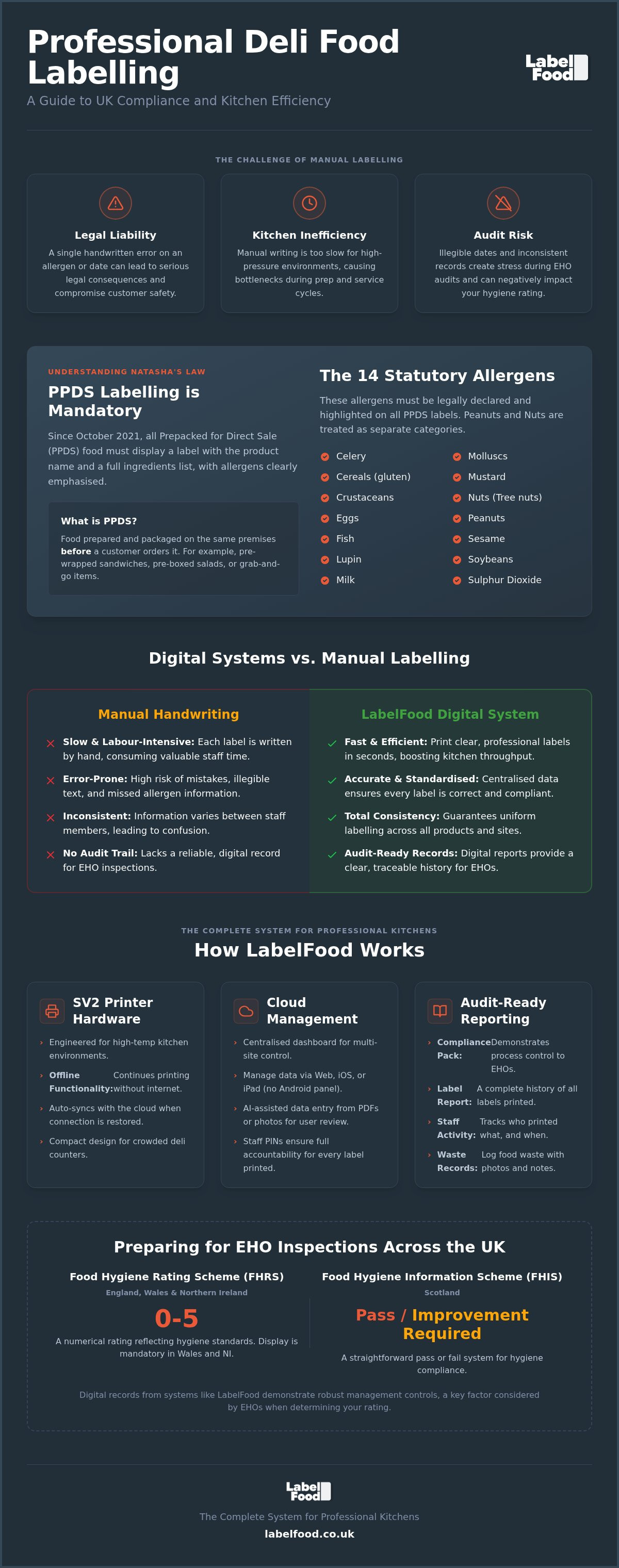
The Food Standards Agency (FSA) maintains strict standards for food safety across the United Kingdom. These rules protect consumers and dictate how your kitchen must operate. Central to these requirements are the UK food information regulations, which establish the legal framework for ingredient disclosure. Since October 2021, Natasha’s Law has mandated that all prepacked for direct sale (PPDS) food must carry a label with the product name and a full ingredients list. This isn't just about listing components; you must also emphasise allergens within that list. Professional deli food labeling solutions ensure these details are formatted correctly every time.
The law recognises 14 statutory allergens that require specific highlighting. These include celery, cereals containing gluten, crustaceans, eggs, fish, lupin, milk, molluscs, mustard, sesame, soybeans, and sulphur dioxide. It's vital to treat peanuts and nuts as two separate categories to avoid confusion. For a deli, this means every pot of coleslaw or pre-wrapped baguette must be scrutinised. Accuracy is the baseline for safety. Digital systems help remove the risk of human error during this process.
PPDS vs. Non-PPDS: Identifying Your Deli Items
Distinguishing between PPDS and non-PPDS food is a critical task for any deli manager. PPDS food is prepared and packaged on the same premises before the customer orders it. This includes items in grab-and-go chillers or pre-boxed salads. These products require full labelling. In contrast, food packed after a customer orders it is non-PPDS. For these items, you can provide allergen information through menus or verbal communication. Understanding this distinction prevents unnecessary work whilst ensuring you meet your legal duties. Full ingredient lists on PPDS labels must be clear, legible, and accurate to the specific batch produced.
EHO Inspections: Rating Schemes Across the UK
Environmental Health Officers (EHOs) use specific schemes to grade your kitchen’s hygiene and management. England, Wales, and Northern Ireland use the Food Hygiene Rating Scheme (FHRS). This 0 to 5 scale reflects your compliance at the time of inspection. In Wales and Northern Ireland, displaying your rating sticker is a legal requirement. Scotland follows the Food Hygiene Information Scheme (FHIS), which uses "Pass" or "Improvement Required" ratings. EHOs currently place high priority on allergen control systems and secondary labelling for opened products. Digital records from deli food labeling solutions act as a reliable audit trail. They demonstrate a high level of confidence in management, which is a key component of your final rating. Reliable data proves your commitment to safety better than any verbal assurance.
The Mechanics of Modern Deli Labelling Solutions
Transitioning from manual day dots to automated thermal printing marks a significant shift in kitchen management. Traditional methods are slow. They invite human error. Modern deli food labeling solutions replace illegible handwriting with clear, standardised labels. This ensures all mandatory food labelling information is present and legible. It also introduces accountability. By using individual PINs for staff attribution, managers can track who printed which label. This creates a transparent record of activity across the entire prep cycle. Centralised control means your data remains consistent, even when staff rotations change.
The LabelFood Printer SV2: Hardware Specifications
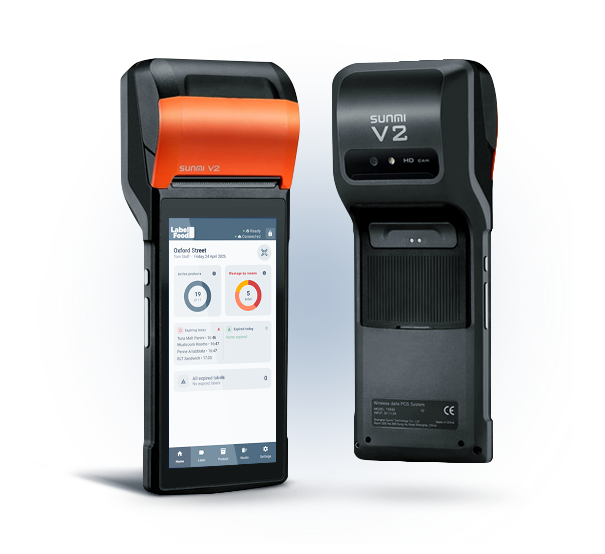
The LabelFood Printer SV2 is engineered for the rigours of a professional kitchen. High-temperature environments and steam don't compromise its performance. Reliability is a necessity, not a luxury. A standout feature is its offline functionality. If your internet connection drops, the printer continues to work. Service doesn't stop. Once the connection is restored, the device automatically syncs with the cloud. This ensures multi-site kitchen management remains unified from a central hub. Its compact footprint is specifically designed for crowded counters. It fits seamlessly into busy London delis where workspace is often limited.
Cloud Management and Data Entry
Centralised management happens through the cloud dashboard. You can organise your product catalogues via web browsers or iOS and iPad devices. There is no Android version of the management panel. For kitchens with extensive menus, the AI-assisted data entry tool accelerates onboarding. It reads PDFs, Excel files, and photos of ingredient lists to populate your database. However, the AI never publishes data autonomously. It acts as a tool for user review and editing. A human must always verify the accuracy of the information before it becomes a live label. This ensures that the final output remains under your total control. If you're looking to upgrade your current setup, exploring a complete food labelling system can streamline your daily operations.
Hardware and software must work as a single, integrated unit. This synergy eliminates the friction of manual entry. It allows your team to focus on food quality whilst the system handles the technicalities of compliance and record-keeping. The result is a more disciplined workspace where precision is the default setting.
Digital Systems vs. Manual Labelling: A Performance Analysis
Manual handwriting is a significant bottleneck in a professional kitchen. It's slow, inconsistent, and prone to error. Digital deli food labeling solutions replace minutes of scribbling with a simple 3-click process. This speed allows staff to focus on production rather than administration. Beyond speed, thermal labels offer superior legibility. Smudged ink on a traditional adhesive sticker is a safety risk. Professional, printed labels clearly highlight the 14 statutory allergens, reducing cross-contamination risks through visual clarity. Customers recognise and trust the precision of a printed label. It signals a disciplined approach to food safety. Whilst generic adhesive stickers might seem cheaper upfront, the cost of thermal labels is offset by the reduction in labour time and the elimination of manual recording errors.
Reducing Human Error in Busy Kitchens
Manual date calculation is a common source of friction. A digital system automatically calculates use-by and best before dates based on pre-set shelf-life data. This removes the mental load from kitchen staff during peak hours. For deli groups, standardisation is essential. A cloud-based system ensures that a specific product has the same allergen profile and shelf life across every site in your estate. The inclusion of individual PINs creates a robust audit trail. Managers can track exactly who printed which label and when. This level of accountability is vital for maintaining high standards and provides clear evidence during EHO inspections. It transforms labelling from a chore into a verifiable management process.
The ROI of Integrated Waste Management
Food waste is a direct drain on your deli’s profitability. Modern deli food labeling solutions often integrate waste tracking at the point of disposal. Staff can log discarded items directly through the printer interface using their unique PIN. Adding photos and notes to these records provides essential context for why waste occurred. You can identify if the loss was due to over-preparation, spoilage, or equipment failure. This data allows for precise adjustments to your prep levels. For a deeper look at the financial benefits of these systems, consult our guide on food waste recording software. Accurate tracking turns a financial loss into an actionable insight that protects your margins.
The transition to a digital system is an investment in kitchen stability. It replaces guesswork with data. By automating the technical aspects of labelling, you create a more efficient, compliant, and profitable physical workspace.
Implementing an Efficient Deli Labelling Workflow
Implementing deli food labeling solutions requires more than hardware. It requires a disciplined routine integrated into your kitchen’s physical workspace. Start by organising your product data within the cloud dashboard. You can use the AI-assisted tool to review and edit existing ingredient lists or import data via Excel for a faster setup. This ensures your staff can access accurate product information instantly. Setting up the LabelFood Printer SV2 for daily prep cycles is straightforward. Once the device is powered on, it syncs with your latest cloud data automatically. Staff simply select the product, verify the quantity, and print. Morning prep cycles should prioritise bulk printing for grab-and-go items. This prevents a backlog during peak service. Evening close-down must include recording food waste with photo evidence. This creates a closed-loop system where every item is accounted for from prep to disposal.
Utilising the Compliance Pack and Label Reports
Digital reporting replaces the frantic search for paper records during an EHO visit. The Compliance Pack allows you to generate comprehensive safety logs in seconds. These reports provide a verifiable history of your kitchen's labelling activity. Reviewing Label Reports helps you identify which products are your highest volume prep items. If you're printing 50 labels for ham sandwiches but only selling 30, you've identified a clear source of waste. This data is essential for managing stock levels and reducing over-preparation. Monitoring Staff Activity through individual PINs ensures that every label printed is attributed to a specific team member. It creates a culture of accountability where shortcuts are easily identified. It's a key component in maintaining a high confidence in management score.
Staff Onboarding and PIN Management
Security in a high-pressure kitchen is maintained through individual PINs. Assign a unique code to every staff member to prevent unauthorised changes to your product catalogue. This ensures that only approved managers can edit allergen information or shelf-life data. Training must focus on the 14 statutory allergens and the specific requirements for PPDS food. Staff need to understand that peanuts and nuts are separate categories and must be labelled as such. The visual, icon-based interface of the LabelFood system simplifies this onboarding process. New hires can become proficient in minutes without complex manuals. For detailed training guides and compliance checklists, see our resource on Natasha’s Law labelling requirements.
Establishing these workflows ensures your kitchen remains organised and audit-ready. If you are ready to eliminate manual errors and improve your kitchen's efficiency, you can order a complete deli labelling system today.
LabelFood: The Complete System for Professional Kitchens
LabelFood is not a standalone piece of hardware. It is an integrated infrastructure designed to stabilise kitchen operations. Unlike generic alternatives, this subscription-based model includes the LabelFood Printer SV2 as part of the service. You aren't just buying a device; you're securing a managed environment for your deli food labeling solutions. This system provides continuous cloud syncing and automated updates. Your data remains secure and accessible across your entire estate. It moves beyond simple printing to provide a unified management layer for compliance and waste tracking.
Access the management panel via web browsers or iOS and iPad devices. This allows for remote oversight of multi-site operations from any location. There is no Android version available. UK-based hospitality businesses benefit from direct support and a system tailored to British safety standards. The focus remains on utility and peace of mind. Every update is designed to address the practical realities of a physical workspace, ensuring your records remain audit-ready without unnecessary administrative friction.
The SV2 Standalone Advantage
The SV2 operates as a standalone unit. You don't need external tablets or complex wiring that clutter your workspace. It uses direct thermal printing technology. This eliminates the ongoing costs and maintenance associated with ink or toner. The device is built for resilience in high-pressure environments. Its ability to function offline ensures that your service continues even during internet outages. For a detailed breakdown of the technical specifications and how it integrates into your workflow, see our guide on the LabelFood Printer SV2. Reliability is the core of the hardware design.
Next Steps for Your Deli
Transitioning to an automated system is a linear process. Start by utilising the AI menu onboarding tool. It reads your existing ingredient lists for quick database population. Remember that all AI-generated data requires your manual review and editing before publishing. This keeps you in total control of your allergen records. You can also customise your label rolls to match your deli branding, ensuring a professional appearance on every grab-and-go item. Organising a demo for your London or UK-wide kitchen is the final step toward achieving total control. This system provides the definitive answer to the complexities of modern food labelling. It is a tool for professionals who prioritise precision and efficiency.
Securing Your Kitchen's Regulatory Future
Professional deli operations require more than culinary skill. They demand a disciplined approach to safety records and data management. Implementing digital deli food labeling solutions eliminates the risks associated with manual handwriting and illegible dates. By automating the technical requirements of Natasha’s Law for PPDS items, you protect your customers and your professional reputation. These systems are already used by professional UK kitchens to maintain audit-ready records and reduce food waste through integrated tracking with photo evidence.
Transitioning to a complete labelling infrastructure ensures your team remains focused on service whilst the system handles the technicalities of compliance. It's an investment in kitchen stability and long-term profitability. You can gain total control over your prep cycles and prepare for your next EHO inspection with confidence. Reliable data is the foundation of a successful food business. It provides the definitive answer to complex regulatory challenges and allows for frictionless growth across multiple sites.
Take the next step in kitchen efficiency. Book a demo of the LabelFood Printer SV2 system today to see how we can stabilise your kitchen operations.
Frequently Asked Questions
Does Natasha’s Law apply to all deli food?
Natasha’s Law applies specifically to prepacked for direct sale (PPDS) items. This includes food prepared and packaged on your premises before a customer orders it. It doesn't apply to food packed after an order is placed or to loose items. For these, allergen information can be provided through other means like menus. Implementing accurate deli food labeling solutions ensures that your PPDS items meet the required standards for full ingredient lists and allergen highlighting.
What are the 14 allergens I must label in the UK?
UK law recognises 14 statutory allergens that must be emphasised on labels. These are celery, cereals containing gluten, crustaceans, eggs, fish, lupin, milk, molluscs, mustard, peanuts, sesame, soybeans, sulphur dioxide, and tree nuts. You must treat peanuts and nuts as two distinct categories in your records. Accurate identification is the foundation of food safety. Digital systems help maintain this precision across your entire menu without the risk of manual oversight or recording errors.
Can I use an Android tablet with the LabelFood management panel?
The LabelFood management panel is not compatible with Android devices. You can access the dashboard via a standard web browser or through a dedicated app for iOS and iPad only. This allows managers to organise product catalogues and review reports from Apple mobile devices or desktop computers. If your kitchen currently relies on Android tablets for management, you'll need to use the web based version or an iOS device to manage your labelling data.
How does the LabelFood Printer SV2 handle internet outages?
The LabelFood Printer SV2 is designed with offline functionality to ensure service continuity. If your kitchen loses internet connectivity, the printer continues to operate using its local database. You can still print labels and record waste during the outage. Once the connection is restored, the device automatically syncs all activity with the cloud. This reliability is vital for busy environments where a technical failure could stall production or compromise your essential compliance records.
Is the AI tool for labelling autonomous?
The AI menu onboarding tool is not an autonomous publisher of data. It serves as a high speed data entry assistant that reads PDFs, Excel files, or photos of ingredient lists. Every piece of information the AI processes must be reviewed and edited by a human user before it is published to the live system. This ensures that the final labels are legally accurate and remain under your total professional control at all times.
What is the difference between the EHO schemes in England and Scotland?
England, Wales, and Northern Ireland use the Food Hygiene Rating Scheme (FHRS), which provides a numerical score from 0 to 5. Scotland operates the Food Hygiene Information Scheme (FHIS), which issues a "Pass" or "Improvement Required" certificate instead. Whilst the scoring systems differ, both schemes prioritise your confidence in management score. Digital deli food labeling solutions support this by providing clear, retrievable records of your safety and labelling workflows during inspections.
Can I import my existing product list from Excel?
You can certainly import your existing product lists directly from Excel. The system supports bulk data entry to accelerate your initial setup. This is often more efficient than manual input for kitchens with extensive menus. Once imported, you can use the management panel to refine your allergen data and shelf life settings. This flexibility allows for a seamless transition from traditional paper based methods to a more disciplined, digital labelling infrastructure.
How does the system help with food waste recording?
The system integrates food waste tracking directly into your daily workflow. Staff log discarded items using their individual PINs, which ensures total accountability. These records aren't just text; you can add photos and notes to explain why the waste occurred. This data is then compiled into reports that help you identify patterns of loss. Better tracking allows for precise adjustments to your prep levels, which directly protects your business margins and reduces costs.