In a high-pressure commercial kitchen, a single illegible sticker isn't just a nuisance. It's a liability that threatens your bottom line and your food safety rating. Managing food prep date labels commercial standards shouldn't rely on the hope that your staff's handwriting remains clear during a Friday night rush.
You know the struggle. Labels peel off in the chiller. "Use-by" dates are calculated in haste. The constant anxiety of a Natasha's Law audit looms over every shift. It's a manual process prone to human error that adds unnecessary hours to your team's workload.
This guide reveals how transitioning from traditional day dots to automated digital systems ensures total compliance and slashes labour costs. You'll discover how modern technology reduces preventable food waste through precise tracking and clear, durable labelling.
We'll compare the hidden costs of manual stickers against the precision of cloud-integrated printing. This is the definitive look at finding the most efficient solution for your professional kitchen.
Key Takeaways
- Master the principles of FIFO stock rotation to maintain a safe, organised professional kitchen environment.
- Identify the operational risks of manual date calculation and how digital automation eliminates human error during busy shifts.
- Ensure total Natasha’s Law compliance with automated allergen labelling that meets all UK legal standards for PPDS food.
- Maximise your kitchen's ROI by using modern food prep date labels commercial technology to track waste and reduce labour time.
- Determine the best labelling solution for your specific site based on daily print volume and environmental durability requirements.
The Role of Food Prep Date Labels in Commercial Kitchens
Food prep labels are the backbone of a safe, organised commercial kitchen. They aren't just stickers. They are your primary line of defence against foodborne illness and financial waste. Without them, your First-In-First-Out (FIFO) stock rotation system collapses. In 2026, legibility is no longer optional. It is a core requirement for every food safety audit. Food prep date labels commercial operations rely on must be precise, durable, and instantly readable. There is no room for guesswork in a professional environment.
Understanding The Role of Food Prep Date Labels requires looking beyond the chiller door. These labels act as a communication bridge between prep staff and the line. They ensure every ingredient is used at its peak quality. If a label is missing or unreadable, that ingredient is a liability. You can't guess safety. You can't gamble with compliance. Proper labelling provides total control over inventory and peace of mind during inspections.
Essential Information for Every Commercial Label
Efficiency starts with clarity. Every label must provide immediate answers to three questions: What is it? When was it made? When does it expire? A high-standard labelling system includes:
- Product name and description: Clear identification is vital to avoid confusion amongst staff. "Tomato Sauce" isn't enough if you have three different recipes in the fridge.
- Precise date calculations: Both 'Prep Date' and 'Use-By' dates must be visible. Accuracy here is non-negotiable for food safety.
- Allergen warnings: Highlighted in accordance with UK labelling standards. In the post-Natasha's Law era, these must be prominent and unmistakable.
The High Cost of Labelling Errors
Illegible handwriting is a silent killer of kitchen profit. When a chef can't read a scrawled date, they have two choices: risk a customer's health or bin the food. Both are expensive. Accidental food poisoning risks escalate when staff misinterpret scrawled numbers. It's a preventable failure. Proper food prep date labels commercial systems prevent these losses through standardised, printed clarity.
The financial impact is staggering. Unlabelled ingredients are often safe, but without proof, they are waste. Throwing away perfectly good stock because of a missing sticker is a direct hit to your margins. Manual date calculation remains the leading cause of kitchen compliance failures. Busy shifts lead to mental fatigue. Fatigue leads to mistakes. A single day's miscalculation can result in an entire batch of prep being discarded during a health inspection. Precision is the only way to protect your bottom line.
Manual Day Dots vs. Digital Labelling Systems
Choosing between manual day dots and digital systems isn't just about the sticker. It's about how you manage your kitchen's time. Manual day dots are cheap to buy. They are expensive to use. The low unit price masks a heavy labour burden and high error rates. Digital systems change the equation. They automate the date calculation. They remove human error entirely. This is the shift from reactive guesswork to proactive management.
Thermal printing is a game changer for professional environments. Unlike ink or scrawled biro, thermal labels remain smudge-proof. They withstand the humidity of a busy service. They survive the condensation of a chiller. Digital records also provide a paperless trail. Health inspectors and auditors prefer clear, timestamped data over inconsistent handwritten notes. It's about being audit-ready at all times. Consistency is key for the food prep date labels commercial kitchens use daily. A digital system ensures that every label matches the last. No more variations in handwriting. No more miscalculated "use-by" dates. Just clear, professional, and compliant information every time.
Traditional Day Dots: Pros and Cons
The low initial cost of manual dots makes them attractive for tiny, low-volume startups. They require no hardware. They are easy to understand. However, the benefits end there. Manual stickers are prone to falling off. They are often difficult to read. The hidden cost is the real killer. Chefs spend 30 minutes or more per shift on manual labelling. That is time stolen from prep and service. It's an inefficient use of skilled labour.
Digital Label Printers: The Professional Standard
Modern kitchens require speed. Digital printers deliver instant results. They print complex data including barcodes and full allergen lists in seconds. Integration with cloud databases ensures consistency across multiple sites. Whether you're in one kitchen or ten, the labels remain uniform. Durability is a core feature. These labels are designed to survive fridges, freezers, and heat lamps without losing legibility. For those ready to upgrade, exploring food labeling solutions is the first step toward a frictionless operation.
Reliability is non-negotiable. A digital system doesn't get tired during a double shift. It doesn't make mental arithmetic errors when the kitchen is at its loudest. It provides a stabilizing force. It ensures that your food safety protocols are followed to the letter, every single time. This is how high-performing kitchens stay ahead of regulation and waste.
Natasha’s Law and UK Compliance Requirements
Compliance is no longer a matter of simple date rotation. Since October 2021, Natasha's Law has fundamentally changed the legal landscape for UK food businesses. It requires a full list of ingredients with the 14 mandatory allergens emphasised on all Prepacked for Direct Sale (PPDS) food. Handwriting this volume of data is physically impossible for most kitchens. It is a slow, error-prone process that risks lives and legal standing. To maintain safety, food prep date labels commercial systems must now handle complex data sets with absolute precision.
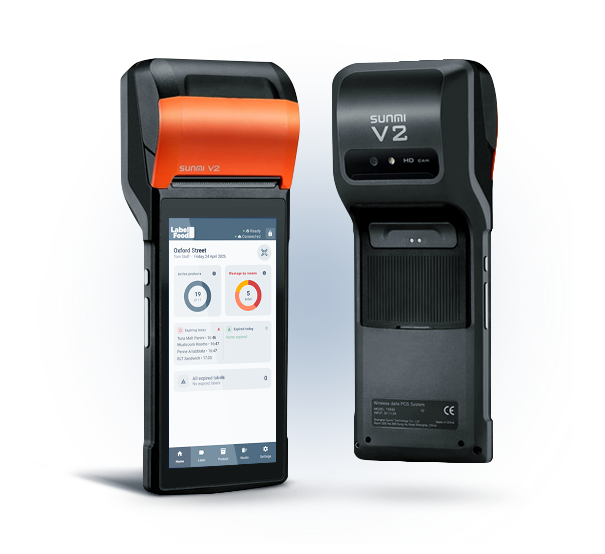
Local authorities, particularly across London, are increasing the frequency and rigour of allergen labelling inspections. A blank sticker with a handwritten "contains nuts" note is no longer sufficient. It is a direct route to a failed audit. The LabelFood Printer SV2 solves this by automating the entire process. It pulls data directly from a managed database to ensure every label is 100% compliant. It removes the burden of knowledge from busy staff and places it into a reliable, automated system.
What Qualifies as PPDS Food?
Understanding the scope of the law is the first step toward compliance. PPDS food refers to items packaged on-site before a customer selects or orders them. This includes:
- Sandwiches and wraps prepared and placed in a chiller.
- Salad pots and fruit bowls packaged for 'grab and go' service.
- Bakery items bagged on the premises before sale.
The distinction is clear. If the food is in the packaging before the consumer asks for it, it requires a full, compliant label. Made-to-order items follow different rules, but 'grab and go' inventory demands the most rigorous food prep date labels commercial standards available.
Preparing for a Food Safety Audit
Environmental Health Officers (EHOs) look for consistency and proof. Digital systems provide both. Unlike paper logs that can be lost or falsified, digital logs offer an unalterable compliance history. They prove you have followed the correct procedures for every batch produced. Standardisation is equally important. Allergen bolding must be clear and consistent to meet FSA standards. Using a Natasha's Law compliance checklist allows you to identify gaps in your current process before an inspector does. It ensures your kitchen is always audit-ready, protecting your reputation and your customers.

Operational ROI: Efficiency and Waste Reduction
Labelling isn't just a chore. It's a tool for profit protection. Every minute your staff spends scrawling on stickers is a minute stolen from the pass. High-performing kitchens view food prep date labels commercial systems as a strategic investment. Efficiency here translates directly to the bottom line. It reduces "prep time friction" and allows your team to focus on what they do best: cooking.
Profitability depends on precision. Automated systems allow for food waste recording at the exact point of disposal. You can't manage what you don't measure. Analysing this data helps head chefs optimise ordering. It informs menu planning. It identifies which ingredients are consistently over-ordered or under-utilised. This is how you turn a compliance requirement into a competitive advantage.
Reducing Labour Costs with Automation
The time savings are substantial. A digital label takes approximately 2 seconds to print. A manual label takes around 15 seconds to write and peel. Over a single shift, this adds up. Automated date calculation prevents "prep paralysis" during busy morning shifts. Staff don't need to pause and calculate shelf life. They just press a button. Training new staff becomes effortless. Digital systems require zero knowledge of complex shelf-life rules. It's a "plug and play" solution for a high-turnover industry.
Linking Labelling to Waste Management
Unlabelled food is the primary source of kitchen waste in the UK. If a chef can't verify the age of a sauce, it goes in the bin. This is preventable. Digital logs allow you to identify exactly which products are consistently over-prepped. You can adjust your prep lists based on hard data rather than gut feeling. The environmental impact is equally significant. Precise labelling reduces the volume of food sent to landfill. It makes your operation leaner and more sustainable. To see how these efficiencies can transform your kitchen, explore our food labeling solutions today.
Choosing the Right Commercial Labelling Solution
Choosing the right system requires a shift in perspective. Stop looking at labels as a consumable cost. View them as a piece of operational hardware. The food prep date labels commercial kitchens require must be as reliable as a combi oven. If the printer fails, the prep stops. If the software glitches, compliance is lost. Reliability is your absolute priority. A broken printer in the middle of a morning shift is more than an inconvenience. It is a compliance emergency.
Assess your volume first. A single-site cafe has different needs than a multi-site dark kitchen. High-volume environments demand speed and hardware durability. Environment is the next hurdle. Kitchens are hostile to electronics. Steam, grease, and extreme temperature shifts destroy standard equipment. Your labels must be waterproof and heat-resistant. They must stay attached in the freezer and remain legible under a heat lamp. Standard stickers simply aren't built for these physical realities.
Software integration is the final pillar of a professional setup. A central dashboard allows for instant menu updates across every site. It ensures that a recipe change at your London headquarters is reflected in your Manchester branch within seconds. This level of autonomy and integration is what separates a modern kitchen from an outdated one. You need a system that offers total control without the need for constant technical intervention.
The LabelFood SV2: A Standalone Solution
Dedicated hardware outperforms repurposed office gear every time. Standard office printers are too slow and too fragile for the line. The LabelFood Printer SV2 is a standalone hardware solution built for the physical realities of a workspace. It doesn't require a constant PC connection or local drivers. This autonomy prevents technical bottlenecks and ensures your prep line stays moving. It is compact, rugged, and ready for high-pressure service.
The integrated cloud dashboard simplifies allergen management for multi-site operators. You can manage your Natasha's Law Compliance Labels from one central location. This removes the risk of local staff making unauthorised or incorrect changes to ingredient lists. It provides a stabilizing force across your entire estate. It is the expert in the room that ensures every label is accurate, every time.
Implementation Checklist for 2026
Modernising your labelling process is a linear, logical sequence. Follow these steps to ensure a frictionless transition:
- Step 1: Audit current failures. Track your labelling errors and waste levels for one week. Identify the primary cause of non-compliance and lost profit.
- Step 2: Centralise your data. Upload your ingredient and allergen information to the Cloud Management Dashboard. Ensure all PPDS data is verified and audit-ready.
- Step 3: One-touch training. Train your team on the "one-touch" printing process. The goal is a system that requires zero knowledge of complex shelf-life rules from the operator.
Precision is the professional standard for 2026. By adopting a system designed for the rigours of the industry, you protect your customers, your staff, and your margins. It is the most efficient way to manage food prep date labels commercial requirements in a modern kitchen.
Standardising Your Kitchen for 2026 and Beyond
Manual labelling is a legacy process that no longer fits the speed of modern hospitality. Relying on handwritten stickers creates unnecessary risks for your customers and your bottom line. Transitioning to a digital system eliminates the labour trap of manual date calculation. It ensures you meet every Natasha's Law requirement with absolute precision. It's about replacing guesswork with a stabilising, professional standard.
Modernising your food prep date labels commercial strategy is the fastest way to slash kitchen waste and reclaim lost labour hours. By integrating automated printing with real-time waste tracking, you gain total control over your inventory and your compliance history. You're no longer just reacting to audits; you're operating at a level of efficiency that protects your margins and your reputation.
Join the leading London restaurants already using our standalone hardware to maintain audit-ready status every day. Upgrade your kitchen with the LabelFood SV2 Printer to benefit from integrated waste tracking and guaranteed Natasha's Law compliance. It's time to remove the friction from your prep line and focus on the craft of cooking. Your more efficient, compliant kitchen is just one upgrade away.
Frequently Asked Questions
Do I legally need to label food prepped in my commercial kitchen?
Yes. Food safety regulations and HACCP principles require clear traceability for all prepped ingredients. You must be able to prove when an item was made and exactly when it expires. Accurate food prep date labels commercial systems ensure you remain compliant during unannounced Environmental Health Officer (EHO) inspections. Failure to provide this data is a major non-compliance risk.
What is the difference between 'Use By' and 'Best Before' on kitchen labels?
'Use By' is a safety-critical deadline. Consuming food after this date poses a direct microbiological risk. 'Best Before' refers to food quality and peak flavour. In a professional kitchen environment, 'Use By' is the standard for almost all prepped components. It provides a clear, non-negotiable instruction to staff to dispose of expired stock immediately.
Can I use a regular Dymo printer for food prep labels?
It is not recommended. Standard office printers are not designed for the high-heat, high-humidity environment of a commercial kitchen. They lack the integrated software needed to automate shelf-life calculations and Natasha’s Law requirements. Professional systems use specialised thermal material that remains legible in chillers and freezers. Office-grade adhesives often fail, leading to lost traceability.
How does Natasha's Law affect my daily food prep labelling?
It mandates full ingredient lists and emphasised allergens for all Prepacked for Direct Sale (PPDS) items. If you package food on-site before a customer orders it, the label must be comprehensive. Manual handwriting is no longer a viable option for these items. Digital systems pull this data from a central dashboard to ensure 100% accuracy and legal compliance.
What should I do if a label falls off a prepped item?
Dispose of the item immediately. If you cannot verify the prep date or expiry with absolute certainty, the ingredient is a safety liability. This is why high-tack, durable labels are essential for profit protection. A lost label is lost profit. Switching to a professional digital printer ensures your food prep date labels commercial standards remain intact throughout the entire chill chain.
How much time can a digital food label printer actually save?
Digital printers reduce labelling time by approximately 85% compared to manual writing. Printing a compliant label takes roughly 2 seconds, whilst manual entry takes 15 seconds or more. For a kitchen producing 100 prep items daily, this saves hours of labour every week. It also eliminates the "prep paralysis" caused by staff manually calculating complex expiry dates.
Are digital kitchen labels waterproof and freezer-safe?
Yes. Professional-grade thermal labels are specifically engineered for extreme kitchen conditions. They use synthetic materials and high-grade adhesives that won't smudge in the chiller or peel off in the freezer. They are designed to withstand condensation and temperature shifts. This ensures that your safety data remains readable from the moment of prep until the point of service.
What information is mandatory on a commercial food rotation label?
Every label must include the product name, the prep date, and the calculated use-by date. For any item qualifying as PPDS under Natasha's Law, you must also include the full ingredient list with the 14 mandatory allergens emphasised in bold. Clear, standardised formatting is essential for passing food safety audits and ensuring customer safety during every shift.