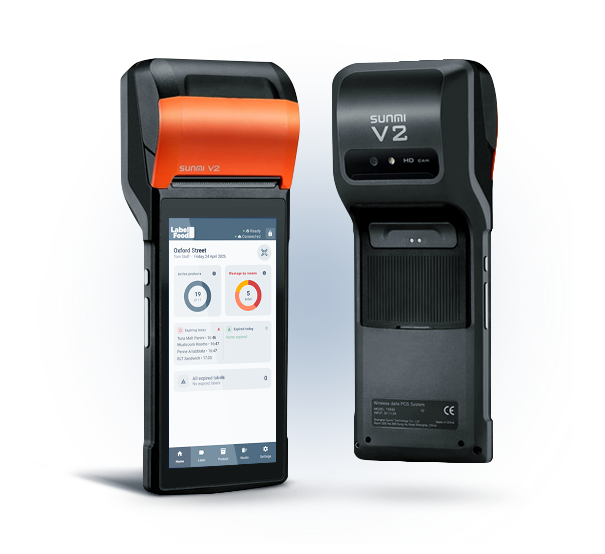
In 2026, an illegible handwritten label is no longer just a kitchen annoyance; it is a direct liability during a digital-first EHO audit. Your staff shouldn't spend their prep shift manually calculating shelf life or squinting at allergen charts. Finding the right food safety label printer UK businesses rely on is about more than just sticky paper. It is about building a compliance gatekeeper that protects your customers and your reputation. You need a tool that bridges the gap between physical food prep and the digital audit trails now required by the Food Standards Agency.
We understand that the fear of a Natasha’s Law oversight or a low hygiene rating keeps many operators awake at night. You need a system that works as hard as your kitchen team. This buyer’s guide explores how to select a professional labelling solution that ensures total accuracy whilst accelerating your prep cycles. We will break down the shift toward digital record-keeping and show you how a "set and forget" system makes every audit stress-free. It is time to replace manual errors with professional precision.
Key Takeaways
- Replace manual "day dots" with a dedicated food safety label printer UK system to eliminate allergen errors and shelf-life miscalculations.
- Compare standalone professional hardware against consumer Bluetooth gadgets to ensure durability in high-heat, high-grease kitchen environments.
- Utilise the LabelFood SV2 Cloud Management Dashboard to automate Natasha’s Law compliance and centralise ingredient data effortlessly.
- Achieve "audit-ready" status through digital records that align with the Food Standards Agency’s move toward digital-first enforcement.
- Optimise kitchen workflow with professional labelling stations that reduce staff training time and accelerate daily prep cycles.
Why Professional Food Safety Label Printers are Essential in 2026
The era of the "day dot" is over. In a modern kitchen, relying on a felt-tip pen and a roll of coloured stickers is a gamble you can't afford to take. Handwriting is no longer a cost-saving measure; it's a liability. Smudged ink or illegible dates lead directly to EHO marks down and, in the worst cases, catastrophic allergen incidents. A professional food safety label printer UK operators trust acts as a shield against these risks. It replaces guesswork with absolute precision. When every second counts during a busy service, your staff need clear, printed instructions, not a puzzle to solve.
The Legal Landscape: Natasha’s Law and PPDS
Understanding the evolution of UK food labelling laws is critical for any business handling Prepacked for Direct Sale (PPDS) items. Since the 2021 legislative shift, the requirements have become uncompromising. PPDS compliance dictates that any food packed on-site before being ordered must carry a label featuring the full ingredient list with the 14 mandatory allergens clearly emphasised. Automated systems remove the human error inherent in manual labelling. They ensure that if an ingredient changes in your recipe, the label updates across your entire estate instantly. Precision saves lives. It also saves your business from the legal fallout of non-compliance.
Beyond the Sticker: The Value of Digital Records
A physical label is only half of the solution. The Food Standards Agency is moving toward a "Digital-First" enforcement model. This means that during an inspection, having a digital log of your labelling activity is just as important as the stickers on your prep tubs. Modern systems like the LabelFood Printer SV2 don't just print; they record. Every label generated creates a timestamped entry in a Cloud Management Dashboard. This provides an immutable audit trail that proves your kitchen follows strict safety protocols every day. You don't have to scramble for paperwork when an officer walks through the door.
The shift towards cloud-based product data management isn't just about satisfying an EHO. It's about efficiency. When your product data is centralised, you eliminate the need for staff to memorise use-by durations or allergen profiles. They simply select the item, and the system handles the rest. This "set and forget" approach reduces prep time and ensures that your kitchen remains audit-ready at all times. In 2026, compliance isn't a periodic check; it's a continuous, automated process that runs silently in the background of your operation.
Key Features to Look for in a UK Food Safety Label Printer
A kitchen is a hostile environment for electronics. Heat, steam, and airborne grease will destroy consumer-grade hardware in weeks. When selecting a food safety label printer UK operators need a unit designed for the line, not the office. Reliability is your primary metric. If the printer fails during a busy Saturday night service, your compliance fails with it. You need a tool that is as rugged as your ovens and as precise as your scales.
Thermal Printing: Efficiency Without the Ink
Direct thermal printing is the industry standard for a reason. It is inkless. You don't want to be changing messy ink ribbons in the middle of a rush. Heat-sensitive paper creates the image; this results in a smudge-proof finish that survives the fridge and the freezer. It is vital to choose labels that are both peelable and residue-free. Scouring old adhesive off plastic containers is a waste of expensive labour. Professional rolls offer a significantly lower cost-per-label than consumer-grade tapes. They provide the high-volume capacity required for a commercial pace without frequent roll changes.
Software Integration and Cloud Sync
Hardware is only half the battle. A standalone printer without a management layer is just a typewriter. To stay compliant with Food Standards Agency guidance, your data must be accurate and up-to-date. Cloud-sync capabilities allow multi-site operators to update allergen information from a central office. One change on the dashboard updates every printer in the estate instantly. This eliminates the risk of outdated labels lingering in one specific branch. It ensures total brand consistency and safety across all locations.
Look for a "Chef-Proof" interface. The screen must be responsive even when operated with gloves or damp fingers. Connectivity shouldn't be an afterthought. Whether you use Wi-Fi or a hardwired Ethernet connection, the system must remain stable. For those seeking a unified approach, exploring professional food labeling solutions ensures your hardware and software work in total harmony. A standalone unit with an integrated processor is the most reliable choice. It avoids the clutter of separate tablets and reduces potential points of failure. This keeps your workflow linear and your digital records secure.
Standalone Professional Systems vs. Consumer Bluetooth Gadgets
A cheap label maker is a false economy. It is built for a home office, not a commercial kitchen. When you're pushing 500 labels a day, a plastic consumer device will overheat and jam. A food safety label printer UK professionals use is constructed for high-volume environments. It handles the constant friction of a 12-hour shift without degradation. Industrial hardware is an investment in stability. Consumer gadgets are merely temporary fixes that lead to long-term frustration. They lack the structural integrity required to survive the physical demands of a professional workspace.
Standard label makers often lack the memory or software to process complex UK food labelling requirements. They struggle with long ingredient lists and allergen bolding. This makes them useless for Natasha's Law compliance. Professional systems are built specifically for this purpose. They ingest data from your recipes and format it correctly every time. You aren't just buying a printer; you're buying a compliance engine that understands the law. Relying on a consumer device puts your business at risk of significant legal oversight.
The Problem with App-Only Bluetooth Printers
Connectivity is the silent killer of kitchen efficiency. Stainless steel surfaces reflect signals and cause frequent dropouts between a tablet and a Bluetooth printer. In the middle of a lunch rush, your staff don't have time to troubleshoot a "pairing failed" error. Re-pairing a device whilst prep is piling up is a recipe for stress and mistakes. Furthermore, app-only systems lack centralised management. If a staff member deletes the app or changes a setting, the whole process breaks. Professional standalone units operate independently of external devices, ensuring they are always ready to print.
Investment ROI: Why Standalone Systems Cost Less Long-Term
Think about the cost of a failed EHO audit. It far exceeds the price of a professional printer. Consumer-grade tapes are also expensive. You pay a premium for small cartridges that run out quickly and generate excessive plastic waste. Professional rolls offer better value and last significantly longer. An industrial unit is designed for at least five years of service in high-pressure environments. It doesn't need frequent replacement like its plastic counterparts. Consumer gadgets are for organisation whilst professional systems are for compliance. Investing in the right hardware today prevents the expensive breakdowns of tomorrow. It is a pragmatic choice for any serious operator.

Achieving Audit-Ready Status: Implementation and Best Practices
Compliance is an active process, not a static target. An EHO inspector in London doesn't just want to see a printer on your counter. They want to see it integrated into your daily habits. Consistency across your prep tubs and trays proves a robust safety culture. A food safety label printer UK kitchens rely on must be the heartbeat of the prep station. When an officer conducts a spot check, they look for clarity, accuracy, and an immutable digital trail. If your labels are uniform and your records are instant, you've already won half the battle.
Integrating Labelling into Prep Workflows
Position the unit at the "Point of Prep." This ensures every container gets a label immediately after the lid is closed. If the printer is across the room, staff will skip the step during a rush. Automated date calculation removes the risk of mental maths errors entirely. It keeps the workflow fast. It keeps the data accurate. Standardising your formats creates a professional, uniform appearance that builds inspector confidence. Your team should stop relying on memory and start relying on the system. This shift in behaviour ensures that no item is ever left unlabelled or misdated.
Using Labelling to Tackle Food Waste
Digital labels are the first step in tracking operational losses. They help you identify which specific items are consistently hitting their expiry date before they can be used. Linking your hardware to food waste recording software allows you to bridge the gap between prep and disposal. This data identifies over-prepping patterns and highlights staff training gaps. It directly improves your bottom line by reducing unnecessary stock loss. Accurate stock rotation is both an environmental necessity and a financial strategy. It ensures you only prep what you sell.
Training your team to "Trust the Label" is essential for long-term success. Memory is fallible, especially in high-pressure environments. The printer is not. When staff stop second-guessing use-by dates, prep speed increases and stress levels drop. Efficiency follows precision. You aren't just printing stickers; you're building a system of total kitchen control. Explore how our food labeling solutions can revolutionise your kitchen's audit readiness and eliminate manual errors for good.
The LabelFood SV2: The Standalone Solution for UK Kitchens
The LabelFood Printer SV2 is the definitive food safety label printer UK operators use to secure their compliance. It is not a modified office tool. It is a dedicated system designed from the ground up to meet rigorous British food safety regulations. From a single boutique cafe to a national catering operation; the SV2 scales effortlessly. It provides a unified solution that bridges the gap between physical kitchen prep and digital audit readiness. This is the expert tool your kitchen deserves.
Hardware Built for the Heat of the Kitchen
Reliability is non-negotiable in a professional London kitchen. The SV2 features a robust, industrial design that thrives in high-heat and high-grease environments. It is a true standalone unit. You don't need a separate tablet or a vulnerable Bluetooth link to operate it. This eliminates the connectivity dropouts that plague lesser systems. High-speed printing ensures your team stays ahead of the rush. It is built to last, preventing the frequent hardware failures common in consumer-grade gadgets. It is a stable force on your prep line.
Total Control via the Cloud Management Dashboard
The Cloud Management Dashboard provides the digital layer necessary for modern compliance. You can organise your entire menu and allergen profile in one central, secure location. Updates happen in real-time. When you change an ingredient at head office, every printer in your estate synchronises instantly. This ensures that every site uses the most up-to-date compliance information without exception. It removes the burden of manual data entry from your kitchen staff. You maintain total oversight of your food safety standards from any device.
Efficiency is the result of the right tools. The SV2 system provides the precision required for Natasha’s Law and the speed needed for commercial success. It is a pragmatic investment in your business's future. Stop managing labels and start managing your kitchen. Request a demo of the SV2 system today to see how we can simplify your compliance workflow and protect your reputation.
Standardise Your Kitchen Compliance
The transition to digital-first enforcement is no longer a future concept. It is the current standard. Choosing a professional food safety label printer UK businesses can rely on is a strategic necessity. You've seen how industrial hardware eliminates the fragility of consumer gadgets. You understand how digital logs transform stressful EHO audits into routine checks. Moving away from manual handwriting isn't just about speed; it's about removing the liability of human error. It is about protecting your customers through absolute precision.
Precision leads to efficiency. Efficiency leads to profitability. Take total control of your prep cycles and audit trails with a system built for the high-pressure environment of a commercial kitchen. Upgrade your kitchen compliance with the LabelFood SV2 Printer. Our solution is Natasha’s Law compliant out-of-the-box and includes integrated food waste recording tools. It is already trusted by professional kitchens across London and the UK. Secure your standards today.
Frequently Asked Questions
Is a food safety label printer a legal requirement in the UK?
Accurate food labelling is a legal requirement under the Food Safety Act 1990 and Natasha’s Law, though the specific method of production is not mandated. However, using a dedicated food safety label printer UK businesses trust is the most reliable way to ensure compliance. It provides clear, indelible information that satisfies EHO standards during inspections. Manual handwriting is increasingly viewed as a liability by enforcement officers due to the risk of illegibility.
How does a label printer help with Natasha’s Law compliance?
A label printer automates the formatting of ingredient lists to ensure compliance with Prepacked for Direct Sale (PPDS) regulations. It pulls data from a central database to bold the 14 mandatory allergens correctly every time. This eliminates the risk of a staff member forgetting to highlight a specific allergen during a busy shift. It guarantees that every label produced is accurate, uniform, and legally compliant without manual intervention.
Can I use a standard office printer for food labelling?
Standard office printers are unsuitable for commercial kitchen environments. They use ink or toner that can smudge and contaminate food surfaces, which is a significant hygiene risk. Additionally, standard office paper lacks the moisture resistance required for refrigeration. Professional thermal printers are inkless and use specialised adhesive labels designed to stay attached and legible in cold, humid, or greasy conditions.
What is the difference between "Use By" and "Best Before" on automated labels?
"Use By" dates indicate when food is no longer safe to eat, while "Best Before" refers to food quality and texture. Automated systems use pre-programmed shelf-life data to calculate these dates instantly once an item is selected. This prevents the dangerous "mental maths" errors that often occur when staff manually calculate expiry dates during a rush. It ensures that every container in your kitchen carries a precise, safe duration.
Do I need a separate tablet or computer to run the LabelFood Printer SV2?
You do not need an external tablet or computer to operate the LabelFood Printer SV2. It is a fully standalone system with an integrated touchscreen and internal processor. This reduces the physical footprint of your labelling station and removes the connectivity issues associated with pairing external devices. It functions as an independent compliance gatekeeper that is ready to work as soon as it is powered on.
How do I manage allergens for multi-site restaurant groups?
Multi-site groups manage allergens through a centralised Cloud Management Dashboard. This allows a head office or executive chef to update recipes and allergen profiles for the entire estate from one central location. These updates are pushed to every food safety label printer UK wide instantly. This ensures total consistency across all branches and removes the risk of site managers using outdated or incorrect ingredient information.
What happens if our kitchen Wi-Fi goes down during a shift?
The SV2 continues to function even if your kitchen Wi-Fi fails. It stores your product and allergen data locally on the device. While you need a connection to sync new updates from the cloud, the printer remains fully operational for all daily prep tasks during an outage. This prevents service disruptions and ensures your safety standards remain intact even when your internet connection does not.
Are thermal labels safe for use in freezers and microwaves?
Professional-grade thermal labels are specifically engineered for extreme temperatures. They remain legible and securely attached in freezers down to -20°C and won't peel or blacken under normal microwave heating. It is essential to use high-quality, residue-free labels to ensure they leave no adhesive on containers after washing. This maintains the longevity of your storage tubs and keeps your kitchen organised and professional.