Approximately 2.4 million adults in the UK now live with a clinically confirmed food allergy. In a high-pressure commercial kitchen, the margin for error is non-existent. You understand the stress of manual processes. Handwriting labels is slow. It invites mistakes. A single missed ingredient can lead to a hospital admission or a devastating EHO report. It is a weight that every kitchen manager carries.
Automated allergen labeling systems provide a stabilising force for your operations. This guide demonstrates how to eliminate manual error and ensure strict Natasha’s Law compliance for PPDS items. You will learn how to protect your customers whilst building a digital, audit-ready record for the EHO. We will explore the 2026 professional standards, including the shift toward written-first allergen information and the latest global standards for precautionary labelling. This is about precision. It is about efficiency. It is about total control over your kitchen’s safety standards.
Key Takeaways
- Eliminate the risk of manual error by replacing handwritten tags with a precise, digital system.
- Ensure your kitchen meets the strict requirements of Natasha’s Law for all prepacked for direct sale (PPDS) items.
- Learn how automated allergen labeling integrates a cloud dashboard with dedicated hardware for consistent multi-site management.
- Streamline menu onboarding using AI-assisted tools to accurately identify and categorise the 14 statutory allergens.
- Prepare for EHO inspections with audit-ready digital records, including staff activity logs and comprehensive compliance reports.
Understanding the Need for Automated Allergen Labelling
Manual labelling is a structural weakness in many UK kitchens. It relies on human consistency in high-stress environments. In 2024, a Food Standards Agency (FSA) study found that approximately 2.4 million adults in the UK have a confirmed food allergy. This makes accuracy a prerequisite for any food business. Understanding Food Allergies is the foundation of a safe kitchen; however, knowledge alone cannot prevent errors during a busy service. Automated allergen labeling removes the variables of fatigue and distraction by ensuring every tag is clear, legible, and technically accurate. It is a digital system that pulls data from a central, verified source to print labels on demand.
Automation is now a necessity for high-volume production. When a kitchen manages hundreds of covers, the risk of a single ingredient being overlooked increases. Cross-contamination often starts with poor communication. If a container is labelled incorrectly, the error follows that ingredient through the entire production line. A digital system creates a single source of truth. It ensures that the information on the label matches the master ingredient list every time.
The High Cost of Manual Labelling Errors
Scrawled handwriting is a liability. If a chef cannot read a prep date or an ingredient list, safety is compromised. Misinterpreting a "p" for "peanuts" or "pine nuts" can have fatal consequences. Beyond safety, manual calculations for shelf life are a significant time-sink. Staff spend valuable minutes checking calendars and counting days. This process is prone to mistakes, especially during peak hours. When staff are under pressure, morale drops if they feel the systems they use are unreliable or slow. A fast, clear labelling process reduces this friction.
Why Traditional "Day Dots" Are No Longer Sufficient
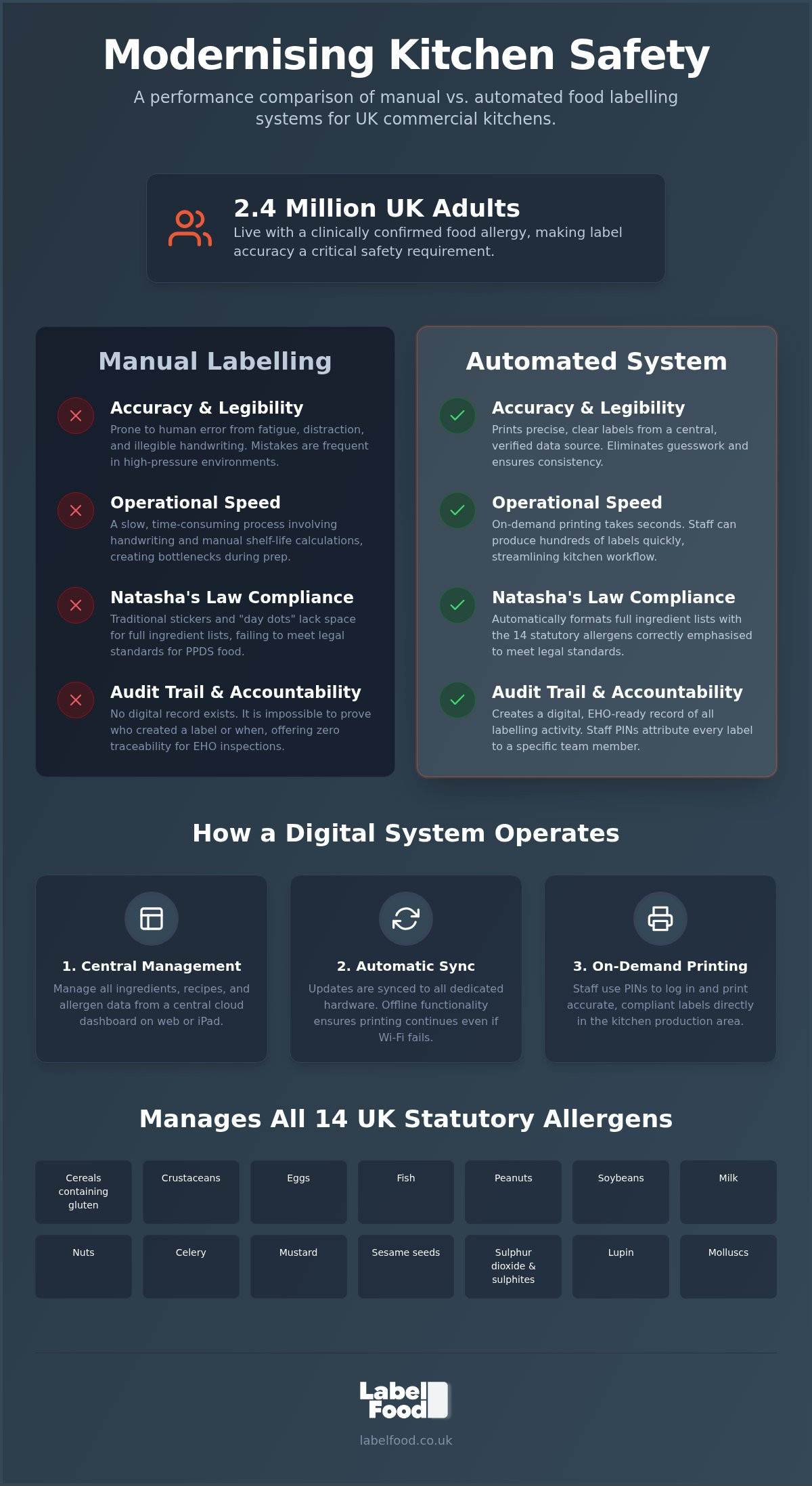
Generic colour-coded "day dots" show when food was prepped. They do not show what is in it. Under Natasha’s Law, all prepacked for direct sale (PPDS) food must have a full ingredients list with the 14 statutory allergens emphasised. Standard stickers lack the physical space for this level of detail. They also fail to provide an audit trail. Digital systems offer a superior alternative for EHO inspections. They record exactly who printed a label and when it was produced. This level of staff attribution, often managed via individual PINs, ensures accountability that a roll of stickers cannot match. It transforms labelling from a chore into a verifiable safety record.
How Digital Allergen Management Systems Operate
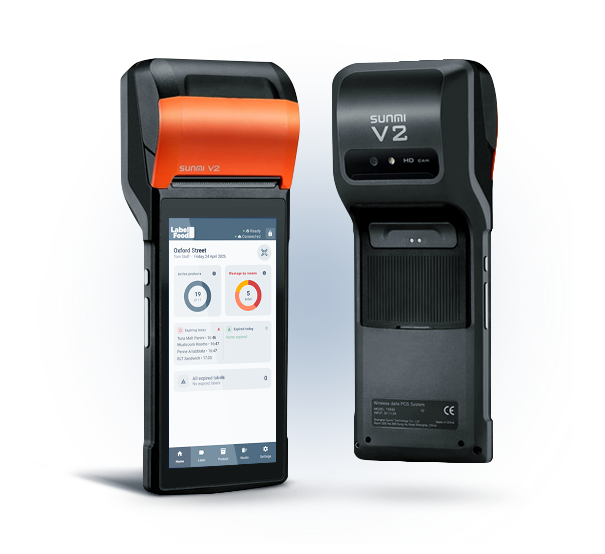
A professional automated allergen labeling system functions as a unified ecosystem. It bridges the gap between administrative oversight and physical kitchen production. The architecture consists of two primary layers: a cloud management dashboard and dedicated hardware, such as the LabelFood Printer SV2. You manage your menu, ingredients, and allergen data from any web browser or iPad. These updates sync immediately across your entire estate. This ensures that every kitchen site uses the same verified data, regardless of its location. It removes the risk of outdated ingredient lists being used in different branches.
Reliability is non-negotiable in a commercial environment. Internet connections often fail during peak service hours. To counter this, the system includes robust offline functionality. If the Wi-Fi drops, the printer continues to operate using its stored local database. Production never stops. Once the connection is restored, the device automatically syncs all activity logs back to the central dashboard. This provides a seamless record of every label printed during the outage. It's a fail-safe approach that keeps your kitchen moving.
Operational transparency is maintained through individual staff PINs. Every label printed is attributed to a specific team member. This creates a detailed staff activity report, which is essential for internal quality control and EHO inspections. You can track exactly who prepped a specific batch. This level of accountability is impossible with generic stickers. It transforms labelling from a manual chore into a verifiable safety record. If you're looking to modernise your workflow, a complete food labelling system provides the necessary infrastructure.
Managing the 14 Statutory Allergens
UK law requires the clear declaration of 14 major allergens. The system organises these precisely, treating peanuts and tree nuts as separate categories to align with UK Allergen Labelling Requirements. When a supplier changes their recipe, you update the master file in the dashboard. The system then automatically applies bold formatting to these allergens in every ingredient list. This removes the burden from kitchen staff. They don't need to remember which specific ingredients require emphasis; the system handles the formatting logic for them.
Natasha’s Law and PPDS Labelling
Natasha’s Law targets food prepacked for direct sale (PPDS). These are items prepared and packed on-site before a customer selects them. The system generates compliant labels that feature the product name and a full ingredient list. Every statutory allergen is emphasised every time it appears. This ensures that customers have immediate access to life-saving information. For a detailed breakdown of these legal standards, refer to our guide on natasha’s law labelling requirements. Accurate PPDS labelling is a cornerstone of modern food safety.
Manual vs. Automated Labelling: A Performance Comparison
Manual labelling is a bottleneck in professional kitchens. A chef might spend thirty seconds handwriting a single container tag. When multiplied across hundreds of prep items, this represents a significant loss of productivity. Automated allergen labeling reduces this task to a few seconds. One touch of a screen prints a clear, compliant label. This speed is critical during high-volume prep sessions. It allows your team to focus on food quality rather than administrative tasks. Efficiency is the primary driver for this transition.
Accuracy is another major differentiator. Manual entry relies on staff correctly calculating shelf-life dates and identifying ingredients from memory. This "guesswork" leads to errors. If a date is unclear, food is often discarded early to avoid safety risks. This creates unnecessary waste. Digital systems automate these calculations. They apply pre-set shelf-life rules to every product. This ensures consistency and significantly reduces food disposal costs. Precise records also support your brand image. A professional, printed label looks superior to a smudged handwritten sticker. It demonstrates a commitment to safety that aligns with Official UK Food Labelling Guidance regarding legibility and consumer information.
Reliability in the Kitchen Environment
Standard office printers are not designed for commercial kitchens. Heat, steam, and grease cause frequent hardware failures. Inkjet labels smudge when handled with damp hands. Thermal printing technology is the professional alternative. It uses heat rather than ink to create images. This results in labels that remain legible in refrigerators and hot holding areas. The LabelFood Printer SV2 is a dedicated hardware solution built for these conditions. It operates as a standalone unit. It doesn't require a separate PC or complex wiring, making it a stable fixture in a busy workspace.
Staff Training and Adoption
Manual systems require extensive training. New staff must learn complex allergen charts and shelf-life protocols. This is a challenge during periods of high staff turnover. Digital interfaces are intuitive. They guide the user through the process, reducing the learning curve to minutes. Individual staff PINs further improve performance. They create a culture of accountability. If a labelling error occurs, you can identify the specific training gap. This reduces the burden on senior chefs. The system holds the technical knowledge, so your team doesn't have to. It makes the onboarding process faster and more reliable.
Transitioning Your Kitchen to Automated Compliance
Transitioning from manual "day dots" to automated allergen labeling is a structured process. It moves your kitchen from a reactive state to a controlled, digital environment. Success depends on data accuracy and staff engagement. The transition follows a logical sequence to ensure your operations remain uninterrupted. It is a shift from guesswork to verifiable precision.
- Step 1: Audit. Review your current menu. Identify every instance of the 14 statutory allergens across your ingredients.
- Step 2: Onboard. Import your product data into the system. Use Excel files or AI-assisted reading for faster entry.
- Step 3: Configure. Access the cloud management dashboard via web or iOS. Set staff PINs and define access levels for your team.
- Step 4: Install. Deploy the dedicated kitchen printer. Test the offline functionality to ensure production continues during Wi-Fi outages.
- Step 5: Launch. Train your staff on the intuitive interface. Review the first Compliance Pack reports to verify accuracy.
Efficient Menu Onboarding
Data entry is often the biggest hurdle for busy chefs. You can streamline this using AI tools designed to read PDF specification sheets or photos of ingredient labels. This technology is a support tool for user review and editing. It is never an autonomous publisher of data. You remain the final authority. Every entry must be checked to ensure it follows a standardised UK format. This includes the correct emphasis of allergens. Once verified, your product catalogue is available instantly on the kitchen floor. This speed allows for rapid menu changes without the risk of manual transcription errors.
Maintaining Audit Readiness
Digital records simplify EHO inspections. The system generates a comprehensive Compliance Pack. This report provides a clear history of your labelling activity. It proves you have a robust process for managing the 14 statutory allergens. You can also monitor staff activity logs. This data identifies training gaps before they lead to safety incidents. If a specific team member consistently makes errors, you can provide targeted support. For more on management best practices, see our guide on allergen management software UK. Proactive monitoring ensures your kitchen stays audit-ready at all times.
Modernise your kitchen operations and secure your data with a complete food labelling system.
LabelFood: The Professional Standard for UK Food Labelling
LabelFood provides a stabilising force for UK commercial kitchens by integrating the LabelFood Printer SV2 with a robust cloud management dashboard. This creates a dedicated environment for automated allergen labeling that is built for the physical realities of a professional kitchen. The SV2 uses thermal technology to produce heat-resistant, legible labels without the need for ink cartridges. It is a standalone solution. It operates without the need for third-party tablets or complex cabling, ensuring your labelling station remains a reliable fixture in high-pressure environments.
Operational oversight is centralised through a dashboard accessible via web browsers or the iOS and iPad app. Note that there is no Android version of the management panel. Owners use this interface to track food waste through records that include photos and notes. This data identifies procurement issues and reduces unnecessary costs. Every action in the kitchen is recorded, providing a clear narrative of activity. It transforms the labelling process into a comprehensive management tool that supports total kitchen oversight.
A Complete System, Not Just a Printer
A subscription provides the complete infrastructure required for modern compliance. This includes both the SV2 hardware and the full software suite, removing the friction of sourcing compatible components. You gain access to specific reporting tools: the Compliance Pack, Label Report, and Staff Activity logs. These reports utilise individual staff PINs to ensure every label is attributed to a specific team member. This level of detail is a prerequisite for professional kitchen management. It replaces vague manual logs with verifiable, digital data that is easy to manage across multiple sites.
Future-Proofing Your Kitchen
Digital records support your business during inspections across different UK jurisdictions. It is essential to recognise that regulatory oversight varies by region. In England, Wales, and Northern Ireland, digital logs assist with the Food Hygiene Rating Scheme. In Scotland, these same records support the Food Hygiene Information Scheme. While LabelFood is a support tool and does not guarantee a specific rating, it provides the verifiable evidence that inspectors require. This discipline ensures your operations remain scalable and prepared for evolving standards. You can update ingredient data centrally and push those changes to your entire estate instantly.
Modernise Your Kitchen Safety Standards
The transition to digital record-keeping is a pragmatic response to the evolving complexity of UK food safety regulations. Manual labelling is no longer a viable foundation for professional kitchens. It introduces risk and creates bottlenecks during peak service. By implementing automated allergen labeling, you provide your team with a reliable system that ensures every ingredient list is accurate and every statutory allergen is correctly emphasised. This replaces illegible handwritten tags with professional labels that meet Natasha’s Law standards for PPDS items.
Operational oversight is maintained through the dedicated LabelFood Printer SV2 and the integrated cloud dashboard. You can manage your entire product catalogue from a single web or iOS interface while generating audit-ready Compliance Pack reports for EHO inspections. This system provides the stability required in high-pressure environments. It protects your customers and secures your business reputation through precision and accountability. You've mastered the menu; let the right tools manage the technical details.
Discover how the LabelFood SV2 Printer can stabilise your kitchen compliance and build a more efficient, professional kitchen today.
Frequently Asked Questions
Is automated allergen labelling mandatory in the UK?
Automated allergen labelling is not a legal mandate, but complying with UK food safety laws is. You must provide accurate information under the Food Information Regulations 2014 and Natasha's Law. Using an automated system is a pragmatic way to eliminate manual error. It ensures your kitchen meets the required standards for 14 statutory allergens without relying on handwritten tags that may be illegible or incomplete.
How does Natasha’s Law affect my automated labelling system?
Natasha’s Law requires full ingredient lists for prepacked for direct sale (PPDS) foods. Your automated allergen labeling system simplifies this by storing verified ingredient data in the cloud. When you print a label, the system automatically emphasises the 14 statutory allergens in bold. This ensures every PPDS item leaving your kitchen features a compliant and clear list that customers can trust.
Can I use the LabelFood system if my kitchen loses internet connection?
Yes, the LabelFood Printer SV2 is designed with offline functionality. The device stores your product database locally so your kitchen never stops during a Wi-Fi outage. You can continue to print labels as normal. Once the internet connection is restored, the printer automatically syncs all data and activity logs back to your management dashboard for accurate digital record-keeping.
Does the system automatically identify allergens in my ingredients?
The system includes AI-assisted onboarding that reads PDFs and photos of ingredient specifications. This tool identifies potential allergens for your review. It's not an autonomous publisher; you must edit and confirm the data before it's saved. This ensures that you maintain total control over the accuracy of your product catalogue while significantly reducing the time spent on manual data entry.
Is the LabelFood dashboard available on Android devices?
The LabelFood management panel is available exclusively on web browsers and iOS/iPad platforms. There's currently no Android version of the dashboard. This focus ensures that the software remains stable and highly integrated with the hardware components. Owners and managers can monitor their sites and update menus from any compatible Apple device or desktop computer with internet access.
How do I track staff accountability for food labelling?
Accountability is managed through individual staff PINs. Every label printed is attributed to a specific team member in the Staff Activity reports. This allows you to track performance and identify where additional training may be required. By using these digital records, you create a transparent audit trail that's ready for review during any EHO inspection or internal quality audit.
Can I record food waste using the same automated system?
Yes, the system allows you to log food waste alongside your labelling tasks. You can record the type and weight of the waste, including photos and specific notes for context. These records are synced to the cloud dashboard, providing owners with a clear view of kitchen efficiency. This data helps you identify procurement issues and reduce unnecessary costs across your estate.
What are the 14 allergens that must be labelled in the UK?
UK regulations require the declaration of 14 statutory allergens. These are celery, cereals containing gluten, crustaceans, eggs, fish, lupin, milk, molluscs, mustard, peanuts, sesame, soybeans, sulphur dioxide and sulphites, and tree nuts. The LabelFood system treats peanuts and tree nuts as separate categories. This ensures your kitchen maintains the specific standards required for accurate and safe food labelling across all menu items.