An EHO inspection should not be a source of anxiety. For many UK kitchens, the sight of a clipboard still triggers a search for missing allergen data or illegible prep dates. You understand that manual handwriting is slow and prone to error. It is a bottleneck that risks both customer safety and your hygiene rating. Finding the right sandwich labeling machine UK operators can rely on is about more than just printing stickers. It is about protecting your business from regulatory risk.
This guide explains how to select a professional sandwich labelling system that ensures Natasha's Law compliance for your prepacked for direct sale (PPDS) items. You will discover how to manage the 14 statutory allergens, including the specific requirements for peanuts and tree nuts, whilst streamlining your kitchen operations. We will examine the transition from manual logs to audit-ready digital reporting, helping you reduce food waste and speed up your prep-to-shelf workflow. Professional labelling provides the clarity your staff need and the peace of mind your business requires.
Key Takeaways
- Understand the specific requirements of Natasha's Law for PPDS food and how to correctly identify all 14 statutory allergens.
- Discover how a dedicated sandwich labeling machine UK system reduces manual handwriting time and eliminates common errors in allergen marking.
- Learn to use the LabelFood Printer SV2 and cloud dashboard to manage multi-site menus and track staff activity via individual PINs.
- Identify how integrated food waste records and automated compliance reports streamline your preparation for future EHO inspections.
- See how AI-assisted menu onboarding can digitise your existing product list for user review, ensuring a fast transition to a professional labelling workflow.
Understanding UK Sandwich Labelling Regulations in 2026
UK food safety standards are rigorous. Compliance is not optional. Following the UK food information regulations ensures your business operates within the law. Central to these rules is Natasha’s Law. It mandates that all prepacked for direct sale (PPDS) food must carry a full ingredients list. This list must specifically highlight any of the 14 statutory allergens. A professional sandwich labeling machine UK system helps maintain these standards without slowing down your kitchen flow.
What Qualifies as PPDS Food?
PPDS refers to food packed on the same premises from which it is sold. If you make a sandwich, wrap it, and place it in a chiller before a customer orders it, it is PPDS. This distinction is critical. Food made to order does not require the same labelling, but PPDS items must be fully transparent. Handwritten labels often fail EHO inspections. They are often illegible or missing vital data. Professional systems ensure clear typography and high contrast. This makes ingredients easy to read for both customers and inspectors. Clear labels are a baseline requirement for safety.
The 14 Allergens and UK Legal Accuracy
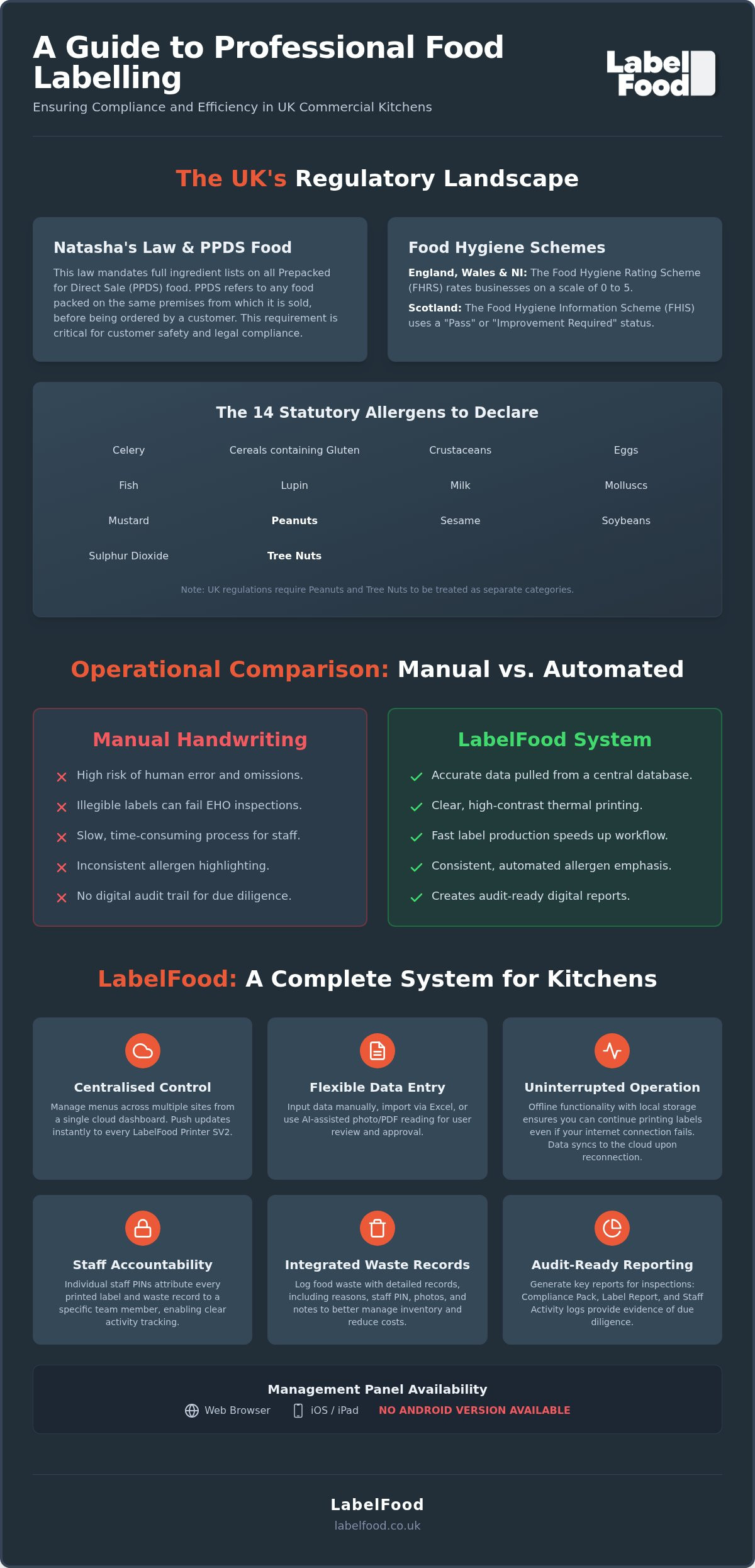
Accuracy is paramount. You must recognise 14 statutory allergens. These include celery, cereals containing gluten, crustaceans, eggs, fish, lupin, milk, molluscs, mustard, peanuts, sesame, soybeans, sulphur dioxide, and tree nuts. UK standards require you to treat peanuts and tree nuts as separate categories. You must not group them together. Allergens must be emphasised in the ingredients list. Most kitchens use bolding or underlining to meet this requirement. Manual systems rely on staff memory. This increases the risk of cross-contamination errors or omitted ingredients. An automated sandwich labeling machine UK kitchen setup removes this variable. It pulls data directly from a managed database to ensure every label is correct.
Your Food Hygiene Rating depends on your records. In England, Wales, and Northern Ireland, the Food Hygiene Rating Scheme (FHRS) rates businesses from 0 to 5. In Scotland, the Food Hygiene Information Scheme (FHIS) uses a "Pass" or "Improvement Required" status. Whilst a labelling machine doesn't guarantee a rating, it provides the evidence EHOs look for. It shows a systematic approach to allergen management. Clear, professional labels signal that your kitchen is organised and compliant. This level of detail is essential for maintaining consumer trust and passing inspections.
Key Features of an Effective Sandwich Labelling Machine
Selecting a sandwich labeling machine UK operators can trust requires looking beyond the printer itself. It is a choice between a standalone tool and a unified system. High-pressure kitchens need hardware that withstands grease, heat, and humidity. Professional systems use stainless steel casings and easy-clean surfaces to maintain hygiene standards. These machines must produce mandatory food labelling information clearly on every sticker. Direct thermal printing is the industry standard for short-life items like sandwiches. It eliminates the need for ink or toner, reducing both operational costs and maintenance downtime.
Hardware vs. Integrated Systems
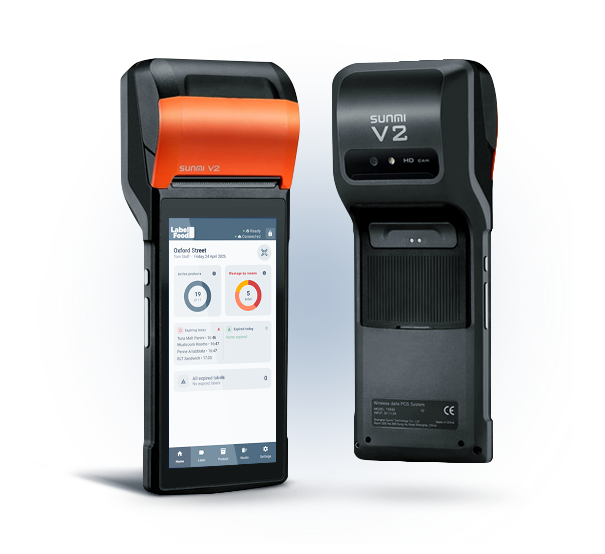
Standalone printers create data silos. They are insufficient for multi-site operations where consistency is vital. The LabelFood Printer SV2 is part of a complete food labelling system. It connects directly to a cloud management dashboard for centralised control. This allows you to push menu updates to every site instantly. Management is handled via a web browser or iOS device. It's important to recognise that the management panel is available on web and iOS/iPad only; no Android version is available. This integrated approach ensures your labelling remains uniform across your entire estate.
Data Entry and Menu Management
Setting up a product list should not take weeks. Efficient systems allow you to import product catalogues via Excel or use AI-assisted PDF and photo reading. This AI acts as a tool for user review and editing. It is never an autonomous publisher of data. You maintain total control by verifying every ingredient and allergen before it enters the system. Once you approve the data, it synchronises across all kitchen terminals. This process removes the friction from onboarding new menu items or updating seasonal recipes.
Kitchen operations must continue even if the internet fails. Local storage provides offline functionality so your staff can keep printing labels during a connection outage. The system syncs all data to the cloud once the connection returns. This reliability makes a complete food labelling system an essential partner in a professional kitchen. It provides the stability you need to focus on production rather than troubleshooting hardware.
Manual Labelling vs. Automated Systems: An Operational Comparison
Handwriting is a liability. It is slow. It is often unreadable. A sandwich labeling machine UK kitchens adopt instead creates a professional, high-impact finish that generic stationery cannot match. Consider the time-motion requirements of a standard lunch service. Handwriting 100 labels for individual PPDS items can take a chef 20 to 30 minutes. This includes writing the product name, the full ingredient list, and highlighting allergens. A batch printer completes this task in seconds. This gap represents a significant labour cost when calculated across a single month of operation.
Labour Efficiency in the Commercial Kitchen
Automated systems return time to your staff. Chefs should focus on food quality, not stationery. The LabelFood system uses individual PINs for every staff member. This creates clear accountability for every label produced. The management panel provides a Staff Activity report, allowing managers to track production volumes and identify training needs. This data transforms the "prep-to-shelf" workflow. Staff select a product on the terminal, print the required quantity, and apply the labels immediately. The process is linear and frictionless.
Reducing Regulatory and Financial Risk
The financial risk of a labelling error is high. Human error is the primary cause of allergen mislabelling in manual systems. Misreading a recipe or forgetting to underline an ingredient can lead to non-compliance with Natasha's Law. Digital records mitigate this risk. They provide a "Compliance Pack" for EHO inspections, showing exactly what was printed and when. Following Food Standards Agency guidance is straightforward when your data is locked into a cloud-managed database.
Professional labelling builds consumer trust. A printed label with clear, bolded allergens looks safer and more reliable than a scribbled note. Consistency in brand presentation is also vital for multi-site operators. Whilst generic stationery might seem cheaper initially, it lacks the adhesive quality needed for chilled environments. It also fails to provide the digital audit trail necessary for modern food safety. Switching to a complete food labelling system ensures your records are audit-ready and your presentation is uniform across every site.
- Eliminate handwriting errors in ingredient lists.
- Speed up the labelling process for high-volume lunch prep.
- Track staff performance through individual PIN attribution.
- Maintain a digital "Compliance Pack" for easy EHO review.
Beyond the Label: Waste Management and Reporting
Efficiency extends beyond the sticker. A sandwich labeling machine UK kitchens rely on should also capture data. Integrating food waste recording into your daily workflow transforms inventory management. Paper waste sheets are often lost or incomplete. Digital logs on the SV2 terminal provide a permanent alternative. Staff document discarded items with specific notes and photos. This detail explains why food is being wasted. It does not just list what is thrown away.
Digital Food Waste Logs
Recording waste on the same device used for labelling streamlines the process. Every entry is linked to a specific product and a staff member via their unique PIN. This visibility leads to direct cost savings. You can identify if a specific site or shift is over-producing. You can see which recipes frequently result in waste. This data allows for precise adjustments to production volumes. It reduces the financial impact of unsold stock whilst maintaining full shelves. It turns a compliance task into a commercial advantage.
Audit-Ready Reporting Tools
Transparency is the foundation of digital kitchen compliance records. The cloud management dashboard generates specific reports designed for EHO review. The Compliance Pack provides an audit trail of every label printed. It shows the exact ingredient lists and allergen warnings used on any given date. Label Reports help you compare production against sales. This identifies the balance between availability and waste. Use these insights to optimise your daily prep lists.
Staff Activity reports identify where training is needed. If waste is consistently high on certain shifts, you have the data to intervene. This is not about surveillance. It is about maintaining professional standards across your organisation. Having a permanent digital record of all activity ensures you are always ready for an inspection. It moves your kitchen from reactive fixes to proactive management. The management panel is available on web and iOS/iPad only, ensuring your data is accessible from the office or the kitchen floor.
Gain total control over your kitchen output with a complete food labelling system that tracks every discarded item.
Implementing the LabelFood Printer SV2 in Your Kitchen
Deployment of a sandwich labeling machine UK kitchens use should be seamless. The SV2 is designed for immediate utility. Setup begins by unboxing the hardware and connecting it to your Wi-Fi. You then sync the device with your cloud management dashboard. This process is linear. The terminal is ready for production within minutes. It is a standalone solution that does not require complex IT integration.
Onboarding your existing menu is the next step. Use the AI-assisted tool to upload photos or PDFs of your current product lists. The system extracts the data for your review. It is essential to understand that the AI is a tool for user review and editing. You maintain total control. You must verify every ingredient and ensure the 14 statutory allergens are correctly highlighted. Once you approve the data, it is instantly available on the kitchen terminal.
Staff training is straightforward. The touch-screen interface is designed for high-pressure environments. Every team member uses an individual PIN to log in. This ensures all labelling activity is attributed to a specific user. They select the product, confirm the quantity, and print. The system handles the complex formatting required for Natasha's Law compliance. Your staff can focus on food quality whilst the system manages the technical details of the label.
A Professional Standard for UK Hospitality
London bakeries and busy cafes require high reliability. The LabelFood Printer SV2 provides this professional standard. It is the preferred choice for operators who need a durable, stainless steel device that handles high volumes. Subscriptions include the printer and a consistent label roll supply. This removes the logistical burden of sourcing generic stationery. You receive dedicated support and a system that operates offline if your internet connection fails.
Next Steps for Your Business
Begin by assessing your current labelling volume. Identify the points in your workflow where manual errors occur most frequently. These are your primary compliance gaps. Organising a demonstration of the LabelFood system allows you to see the speed of the SV2 firsthand. You can test the iOS and web management panels to see how they fit your administrative routine. Moving toward a paperless, fully compliant kitchen operation is a logical step for any modern food business. It provides the stability you need for long-term growth and successful EHO inspections.
- Review your current PPDS labelling for legibility and allergen accuracy.
- Digitise your menu using AI-assisted onboarding for faster setup.
- Implement individual PINs to improve staff accountability.
- Switch to a subscription that includes hardware and label supplies.
Standardising Your Kitchen Compliance
Transitioning from manual to automated systems is a requirement for modern UK food safety. You have seen how precise labelling for PPDS items protects your business from regulatory risk. Digital waste logs and individual staff PINs provide the visibility needed for efficient management. These tools move your operation beyond guesswork and into a state of total control. Professional standards are easier to maintain when the technical burden of compliance is managed by a reliable system.
Adopting a professional sandwich labeling machine UK operators trust is about more than just printing stickers. It is about implementing a system used by leading UK bakeries and cafes. The SV2 hardware features Red Dot Design Award winning design and includes a comprehensive Reporting and Compliance Pack for your auditing needs. This integrated approach ensures your records are always audit-ready and your kitchen remains efficient under pressure.
It is time to eliminate manual errors and streamline your prep-to-shelf workflow. Upgrade your kitchen with the LabelFood Printer SV2 system to secure your operational future. Establish a reliable, professional standard in your workspace today.
Frequently Asked Questions
Does Natasha's Law apply to all sandwiches sold in the UK?
No, it applies only to prepacked for direct sale (PPDS) items. These are sandwiches packed on-site before being ordered by a customer. Sandwiches made to order or packed off-site fall under different regulations. London cafes must distinguish between these categories to avoid unnecessary labelling costs whilst maintaining safety standards for all items kept in chillers. Accurate identification ensures you meet specific legal requirements for ingredient transparency.
Can I use a standard office printer for sandwich labels?
Standard office printers are not suitable for professional kitchen environments. They use ink or toner that can smudge in humid or chilled conditions. A dedicated sandwich labeling machine UK operators use, like the SV2, uses direct thermal printing. This ensures labels remain legible and adhesive in commercial fridges. It also eliminates the ongoing cost and mess of ink cartridges in a food preparation area.
How does the AI menu onboarding work for the SV2?
You can upload photos or PDFs of your current menu or ingredient lists directly to the system. The AI reads this data and populates your product catalogue. This AI acts only as a tool for user review and editing. You must verify every ingredient and allergen before the data is published to the printer. This ensures total accuracy for your London business whilst reducing manual data entry time significantly.
Is there an Android app for the LabelFood management dashboard?
The management panel is available exclusively on web browsers and iOS/iPad devices. There is no Android version of the software available. London kitchen managers can access the dashboard from a desktop computer or an iPad to update menus and review reports. The SV2 printer terminal is a standalone hardware unit. It does not require a separate mobile device for daily label production or data management in the kitchen.
What allergens must be highlighted on a sandwich label?
You must highlight 14 statutory allergens if they are present as ingredients. These include celery, cereals containing gluten, crustaceans, eggs, fish, lupin, milk, molluscs, mustard, peanuts, sesame, soybeans, sulphur dioxide, and tree nuts. UK regulations require you to treat peanuts and tree nuts as separate categories. These must be emphasised in the ingredients list using bolding or underlining to ensure clear communication with your customers and EHO inspectors.
Does the system work if the kitchen Wi-Fi goes down?
The LabelFood system includes offline functionality to prevent downtime in busy London sandwich shops. Your staff can continue to select products and print labels even during an internet outage. The terminal stores all necessary data locally. Once the connection is restored, the system automatically syncs all activity, including food waste records and staff logs, back to the cloud management dashboard. This ensures your records remain complete and up to date.
How do PINs help with kitchen management?
Every staff member is assigned a unique PIN for terminal access. This creates a clear digital record of who printed specific labels and when they were produced. Managers use the Staff Activity report to monitor production volumes and identify training gaps. This level of attribution improves accountability and helps maintain professional standards across your kitchen team. It removes the need for manual supervision of labelling tasks during peak service hours.
Can the machine record food waste as well as print labels?
The SV2 is a complete system that integrates food waste recording into the labelling terminal. Staff document discarded items by adding notes and photos directly on the screen. This data is then synced to the cloud for analysis. It allows London operators to identify why waste is occurring, whether due to overproduction or quality issues. This insight helps you reduce costs and optimise daily prep lists for better efficiency.