A label can look secure on the prep bench and still fail in the freezer. If freezer-safe food prep labels lift, smudge or become unreadable at -18°C, staff may lose track of what food is and when it was prepared. Choosing a label means considering more than the sticker: adhesive, surface, moisture, print method and record-keeping all matter.
Clear labelling supports safe food handling, but it does not replace your legal responsibilities. UK food information rules require accurate information, including declaration of the 14 statutory allergens where applicable. Natasha’s Law applies to prepacked for direct sale (PPDS) food and requires a full ingredients list with allergens emphasised. A label system can support your records and processes, but cannot guarantee compliance.
This guide explains what to check before buying, including freezer-temperature performance, adhesion in damp conditions, print legibility and workflow. You’ll also learn why there is no specific UK standard for freezer-safe prep labels, what to ask suppliers, and how a connected printer and management system can help keep kitchen records organised and ready to review.
Key Takeaways
- Check the supplier’s stated freezer temperature range, application conditions and performance around moisture before choosing a label stock.
- Compare freezer-safe food prep labels by material, print method and how clearly information can be read after storage.
- Review where handwriting slows prep or creates avoidable input errors before deciding whether to automate parts of your workflow.
- Assess whether the LabelFood Printer SV2 and cloud dashboard suit your kitchen, including offline use with cloud syncing and multi-site control.
- Use photo and note records to add useful detail when tracking food waste, expired stock or freezer-related issues.
The Challenges of Labelling for Sub-Zero Storage
A label that works on a dry prep bench may not stay put in a commercial freezer. Standard day dots and masking tape are not necessarily made for cold, damp surfaces. Their adhesive can lose its grip, while handwriting may become difficult to read after handling. Staff may then be unable to identify a container, confirm when it was prepared or decide whether it should be used or discarded.
Clear records support safe food management, but no single label format guarantees an EHO inspection outcome. Inspectors assess how a business manages food safety. Your system should make relevant information, including preparation and freezing dates, easy for staff to find and interpret. Natasha’s Law applies specifically to prepacked for direct sale (PPDS) food. It requires a full ingredients list with the 14 statutory allergens emphasised. Freezing food for later use does not, by itself, make it PPDS.
Temperature Fluctuations and Adhesive Failure
Check two separate specifications. Application temperature is the range in which a label can be applied and bond. Service temperature is the range it can withstand once attached. Ask suppliers for both, and confirm that the stated performance covers your actual application process.
Frost, moisture or condensation between the label and a plastic tub or stainless-steel surface can interfere with the bond. If a label is applied to a cold, damp container, it may not adhere as intended. Vibration and handling can then worsen a weak bond. Labels may lift, shift or fall off, leaving containers among other stock without identifying details.
Legibility and Condensation
Moving a frozen container into a warmer, humid area can cause condensation on its surface. Depending on the label and writing instrument, moisture and handling may blur or smear handwriting. Small, rushed notes can also be hard to read in a busy kitchen. Printed text can improve consistency, but check that the label and print method remain legible through your storage and handling conditions.
The Food Hygiene Rating Scheme uses a 0–5 scale in England, Wales and Northern Ireland. Scotland has a separate Food Hygiene Information Scheme. Neither scheme sets a universal freezer-label format, and a label alone cannot secure a rating. The wider purpose of food labelling regulations is to make food information clear and usable. In practice, readable dates help staff follow your procedures and support inspection discussions.
Unidentified stock creates avoidable decisions: spend time investigating, use food without enough information or discard it. Repeated losses can affect stock control and waste records. Durable, legible freezer labels help keep information with the food, where staff need it.
Technical Criteria for Freezer-Safe Food Prep Labels
Choose the label and printing method as a matched system. A material that prints cleanly may still fail if its adhesive cannot bond to a cold, damp container. Ask suppliers for the label’s application and service temperature ranges, and check whether those specifications apply to your surfaces and workflow. There is no single UK standard defining every product described as freezer-safe, so request evidence rather than relying on the wording alone.
Material and print method
Paper labels can suit dry, controlled handling, but may be more vulnerable to moisture or tearing. Synthetic facestock is often considered where toughness and moisture resistance matter. Neither description proves freezer performance by itself. Confirm the full label construction, including its adhesive, and test it on the containers and bags used in your kitchen.
Thermal printing does not always mean the same thing. Direct thermal printers use heat-sensitive label material and do not need ink cartridges or ribbons. Thermal transfer printing uses a ribbon to transfer an image onto the label. In either case, print clarity depends on compatible equipment and media. Ask the supplier how the print is expected to withstand condensation, rubbing and cold storage. A consistent printed template can also make product names and dates easier for the brigade to scan than varied handwriting.
Adhesion, surfaces and removal
Adhesive performance depends on more than freezer temperature. A smooth stainless-steel gastronorm container differs from a flexible vacuum bag, and grease, frost or moisture can prevent a reliable bond. Check that the application temperature suits when staff label the item, then verify the service range for storage. “Chilled” and “deep-freeze” are not interchangeable descriptions. Ask for the actual temperature limits and conditions.
Some kitchens need labels to stay attached throughout storage but come away during washing. That calls for a removable adhesive designed for the relevant surfaces and conditions, not simply a weak adhesive. Test whether it peels cleanly after use and whether residue remains after washing. Do not assume that “removable” means it will stay secure in a freezer.
Check the label’s intended use
The Quick-frozen Foodstuffs Regulations concern quick-frozen foodstuffs within their scope. They should not be treated as a universal labelling rule for every container of kitchen-prepared food placed in a freezer. Check which requirements apply to your product and process, then make sure your labels support clear identification and food-safety records.
Before committing, trial a sample through your real prep, freezing, transfer and washing routine. If you’re reviewing the wider equipment and record-keeping process, explore LabelFood’s food labelling system.
Manual vs Automated Labelling Systems
Handwriting can work for occasional batches. At volume, each label takes staff away from preparation, and repeated writing creates opportunities for inconsistent dates, unclear text and missed details. To assess the labour involved in labelling 100 containers, time your team doing the task during a normal shift. Include writing, checking and correcting labels. This gives you a kitchen-specific comparison without relying on generic time estimates.
Automation can standardise label layouts and reduce repeated handwriting, but it does not remove the need for staff to enter and check accurate product information. A label system is a support tool, not a substitute for your food-safety procedures. Before changing your workflow, confirm how dates are set, what staff need to verify and how allergen information is managed.
Control dates and product information
Manual date calculation is vulnerable to simple slips: transposed digits, an incorrect day or a date copied from the wrong batch. Freezing an item does not automatically reset its dates or determine how long it remains suitable for use. Set clear procedures for recording preparation and freezing dates, and ensure staff follow the product-specific rules in your food-safety plan.
Some labelling systems may use pre-set product data to populate fields or calculate dates. Do not assume that function is included. Ask the supplier what the system does, which values staff must enter and whether a person reviews the result before printing. For kitchens with multiple shifts or sites, consistent product records and label formats can help reduce variation, but each site still needs to follow its own procedures.
Attribute work to staff
Individual PINs can link activity to a named staff member, making it easier to trace who recorded or labelled a batch. This creates a clearer record than an uninitialled container, though it does not prove every entry is correct. Use attribution alongside practical checks, such as confirming the product and dates before storage. Clear ownership also helps teams investigate “mystery” containers instead of guessing what they contain.
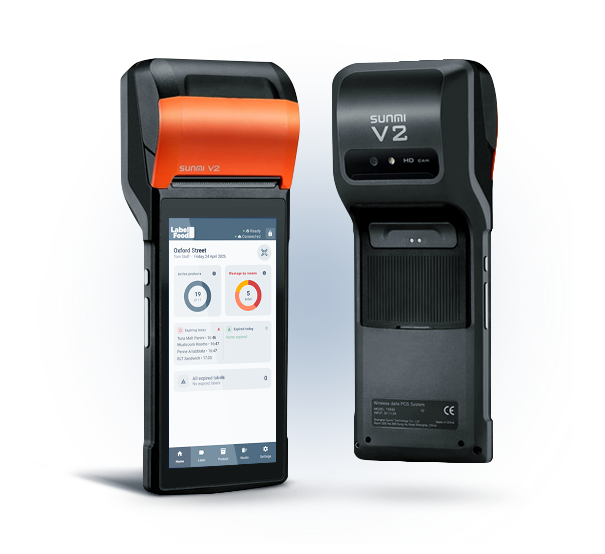
LabelFood’s system combines a printer with a cloud management dashboard. It supports offline functionality with cloud syncing and individual PINs for staff attribution. Product data can be entered manually, imported from Excel, or read from a photo or PDF using AI for staff review and editing. The AI does not publish data autonomously. These records can support a wider process for digital kitchen compliance records, but staff remain responsible for checking the information and following the kitchen’s procedures.
For freezer-safe food prep labels, check whether staff can produce and verify a clear, accurate label without adding friction to service. Trial the process across different shifts. Check date entry, allergen information, staff attribution and the resulting record before rolling it out more widely.

Buying Guide: Selecting a System for Your Kitchen
Start with the job the system needs to do. A printer alone will not manage product data, staff records or review processes. Check the label stock separately: confirm its suitability for your application method, freezer temperature and container surface. Do not assume the printer or a “freezer-safe” description guarantees that a label will remain legible and attached throughout storage.
For a commercial kitchen, the LabelFood Printer SV2 is built for kitchen use and forms part of a complete food labelling system with a cloud management dashboard. The SV2 is included with subscriptions. Assess the whole workflow, from entering product details to printing a label and keeping records, rather than comparing equipment by roll price alone. Read more about the LabelFood Printer SV2 and its role in a kitchen labelling setup.
Check the labelling process against the rules
Natasha’s Law applies to prepacked for direct sale (PPDS) food, not every item stored in a freezer. PPDS food must carry a full ingredients list, with the 14 statutory allergens emphasised. The categories include peanuts and tree nuts as separate allergens, alongside cereals containing gluten, milk, eggs, sesame and the other statutory allergens. Freezing a product does not remove the need to follow applicable labelling rules. Confirm how your products are classified and check the Natasha’s Law labelling requirements when reviewing your process. Label tools can support accurate records, but cannot guarantee compliance.
Assess access, records and multiple sites
Connectivity matters in kitchens with unreliable signal or areas such as basements. Check what staff can do offline and how records sync when connectivity returns. LabelFood supports offline functionality with cloud syncing. Its management panel is available on web and iOS/iPad, with no Android version, so confirm that supported access suits your team.
For multi-site operators, a cloud dashboard can help centralise product data and oversight. LabelFood supports data entry by manual input, Excel import, or AI-assisted reading of photos and PDFs. Staff must review and edit AI-read information; it does not publish data autonomously. The system also provides Staff Activity reporting and waste records with photos and notes. Check which records managers can access and how they fit your existing procedures.
For London kitchens considering a connected labelling workflow, explore LabelFood’s complete food labelling system.
Implementing Freezer-Safe Labelling with LabelFood
A labelling system works best when the process is clear before the hardware arrives. Define what staff record at prep, which dates appear on labels, how allergen information is checked and who is responsible for each step. Then test the chosen label stock on your containers and through your freezer workflow. LabelFood provides a complete food labelling system, not just a printer, with the LabelFood Printer SV2 included with subscriptions.
Build a consistent prep-to-freezer workflow
Staff can enter product information manually, import it from Excel, or use AI-assisted reading of photos and PDFs. A person must review and edit any AI-read details before use. Individual PINs support staff attribution, helping managers trace who recorded a label. The system can work offline and sync with the cloud when connectivity returns. Its management panel is available on web and iOS/iPad, not Android, so check that access suits your team’s devices.
For relevant prepacked for direct sale (PPDS) food, Natasha’s Law requires a full ingredients list with the 14 statutory allergens emphasised. Peanuts and tree nuts count as separate allergen categories. LabelFood includes Natasha’s Law labelling tools to support your process, but the business remains responsible for checking product information and applying the rules correctly. A system can support records; it cannot guarantee compliance or an EHO inspection outcome.
Record and review freezer waste
Use food waste recording software to capture why stock is discarded, such as freezer burn or expired product. LabelFood waste records can include photos and notes, giving managers context beyond a waste entry alone. Review these records as part of routine stock and prep checks. If the same products are repeatedly discarded, use that information to reassess preparation quantities or storage practices. The records support review; they do not automatically diagnose the cause.
Plan label and record management
Cloud management supports oversight across sites, while the Compliance Pack, Label Report and Staff Activity reports provide different views of recorded information. Use them to review your processes and identify records that need attention. Label roll supply is available by subscription. Plan replenishment around your kitchen’s usage and confirm the supply arrangements rather than assuming stock will never run out.
Before rollout, run a trial across a normal prep shift. Check that freezer-safe food prep labels remain readable and attached, staff can follow the recording steps, and managers can locate the relevant records. Then update your written procedures if the trial exposes gaps.
Make Freezer Labelling Part of a Reliable Workflow
Reliable freezer labelling depends on more than the label itself. Check that the label stock suits your application temperature, freezer conditions and container surfaces. Test it through your kitchen’s actual prep, storage and handling routine. Clear printed information and consistent date procedures help staff identify stock without relying on guesswork.
For freezer-safe food prep labels, consider how the whole system supports your process. The LabelFood Printer SV2 is included with subscriptions and works with a cloud management dashboard. Offline functionality with cloud syncing, individual staff PINs and waste records with photos and notes can help teams keep information organised. Natasha’s Law tools support labelling processes for PPDS food, but the system does not guarantee compliance. Your team remains responsible for checking product details and following the rules that apply.
Ready to review the system for your kitchen? Explore the LabelFood Printer SV2 and complete food labelling system. With suitable label stock, clear procedures and dependable records, your team can manage freezer stock with greater confidence.
Frequently Asked Questions
Are all thermal labels safe for use in deep-freeze environments?
No. Thermal printing describes how text is printed, not whether the label will withstand freezer storage. Check the label’s stated application and service temperatures, adhesive performance and compatibility with the surface you’re labelling. Ask the supplier whether the specifications cover moisture and condensation as well as low temperatures. Trial the stock in your own workflow before relying on it for freezer-safe food prep labels.
How do I ensure labels don't fall off plastic containers in the freezer?
Match the adhesive to both the plastic and the freezer conditions. Apply the label to a clean, dry surface, following the supplier’s application-temperature guidance. Frost, grease or condensation can interfere with adhesion, and different plastics may behave differently. Check the label’s service-temperature range, then test it on your containers through freezing, handling and thawing or washing as relevant to your process.
Does Natasha's Law apply to food prep items stored in the freezer?
Not simply because an item is prepared or stored in a freezer. Natasha’s Law applies to prepacked for direct sale (PPDS) food, meaning food packed on the same premises from which it’s sold before a customer orders it. PPDS food needs a full ingredients list, with the 14 statutory allergens emphasised. Check how each product is classified. Freezing does not, by itself, make food PPDS.
What are the 14 allergens I must include on my freezer labels?
The 14 statutory allergen categories are celery; cereals containing gluten; crustaceans; eggs; fish; lupin; milk; molluscs; mustard; peanuts; sesame; soybeans; sulphur dioxide and sulphites; and tree nuts. Peanuts and tree nuts are separate categories. Allergen information must be provided where the rules applicable to the food require it, including on PPDS labels. A freezer label is not automatically required to list allergens for every prepared item.
Can I manage my freezer labels from a central dashboard for multiple sites?
Yes. LabelFood’s cloud management dashboard supports product-data management and multi-site kitchen control. This can help an operator oversee labelling processes across London sites from a central point. Confirm how your teams will keep product information accurate and review changes locally. The management panel is available on web and iOS/iPad, but there is no Android version, so check device access before rollout.
Will the LabelFood Printer SV2 work if my kitchen loses internet connection?
LabelFood supports offline functionality, with cloud syncing when connectivity is available again. This can help teams continue using the system during an internet interruption. Check your kitchen’s process for entering and verifying product details while offline, and confirm how records sync once the connection returns. The LabelFood Printer SV2 is part of a complete food labelling system, rather than a printer-only setup.
How can I track who labelled a specific item in the freezer?
LabelFood uses individual staff PINs for activity attribution. Staff use their own PIN so recorded activity can be linked to them, helping managers investigate an unidentified container or review who completed a labelling task. Check how your team records each batch and how to find the relevant activity in your system. PIN attribution supports accountability, but staff still need to check label details.
What is the best way to remove freezer-safe labels without leaving residue?
Choose a label described as removable only if the supplier confirms it suits your freezer conditions, container material and cleaning process. Removable during washing must still mean secure during storage. Test a sample on the actual container, then remove and wash it using your normal procedure. Check for adhesive residue afterwards. Do not assume every freezer label will peel cleanly from every surface.