The UK hospitality and food service sector generates 1.1 million tonnes of food waste annually. It's a staggering figure that represents billions in lost revenue across the industry. You know that rising food costs are tightening your margins. You also know that manual paper logs are often inaccurate, inconsistent, and difficult to manage during a busy service. By 2026, new regulations will make digital waste tracking a core requirement for professional kitchens. Adopting food waste tracking software UK is the most direct way to gain control over these costs while ensuring your business remains compliant.
It's time to move away from unreliable recording methods. This guide explains how to implement digital waste recording to meet 2026 UK regulations and improve your kitchen's profitability. We'll examine the specific legal requirements for England, Wales, and Scotland. You'll learn how to simplify your record-keeping for EHO audits and use accurate data to reduce waste. We'll show you how to organise your kitchen for total visibility and better operational efficiency.
Key Takeaways
- Understand the 2026 waste tracking mandates across England, Wales, and Scotland. Preparation is essential for maintaining operational compliance.
- Replace manual paper logs with professional food waste tracking software UK. Digital records provide the accuracy required for successful EHO audits.
- Use individual PIN codes and activity logs to ensure staff accountability. This data identifies specific waste patterns and protects your P&L.
- Integrate waste recording into existing daily prep and closing routines. Seamless digital entry maintains kitchen speed whilst improving data visibility.
- Centralise your kitchen management by combining prep labelling, Natasha’s Law compliance, and waste recording into one unified system.
Understanding UK Food Waste Regulations and Mandatory Tracking in 2026
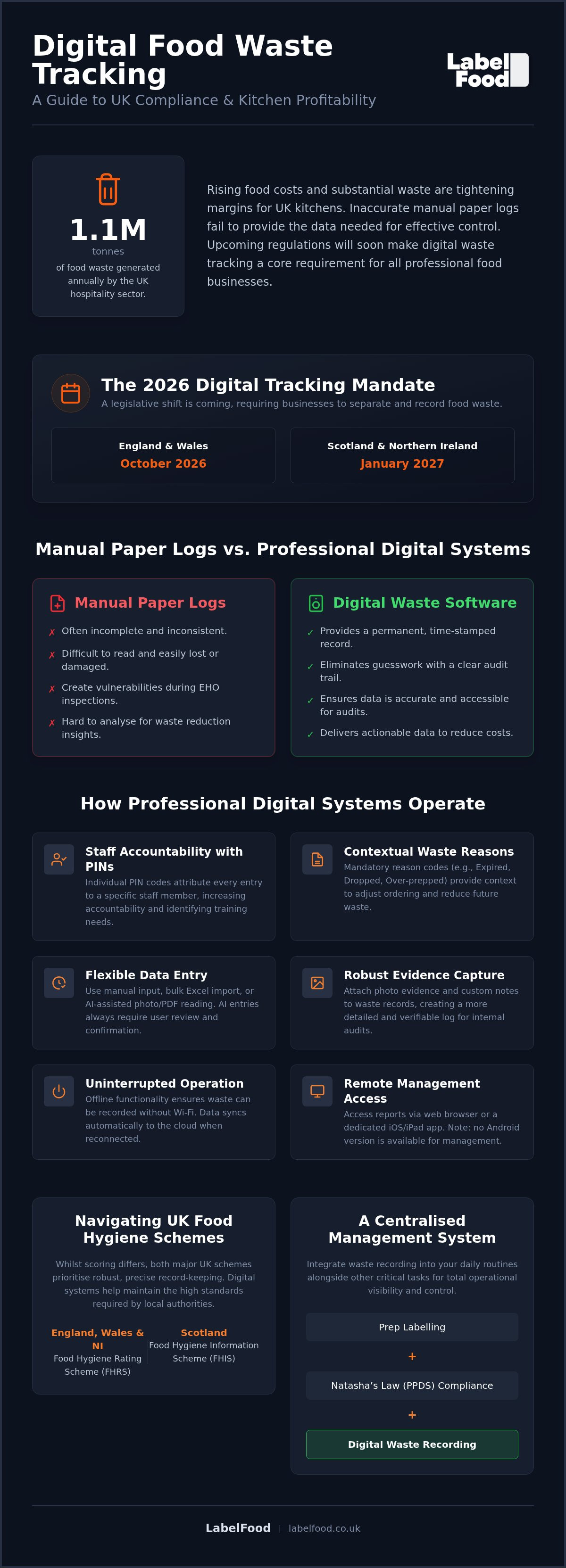
Digital food waste tracking is the systematic electronic recording of all organic waste generated within a professional kitchen environment. It moves beyond simple bin weighing. It involves capturing the reason for waste, the specific food type, and the staff member responsible. This creates a transparent data layer for your operations. The UK government has set a clear timeline for this transition. A mandate for digital waste tracking in England and Wales begins in October 2026. Scotland and Northern Ireland are scheduled to implement similar requirements from January 2027. This legislative shift addresses the environmental and economic impact of food waste in the United Kingdom, where millions of tonnes are discarded annually.
The Shift from Paper Logs to Digital Systems
Traditional paper logs are a liability in a modern commercial kitchen. They are often incomplete, difficult to read, and easily lost. During an EHO inspection, these gaps in your record-keeping can lead to lower hygiene ratings. Professional food waste tracking software UK eliminates these vulnerabilities by providing a permanent, time-stamped record of every disposal. This level of accuracy is essential for compliance with the Simpler Recycling reforms. These rules require businesses to separate food waste from general waste for collection. Digital tracking ensures you have the data to prove your compliance. It also helps the industry identify and prevent waste crime, ensuring all organic matter is handled by authorised waste carriers.
Regulatory Differences Across the UK
Operators must navigate different hygiene frameworks depending on their location. England, Wales, and Northern Ireland use the Food Hygiene Rating Scheme (FHRS). Scotland uses the Food Hygiene Information Scheme (FHIS). Whilst the schemes differ in their scoring, both prioritise robust record-keeping. Using digital software ensures your kitchen maintains the precision required for local authority inspections. This precision is particularly important for managing the 14 statutory allergens. Your waste records must be as detailed as your prep labels. They should treat peanuts and nuts as distinct categories to ensure total safety. A digital system organises this data automatically, making it accessible for any audit or internal review.
How Digital Waste Recording Operates in a Commercial Environment
High-pressure kitchens require systems that prioritise speed without sacrificing precision. Professional food waste tracking software UK bridges the gap between operational pace and data accuracy. It replaces guesswork with a clear audit trail. Every discarded item is recorded with context. This ensures your kitchen follows the official government guidance on food waste whilst maintaining a focus on your bottom line.
Staff Attribution and Accountability
Individual PIN codes are the foundation of a professional waste log. When every entry is attributed to a specific staff member, accountability increases. This isn't about surveillance. It's about identifying patterns. If spoilage or prep waste spikes during specific shifts, you can identify training needs. Mandatory reason codes like "expired," "dropped," or "over-prepped" provide the context required to adjust your ordering. Staff activity logs give you a transparent view of kitchen behaviour. This allows for decisive management based on facts rather than assumptions.
Data Entry Methods and AI Assistance
Efficiency depends on how quickly data enters the system. You can import your entire product catalogue via Excel to streamline the initial setup. For daily recording, users choose between manual input or AI-assisted review. The AI functions as a tool for user review and editing. It can read photos or PDFs to suggest entries based on your catalogue. Crucially, it is never an autonomous publisher of data. The user must review and confirm every entry. Photo evidence and custom notes add a layer of proof that simple numbers cannot provide, making records more robust for internal audits.
Reliability in a physical workspace is non-negotiable. Digital systems must offer offline functionality. Your team can record waste even if the kitchen Wi-Fi drops. The data syncs to the cloud automatically once the connection is restored. Management can access these reports via a web browser or a dedicated iOS/iPad app. It's important to note that these management panels are not available on Android. For operators looking to centralise their kitchen management, integrated waste recording solutions offer a streamlined path to total operational control.
Evaluating Software: Manual Logs vs. Professional Digital Systems
Manual paper logs are a liability in a professional kitchen. They are prone to human error and physical damage. They lack the real-time visibility required to manage rising food costs. Transitioning to professional food waste tracking software UK provides a reliable audit trail. It ensures that data is captured accurately and stored securely in the cloud. This move replaces guesswork with precise metrics. You can identify exactly where your margins are leaking, whether through over-prepping or spoilage.
Some solutions rely on expensive, specialised camera hardware to identify waste. This often creates a high barrier to entry for many operators. A more pragmatic approach involves software that utilizes existing kitchen devices. This provides the necessary data without the significant hardware overhead of third-party AI systems. According to House of Commons Library research on food waste, the scale of the problem necessitates accessible solutions for all business sizes. Digital recording that balances manual input with AI-assisted review offers the best cost-benefit ratio for most UK kitchens.
Key Features for UK Professional Kitchens
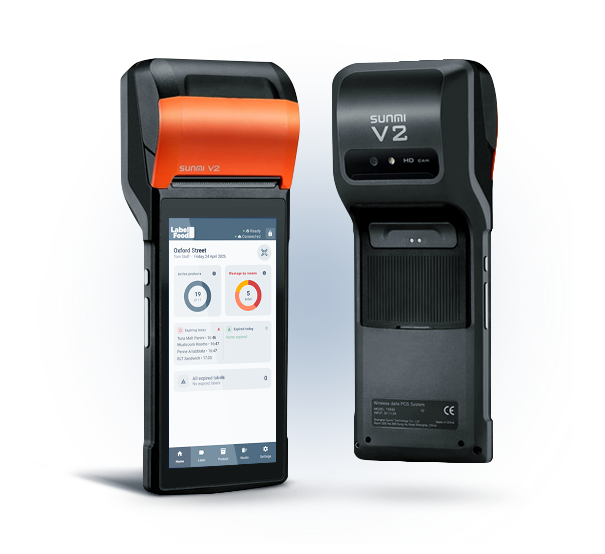
Professional systems must offer more than just a waste log. They should provide a Compliance Pack and specific Label Reports for audit purposes. Dedicated hardware like the LabelFood Printer SV2 is essential for creating clear, durable prep labels. This printer is included with subscriptions to ensure you have the right tools from day one. Reliability is critical. Cloud syncing with offline functionality ensures your team can record waste even during a service with poor connectivity. Once the connection is restored, the data uploads automatically to the management dashboard.
The Limitations of Generic Software
Generic or US-based software often fails to meet specific UK requirements. These applications frequently lack the necessary fields for the 14 statutory allergens. They may not treat peanuts and nuts as separate categories, which is a requirement for UK food safety. Furthermore, they often lack support for Natasha’s Law, which applies specifically to prepacked for direct sale (PPDS) food. Using non-specialist apps for food safety record-keeping increases your risk during local authority inspections. It is also important to note that professional management panels are often restricted to web and iOS/iPad platforms. The absence of an Android version for management is a key consideration when planning your hardware rollout.
Reducing Kitchen Waste: Practical Workflow Integration Strategies
Effective waste reduction requires more than just a bin. It requires a change in kitchen culture. Integrating food waste tracking software UK into your daily prep and closing routines ensures that recording becomes a habit rather than a chore. This data allows you to identify spoilage patterns and adjust your par levels accordingly. When you connect your prep date labelling with your waste monitoring, you gain a complete picture of your inventory lifecycle. This visibility is the first step toward significant cost savings and operational excellence.
Step-by-Step Implementation in the Kitchen
Start by setting up your product catalogue. You can import your existing inventory via Excel to save time. Organise your waste into clear categories such as spoilage, prep waste, and plate waste. Assign individual PINs to every team member. This establishes clear recording protocols and ensures accountability. Every entry should include a reason code and, where possible, a photo. Review your weekly waste reports every Monday morning. Focus on your top five cost drivers. These figures provide the evidence you need to adjust your ordering or retrain staff on specific prep techniques.
Combining Labelling and Waste Management
There is a direct synergy between prep date labels and waste logs. If an item is discarded because it has expired, your waste record should reflect the date it was originally prepped. The LabelFood Printer SV2 facilitates both tasks within a single workflow. Staff use the same system to print accurate prep labels and record waste at the end of a shift. This unified approach reduces the time spent on admin. It also ensures that your food waste recording software data is linked to your actual kitchen output.
Training your team is essential for success. Position waste tracking as a tool for professional development. Show them how the data improves kitchen efficiency and reduces unnecessary work. Use the cloud dashboard to share progress and celebrate reductions in waste. For operators ready to modernise their workflow, you can start your food waste management journey with a system designed for the realities of a UK commercial kitchen.
LabelFood: Integrated Labelling and Waste Management Solutions
LabelFood is a complete system for UK kitchens. It integrates prep labelling, PPDS compliance, and digital waste recording. This food waste tracking software UK solution removes the friction of using multiple platforms. You manage everything from a single cloud dashboard. It's designed for the physical realities of a busy workspace. It provides the reliability you need for professional record-keeping. By centralising your data, you reduce the risk of errors. You also gain a clear view of your operational efficiency.
Professional Hardware and Software
The LabelFood Printer SV2 is the core of the system. It's built for commercial environments. It works offline and syncs automatically when reconnected. You manage your product data and 14 statutory allergens via the web or iOS/iPad dashboard. The system treats peanuts and nuts as separate categories. This ensures your labelling is accurate and safe. You can import your catalogue via Excel for a fast setup. The dashboard provides clear visibility across multiple sites. It's a central hub for all your kitchen data. Note that management tools are restricted to web and iOS/iPad. There is no Android version available.
Expert Support for UK Operators
Onboarding is straightforward. We use AI-assisted tools to help you set up your menu and product catalogue. This isn't autonomous. The AI suggests entries for your review and editing. This ensures your data is correct before it goes live. Once operational, you gain access to the Compliance Pack. This includes the Label Report and Staff Activity logs. These documents are essential for EHO inspections and internal audits. They provide the evidence of your professional standards. Whether you operate under the Food Hygiene Rating Scheme or Scotland's Food Hygiene Information Scheme, these reports support your record-keeping requirements.
Getting started is simple. A LabelFood subscription includes the SV2 Printer and access to the full software suite. You receive a regular supply of label rolls. This ensures your kitchen never runs out of essential materials. It's a pragmatic investment in your kitchen's future. You gain control over your waste and your compliance. It's about precision. It's about peace of mind. You can view our subscription options to find the right fit for your business.
Preparing Your Kitchen for the 2026 Waste Mandate
The transition to digital waste recording is no longer optional. Upcoming 2026 regulations require a shift from manual paper logs to precise, auditable data. Implementing professional food waste tracking software UK ensures your kitchen remains compliant whilst protecting your bottom line. You've seen how digital records improve staff accountability and reveal hidden cost drivers. You also understand the value of a unified system that handles both prep labelling and waste monitoring. Managing these tasks on one platform saves time and reduces the risk of error during busy services.
LabelFood provides a complete solution for modern operators. Every subscription includes the LabelFood Printer SV2 to handle your physical labelling needs. Our system supports the 14 UK statutory allergens and provides specific Compliance Pack reporting for your next inspection. You gain total visibility over your operations via a secure cloud dashboard. It's time to replace guesswork with data. Take the first step toward total operational visibility. Request a demo of the LabelFood system today. Modernising your kitchen management is a pragmatic choice for a more profitable future.
Frequently Asked Questions
Is food waste tracking mandatory in the UK in 2026?
Food waste tracking becomes mandatory for businesses in England and Wales in October 2026. Scotland and Northern Ireland follow in January 2027. These regulations require precise digital records rather than traditional paper logs. For London operators, this means moving toward a unified system to manage all organic waste. Using professional food waste tracking software UK ensures you have the necessary data for environmental and local authority audits before these deadlines arrive.
What are the 14 allergens that must be tracked in UK kitchens?
UK law requires you to track 14 statutory allergens. These include celery, cereals containing gluten, crustaceans, eggs, fish, lupin, milk, molluscs, mustard, sesame seeds, soya, and sulphur dioxide. Crucially, you must treat peanuts and nuts as two separate categories. Professional software organises these allergens automatically. This level of detail is essential for both your prep labelling and your waste records to maintain high safety standards in your London kitchen.
How does Natasha’s Law affect food waste labelling?
Natasha’s Law mandates full ingredient and allergen labelling for prepacked for direct sale (PPDS) food. When these items are discarded, your waste logs should reflect the same level of detail as the original label. This ensures total transparency in your food safety records. Using a system that integrates PPDS labelling with waste recording allows you to track the lifecycle of every product. It helps identify if specific PPDS items are consistently over-prepped.
Can food waste tracking software help me get a 5-star hygiene rating?
Software is a support tool for professional record-keeping, but it cannot guarantee a specific hygiene rating. A 5-star rating depends on your overall kitchen management, cleanliness, and safety protocols. Professional software provides the accurate digital logs that EHO inspectors look for during audits. It replaces unreliable paper systems with clear, time-stamped evidence. Whilst it supports your efforts to maintain high standards, the final rating is determined by the local authority inspector.
Does the LabelFood software work on Android devices?
The LabelFood management dashboard is available exclusively on web browsers and iOS or iPad devices. There is no Android version of the software available. This allows for a more stable and secure experience on professional hardware in high-pressure London kitchens. Most operators use an iPad for waste entry and a web browser for reviewing reports. This specific platform focus ensures that the cloud syncing and reporting tools remain reliable and efficient for all users.
What is the difference between peanuts and nuts in UK allergen labelling?
Peanuts and nuts are distinct statutory categories in UK food safety law. Peanuts grow underground and are legumes, whilst tree nuts like walnuts, almonds, and hazelnuts grow on trees. Your labelling and waste records must distinguish between them to protect customers with specific allergies. Professional software ensures these are never grouped together. Treating them as separate categories is a legal requirement for any food business operating in England, Wales, Northern Ireland, or Scotland.
How do I record food waste if the kitchen internet goes down?
You can continue to record waste even if your kitchen Wi-Fi fails. The LabelFood system features offline functionality that saves your entries locally on the device. Once your internet connection is restored, the data syncs automatically to the cloud management dashboard. This ensures that your digital logs remain continuous and complete. It prevents data loss during busy services in London basements or older buildings where connectivity is often inconsistent or unreliable.
What information should be included in a professional food waste log?
A professional food waste log must include the specific food type and the reason for disposal, such as spoilage or prep waste. It should also record the quantity and the staff member responsible via a unique PIN. Adding photo evidence and notes provides a robust audit trail for internal reviews. High-quality food waste tracking software UK captures this data instantly. This level of detail allows managers to identify waste patterns and adjust ordering to protect their margins.