London recorded an average food hygiene rating of 4.39 out of 5 across its food premises in 2026. This is the lowest regional average in England. Maintaining high standards whilst managing a high-pressure kitchen is a constant challenge. You likely find that manual paperwork is slow and unreliable. Paper logs get stained, lost, or forgotten. Implementing digital food safety records London kitchens can trust provides the clarity needed for rigorous inspections.
This guide explores how digital systems help you meet UK food safety regulations. We will cover the specific requirements of Natasha's Law for prepacked for direct sale (PPDS) food and the importance of accurate temperature logs. You'll discover how cloud-synced tools improve staff accountability and simplify food waste recording with photographic evidence. By the end, you'll understand how to replace outdated paper binders with a streamlined system that ensures your records are always inspection-ready. This approach reduces human error and provides a clear audit trail for every task in your kitchen.
Key Takeaways
- Understand the shift from paper SFBB diaries to digital logs to satisfy Environmental Health Officer (EHO) requirements in England.
- Learn how digital food safety records London kitchens use can eliminate manual paperwork and reduce data entry errors.
- Master the labelling requirements for prepacked for direct sale (PPDS) food to maintain strict compliance with Natasha's Law.
- Discover how individual staff PINs and timestamped audit trails improve kitchen accountability and support the Confidence in Management pillar.
- Explore how offline functionality and cloud syncing ensure your food safety records remain available even when the internet connection fails.
Understanding Digital Food Safety Records
Digital food safety records are electronic systems designed to replace traditional paper-based Safer Food, Better Business (SFBB) binders. These systems log critical data such as fridge temperatures, cooking times, and cleaning schedules. In a high-pressure kitchen environment, paper records are often prone to staining or loss. By using digital food safety records London kitchens can ensure data is captured accurately and remains accessible during unannounced inspections by Environmental Health Officers (EHOs).
UK law requires every food business operator to maintain a permanent procedure based on Hazard Analysis Critical Control Point principles. This is mandated under assimilated Regulation (EC) No 852/2004. Maintaining these records isn't optional; it's a legal necessity for establishing a due diligence defence. Implementing digital systems helps bridge the gap between daily operations and strict regulatory requirements.
Key Regulatory Requirements
Food businesses in England must adhere to the Food Information (Amendment) (England) Regulations 2021, commonly known as Natasha's Law. This applies strictly to food that is Prepacked for Direct Sale (PPDS). It requires a full ingredients list with the 14 statutory allergens clearly emphasised. These allergens include celery, cereals containing gluten, crustaceans, eggs, fish, lupin, milk, molluscs, mustard, sesame seeds, soybeans, and sulphur dioxide. Critically, peanuts and nuts are treated as separate categories under UK regulations.
The Food Hygiene Rating Scheme (FHRS) in England, Wales, and Northern Ireland uses a scale of 0 to 5. London kitchens currently average a rating of 4.39, which is the lowest regional average in England. A significant portion of this score depends on the "Confidence in Management" pillar. EHOs look for consistent, reliable record-keeping as evidence that safety procedures are followed every day. Digital logs provide the timestamped proof needed to support this pillar.
Digital Solutions Overview
A digital food safety record system typically consists of a management dashboard and a data entry interface. These tools allow for real-time monitoring of kitchen activity. Unlike generic paper systems, digital solutions offer cloud-syncing capabilities. This means data is backed up instantly and can be viewed remotely by kitchen managers. Managing digital food safety records London businesses require is more efficient than handling physical folders.
Cloud-based systems enhance compliance by providing automated alerts when checks are missed. Transitioning to these systems removes the friction of manual filing. It allows staff to focus on food preparation whilst maintaining a high level of accountability through individual PINs. This structure creates a transparent environment where every entry is attributed to a specific team member, making it easier to identify training needs or operational gaps.
Comparing Digital Food Safety Record Systems
Evaluating a system requires looking beyond the interface. You need a tool that mirrors the practical realities of a London kitchen. Generic solutions often fail because they don't account for specific UK statutory requirements. When comparing digital food safety records London operators should prioritise systems that provide timestamped audit trails and clear staff attribution. Reliability is paramount in a high-pressure environment.
A reliable system must handle the "Confidence in Management" pillar of an EHO inspection. According to the Food Hygiene Rating Scheme guidance, officers assess how well a business manages and records its food safety procedures. If your digital system is complicated or prone to syncing errors, it won't support your rating. Look for offline functionality. Kitchens are often in basements with poor connectivity. Your records must be accessible at all times.
Key Features to Look For
Compliance with Natasha’s Law is essential for Prepacked for Direct Sale (PPDS) food. Your system should allow for ingredient lists with the 14 statutory allergens highlighted in bold. This isn't just about printing labels. It's about maintaining a verifiable record of what was prepared and when. Peanuts and nuts must be treated as separate categories to meet UK standards.
Ease of training is another factor. High staff turnover is common in London hospitality. You can't afford days of training for every new hire. A system using individual PINs for staff attribution ensures accountability without complex logins. If the system integrates with your existing workflow, adoption is faster. Simple data entry via Excel import or AI-assisted reading can save hours of manual input.
Cost Analysis
Switching to digital involves an initial investment, but the return comes from recovered time. Manual record-keeping is a hidden cost. Staff spend hours filling out binders that often lack accuracy. Digital systems streamline this process, allowing more time for food prep and service. Efficiency is the primary driver of ROI in commercial settings.
You also save on physical storage and stationery. More importantly, you reduce the risk of a low hygiene rating. In London, a rating drop can lead to immediate commercial losses on delivery platforms. Investing in a complete food labelling system helps maintain the records needed to substantiate your due diligence. Support is the final consideration. Ensure the provider understands the UK market. Avoid systems that use US terminology or lack specific reporting tools like a Compliance Pack or Staff Activity reports.
Implementing Digital Food Safety Records in Your Kitchen
Transitioning from paper binders to digital systems requires a methodical approach. Start by digitising your existing product catalogue. You can do this through manual entry, Excel imports, or using AI-assisted tools to read PDFs of supplier lists. It's vital that staff review and edit any data processed by AI to ensure total accuracy. Once your catalogue is set, you can begin generating digital food safety records London inspectors expect to see during unannounced visits.
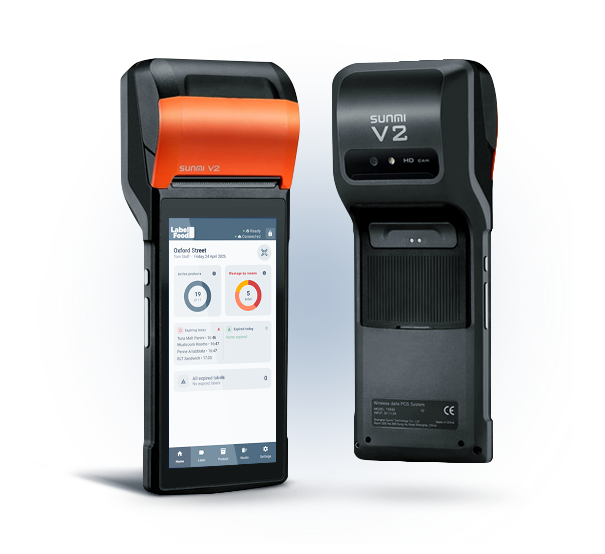
The physical setup involves placing the labelling hardware in a central prep area. Modern systems, such as the LabelFood Printer SV2, work offline and sync to the cloud once a connection is restored. This prevents data loss in basement kitchens with inconsistent Wi-Fi. Establishing a clear timeline for the switchover helps manage expectations and ensures no gaps occur in your due diligence logs.
Training Your Team
Effective training focuses on speed and accountability. Use individual PINs for every team member. This attributes every label printed and every temperature check to a specific person. It removes anonymity and encourages a culture of precision. Avoid long training sessions; instead, use short, practical demonstrations on the kitchen floor. Staff should understand how to navigate the interface to find specific allergen information for the 14 statutory allergens, including milk, gluten, and molluscs. Remember that peanuts and nuts must be handled as distinct categories in your system.
Ongoing education is simplified when the system provides feedback. Use the Staff Activity report to identify where errors occur or where checks are being missed. This allows for targeted retraining rather than broad, time-consuming meetings. When compliance becomes part of the daily workflow, it feels less like a chore and more like a standard operating procedure. This is especially relevant for maintaining standards for prepacked for direct sale (PPDS) food under Natasha's Law.
Establishing Record-Keeping Protocols
Daily checklists must be integrated into the start and end of every shift. Digital logs should cover fridge temperatures, hot-holding values, and cleaning tasks. Incorporating photo evidence into your food waste records adds a layer of verification that paper logs cannot match. Staff can take a photo and add notes directly into the system, providing a clear reason for the waste, which helps in managing kitchen costs.
Regular audits are essential for maintaining a high hygiene rating. Review your Compliance Pack and Label Reports weekly to ensure all protocols are being followed. These digital summaries make it easy to spot trends, such as recurring temperature fluctuations in specific units. Consistent monitoring ensures your kitchen remains compliant with the Food Hygiene Rating Scheme standards used across London boroughs. Adjust your protocols based on these reports to maintain a high level of operational efficiency and prepare for future inspections.
Local Solutions for London Kitchens
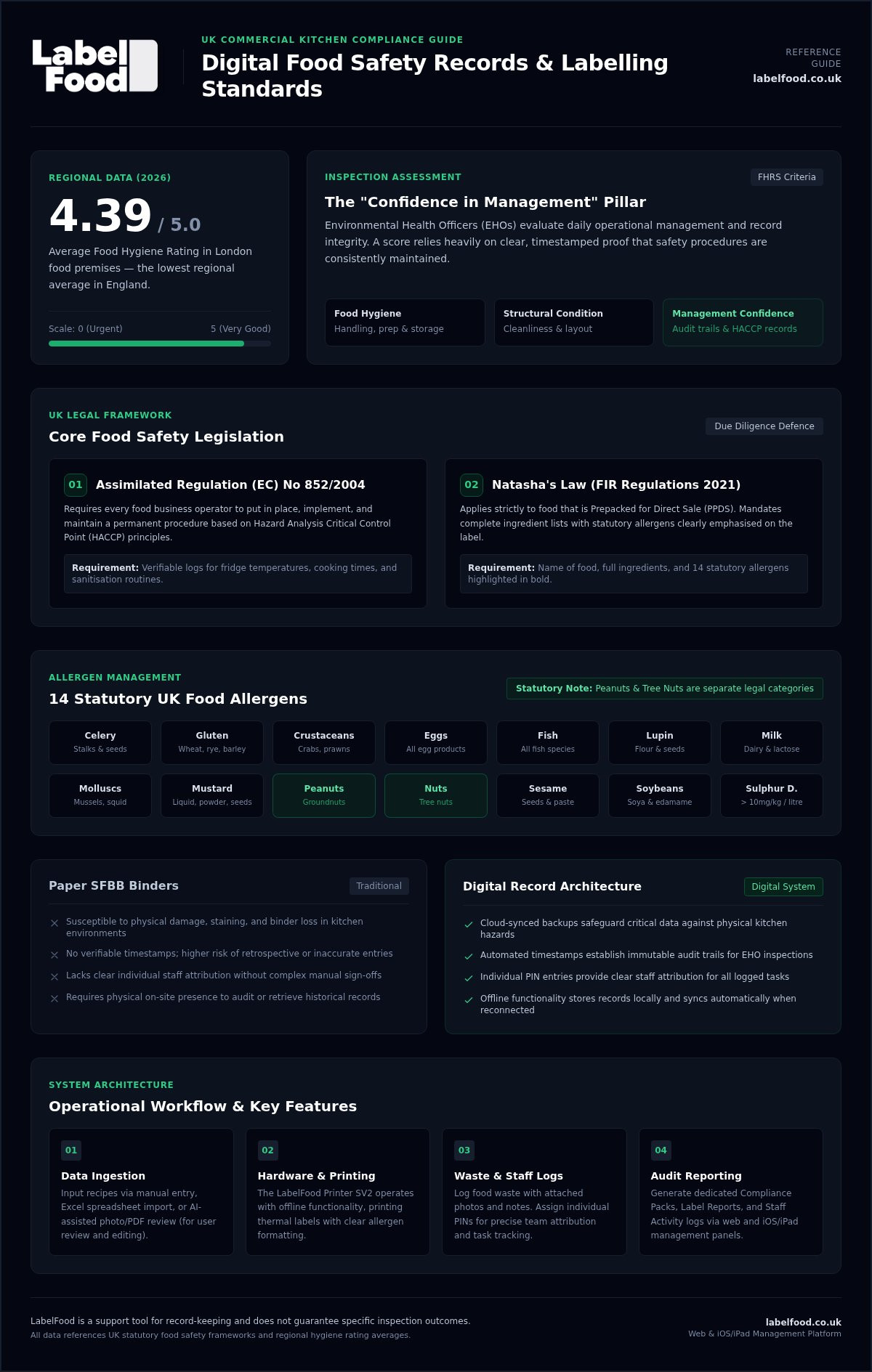
London's hospitality sector operates under intense scrutiny. With 33 separate local authorities, including 32 boroughs and the City of London Corporation, enforcement styles can vary. London recorded an average food hygiene rating of 4.39 out of 5 in 2026. This represents the lowest regional average in England. In this high-stakes environment, digital food safety records London operators implement must be robust enough to satisfy different Environmental Health Officers (EHOs) during unannounced inspections.
Financial implications of a low rating are immediate. Requesting a re-inspection to improve a score involves statutory recovery fees. For example, the London Borough of Harrow charges £295.00, whilst the London Borough of Havering charges £314.00. These costs, combined with the potential loss of revenue, make accurate record-keeping a financial priority. Digital systems provide the timestamped evidence needed to substantiate your due diligence defence and support the "Confidence in Management" pillar of the Food Hygiene Rating Scheme (FHRS).
Connecting with Local Resources
Navigating borough-specific requirements is easier when you utilise local resources. The Association of London Environmental Health Managers (ALEHM) provides a framework for how inspections are conducted across the capital. Many London-based training providers offer Level 2 and Level 3 Food Safety awards tailored to the high-volume nature of city kitchens. Networking with other local operators allows you to share best practices for managing unique London challenges, such as limited storage space and basement kitchen ventilation.
City-specific compliance resources often highlight the importance of the 14 statutory allergens. In London's diverse food scene, clear allergen labelling is a non-negotiable standard. Your digital records should reflect a deep understanding of these requirements, treating peanuts and nuts as separate categories. Accessing council-led business forums can provide early warnings about specific enforcement focuses in your borough, such as increased scrutiny on delivery-only dark kitchens.
Leveraging Community Support
Dark kitchens in high-density areas like Hackney, Tower Hamlets, and Camden face the same traceability checks as traditional restaurants. Delivery aggregators such as Deliveroo and Uber Eats now integrate FHRS scores directly into their consumer-facing apps. A rating drop below 4 often results in a significant decrease in order volume. Utilising digital logs ensures that your records are always available for inspection, even during the busiest Friday night service.
Engaging with your local council's environmental health department can lead to a more collaborative relationship. Many boroughs offer pre-inspection audits for a fee, which can identify gaps in your current record-keeping. Using local case studies from within your industry association can help you avoid common pitfalls. By adopting a complete food labelling system, you provide your team with the tools needed to maintain consistent standards across multiple London sites. This unified approach simplifies management and ensures your kitchen meets the expectations of both regulators and city consumers.
How LabelFood Supports Your Digital Record-Keeping Needs
LabelFood provides a structured framework for managing the digital food safety records London operators use to maintain high standards. It's not just a standalone printer. It's a complete food labelling system designed for the rigours of a commercial kitchen. The system integrates hardware and software to create a unified record-keeping process. This eliminates the need for fragmented manual logs and disconnected spreadsheets.
Reliability is built into the core of the system. The management panel is available exclusively on web and iOS/iPad platforms. There is no Android version. This focus ensures a stable and high-performance environment for kitchen managers. By centralising your data, you gain total control over your food safety protocols across single or multiple sites.
Complete Food Labelling System
The LabelFood Printer SV2 is included with your subscription. It's a robust device built for high-volume use. One of its most critical features is offline functionality. London kitchens often suffer from poor connectivity in basements or older buildings. The system continues to function without an internet connection. It syncs data to the cloud automatically once the connection is restored. This prevents gaps in your digital audit trail.
The cloud dashboard provides specific reporting tools that simplify EHO inspections. You can generate a Compliance Pack, a Label Report, or a Staff Activity report in seconds. These documents provide the timestamped evidence officers look for when assessing your kitchen. Accountability is maintained through individual PINs for every staff member. Every action is attributed to a specific person, which strengthens your confidence in management pillar score.
AI-Assisted Data Management
Onboarding your product catalogue is a streamlined process. You can enter data manually, import Excel files, or use the AI-assisted photo and PDF reader. This AI tool is designed to speed up menu setup by extracting information from supplier documents. It's important to remember that the AI acts as an assistant. It never publishes data autonomously. Every entry requires user review and editing to ensure accuracy. This maintains the high legal accuracy required for UK food safety standards.
Managing food waste is also integrated into the daily workflow. Staff can record waste using photos and notes directly on the device. This provides a visual record of lost stock and the reasons behind it. For businesses managing prepacked for direct sale (PPDS) food, the system supports strict compliance with Natasha's Law. Labels clearly emphasise the 14 statutory allergens, including lupin, sesame seeds, and molluscs. Peanuts and nuts are always treated as separate categories. This level of detail ensures your digital food safety records London stay accurate and professional.
Securing Your Kitchen's Compliance Standards
London food businesses face unique regulatory pressure. Maintaining a high hygiene rating requires more than just good cooking. It requires a verifiable audit trail. Implementing the digital food safety records London kitchens need ensures your due diligence is never in question. You move from reactive management to proactive oversight. Stained paper logs and missed temperature checks become a thing of the past.
LabelFood provides comprehensive food labelling solutions that integrate seamlessly into kitchen operations. The system supports compliance with Natasha's Law by handling the 14 statutory allergens with precision. With offline functionality and individual staff PINs, you maintain total control over your safety protocols. This shift improves accountability and protects your business from the financial risks of a rating drop.
Contact LabelFood today to streamline your kitchen's food safety records. Take the first step toward a more efficient, paperless workspace. You can achieve reliable compliance and operational peace of mind with the right tools in place.
Frequently Asked Questions
What are digital food safety records and why are they important?
Digital food safety records are electronic logs that replace paper binders for HACCP compliance. They are essential because they provide timestamped, indelible proof of safety checks such as fridge temperatures and cleaning schedules. In London, where Environmental Health Officers (EHOs) scrutinise the Confidence in Management pillar, having reliable digital food safety records London inspectors can easily review is vital for maintaining a high Food Hygiene Rating Scheme score.
How can I transition from paper records to digital systems?
Transitioning begins with digitising your product catalogue and ingredient lists. You can upload data via Excel or use AI tools to read existing PDFs, provided you review the output for total accuracy. Once the database is set, replace physical binders with a dedicated labelling terminal and management dashboard. Establishing a clear switchover date and training staff on individual PIN attribution ensures a seamless move from manual entry to automated record-keeping.
What should I look for in a digital food safety record system?
Prioritise a system that offers offline functionality with cloud syncing to ensure data isn't lost during internet outages. It should include specific reporting tools like a Compliance Pack and Staff Activity logs for clear accountability. Ensure the interface is user-friendly for fast-paced kitchens and supports individual PINs. A complete system should also facilitate accurate allergen labelling for the 14 statutory allergens, including separate categories for peanuts and nuts.
How does Natasha's Law impact my kitchen's record-keeping?
Natasha's Law applies to food that is prepacked for direct sale (PPDS). It requires a label featuring the full product name and an ingredients list with the 14 statutory allergens clearly emphasised in bold. Your record-keeping must verify that these labels are accurate and consistently applied. Digital systems help by storing approved ingredient data, ensuring that every PPDS item sold in your London premises meets the specific legal requirements for allergen transparency.
What local resources are available for food safety compliance in London?
London operators can access guidance through the Association of London Environmental Health Managers (ALEHM) and the Food Standards Agency. Each of the 33 local authorities, such as the London Borough of Camden or Hackney, provides borough-specific advice for food business operators. These resources explain the Food Hygiene Rating Scheme and offer information on statutory recovery fees for re-inspections, helping businesses understand the local enforcement landscape and compliance expectations.
How can LabelFood help with my kitchen's digital record-keeping needs?
LabelFood provides a complete food labelling system that includes the LabelFood Printer SV2 and a cloud management dashboard. The system supports Natasha's Law compliance and integrates food waste recording with photo evidence. It uses individual PINs for staff attribution and offers AI-assisted menu onboarding to simplify data entry. By centralising digital food safety records London kitchens can improve operational efficiency and maintain organised documentation for EHO inspections without relying on physical paper binders.
What are the benefits of using a cloud-based food safety management system?
Cloud-based systems provide real-time access to safety data from any location via web or iOS devices. This allows managers to monitor multiple sites and review Compliance Packs or Label Reports remotely. Automated syncing ensures that all entries are backed up securely, creating a reliable audit trail. It removes the risk of physical records being damaged or lost, providing a stabilising force for kitchens. Note that the LabelFood management panel is available on web and iOS only.