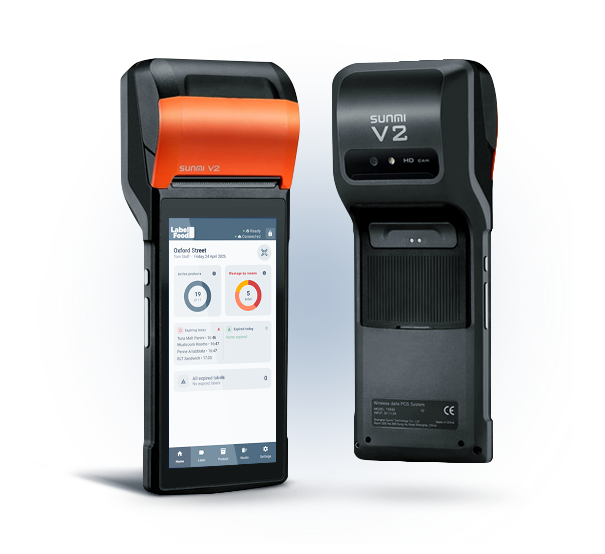
According to a Food Standards Agency report from May 2024, approximately 2.4 million UK adults live with a clinically confirmed food allergy. This figure represents a constant liability for any commercial kitchen operator. You understand that manual labelling is slow, inconsistent, and often the first process to fail during a busy shift. A single error in identifying one of the 14 statutory allergens can lead to serious safety risks and failed EHO inspections. Integrating a dedicated allergen information printer into your workflow replaces these manual vulnerabilities with a reliable, professional standard.
This guide demonstrates how to implement a labelling system that meets UK statutory requirements while improving overall kitchen efficiency. You'll learn how to navigate the specific demands of Natasha’s Law for prepacked for direct sale (PPDS) items and maintain the digital records required for modern food hygiene ratings. We will examine the practical benefits of moving away from handwritten day dots toward a system that provides clear, professional labels and staff activity tracking. This article provides the definitive steps to ensure your kitchen remains compliant, your records are audit-ready, and your customers are protected.
Key Takeaways
- Understand the 14 statutory allergens required by UK law and how Natasha’s Law specifically applies to prepacked for direct sale (PPDS) food.
- Discover why transitioning from manual "day dots" to a professional allergen information printer reduces the risk of illegible labels and improves customer safety.
- Learn why thermal printing technology and durable hardware are essential for maintaining clear records in humid, high-pressure kitchen environments.
- Master the process of onboarding product data and training staff with individual PINs to ensure audit-ready compliance records.
- Explore how digital reporting tools like the Compliance Pack and Label Report provide a reliable framework for EHO inspection readiness.
Navigating UK Allergen Labelling Regulations in 2026
The Food Standards Agency (FSA) oversees the safety standards that every UK kitchen must follow. These requirements are codified within the UK Food Information Regulations, which dictate how allergen data is managed and displayed. Local authority inspections focus heavily on these records. A failure to comply is a criminal offence. Since 2015, magistrates' courts have had the power to issue unlimited fines for breaches of the Food Safety Act 1990. Your compliance directly affects your rating under the Food Hygiene Rating Scheme in England, Wales, and Northern Ireland, or the Food Hygiene Information Scheme in Scotland. High standards are a fundamental requirement for operational safety.
The 14 Statutory Allergens in the UK
UK legislation identifies 14 major allergens that must be declared. You must distinguish between peanuts and tree nuts as separate categories. The full list includes: celery; cereals containing gluten; crustaceans; eggs; fish; lupin; milk; molluscs; mustard; peanuts; sesame; soybeans; sulphur dioxide and sulphites; and tree nuts. Accurate identification is the first step in protecting your customers.
Statutory requirements state that these ingredients must be emphasised in your product lists. This usually involves using bold or italic fonts to ensure they stand out. Handwriting these lists is risky. It's slow and prone to errors. An allergen information printer solves this by applying consistent formatting to every label. It ensures that your kitchen meets the exact clarity standards expected by Environmental Health Officers (EHOs). Digital precision removes the ambiguity of manual records.
Natasha’s Law and PPDS Requirements
Natasha’s Law applies exclusively to food that is Prepacked for Direct Sale (PPDS). This category includes any food packaged at the same site where it is sold before the customer selects it. If you sell boxed salads or wrapped sandwiches from a display fridge, you are producing PPDS food. The regulations are strict and leave no room for interpretation.
Every PPDS item must carry a label showing the name of the food and a full ingredients list. All allergens must be highlighted within that list. This is a higher standard than for loose food, where verbal communication is still permitted. Using a dedicated allergen information printer ensures that every PPDS item leaving your kitchen is legally compliant. It provides a clear, professional finish that protects both your customers and your business reputation. Reliable systems create a safer environment for everyone.
Why Manual Allergen Labelling Fails in Commercial Kitchens
Manual systems are inherently fragile. In a high-pressure kitchen, handwriting is often the first thing to deteriorate. Illegible labels on prep containers aren't just an inconvenience. They are a direct threat to customer safety. If a chef cannot clearly read an ingredient list during a mid-service rush, the risk of a reaction increases. Relying on "day dots" and markers creates a fragmented system where critical information is easily lost or misinterpreted. This lack of clarity is a primary cause of non-compliance during local authority inspections.
The Risk of Cross-Contamination and Human Error
Standardisation is the only way to eliminate ambiguity. When prep containers are mislabelled, the entire safety chain breaks down. Human error is inevitable when staff are expected to memorise complex recipe changes or supplier substitutions. Using an allergen information printer ensures that every label is uniform, legible, and accurate. It removes the psychological pressure from staff to get it right whilst multitasking. Clear, printed data allows for instant verification. This is essential for maintaining the standards set out in the FSA Allergen Guidance. Precision in labelling acts as a stabilizing force in the kitchen environment.
Operational Inefficiency of Traditional Methods
Manual labelling is a significant drain on resources. The time spent writing out ingredient lists for PPDS items or updating physical allergen folders adds up. These hidden labour costs often go uncalculated. A kitchen manager might spend several hours a month simply verifying that handwritten labels are correct and up to date. Paper-based logs are also notoriously difficult to maintain. When a supplier changes a product specification, every physical folder in every site must be manually corrected. This leads to dangerous inconsistencies in multi-site operations. One kitchen might use the new data whilst another relies on an outdated folder. This lack of central control makes it impossible to guarantee safety standards across a group.
Digital systems provide a single source of truth. Moving from paper-based records to digital compliance ensures that updates are synchronised across the entire business instantly. An allergen information printer acts as the physical output of this digital system. It provides real-time accuracy that manual methods cannot match. It transforms labelling from a chore into a seamless part of the prep workflow. You can achieve this level of precision by implementing a complete food labelling system tailored for professional kitchens.
Criteria for Choosing an Allergen Information Printer
Selecting hardware for a professional kitchen requires a focus on resilience. A standard office printer cannot withstand the humidity, grease, and temperature fluctuations of a busy prep station. Your choice of an allergen information printer must be based on its ability to function as a reliable tool in a high-pressure environment. It shouldn't just print labels. It must integrate with a system that manages your data accurately across multiple sites. Standalone hardware without a management layer creates data silos that lead to inconsistencies.
Thermal vs. Inkjet Printing for Food Safety
Thermal printing is the industry standard for commercial kitchens. Unlike inkjet printers, thermal units do not require ink cartridges or toners. This eliminates the risk of ink leaking into food preparation areas and removes the ongoing cost of consumables. Thermal labels are created using heat. The resulting print is smudge-proof and resistant to the oils and moisture found in kitchens. This clarity is vital for consumer protection, as outlined in Allergy UK's Guide to Food Labelling. If a label smudges, the allergen information becomes illegible. This renders the product non-compliant and potentially dangerous.
Label material is equally important. You need adhesives that remain secure in refrigerators and freezers without peeling. Thermal labels designed for food service are engineered to handle these temperature shifts whilst maintaining clear, high-contrast text. This ensures that the emphasised allergens in your ingredient lists remain visible from the moment of prep until the point of sale. Reliable adhesion prevents the loss of critical safety data during storage.
Integration with Cloud Management Software
Standalone hardware is often a liability because it creates fragmented records. If you update a recipe on one device but forget another, your kitchen safety is compromised. A professional allergen information printer must be part of a complete food labelling system that utilises cloud synchronisation. This allows kitchen managers to organise product catalogues from a central dashboard and push updates to every printer in the business instantly. The LabelFood management panel is available on web and iOS/iPad only. There is no Android version.
Efficiency in data entry is another critical factor. Systems that allow for Excel imports or use AI-assisted photo and PDF reading reduce the time required for menu onboarding. These AI tools are designed for initial data capture. Final review and editing must be performed by a human professional to ensure absolute accuracy. Reliability comes from this combination of automated speed and professional oversight. Your system should also offer offline functionality. Staff can continue to print labels during a service even if the kitchen's internet connection fails. The device will sync with the cloud automatically once the connection is restored, keeping your activity logs and compliance reports up to date.

Establishing a Robust Allergen Labelling Workflow
Transitioning to a digital workflow requires a structured approach. It begins with the digitisation of your existing menu. You can build your product catalogue using manual input, Excel imports, or AI-assisted tools. Once the data is centralised, your allergen information printer becomes the reliable output for every prep station. A consistent routine ensures that compliance is a standard part of kitchen operations rather than an afterthought.
Staff Accountability and PIN Access
Kitchen managers need to know who is responsible for each label. The LabelFood system uses individual PINs for every staff member to provide total transparency. This creates a clear audit trail for every item prepped and labelled. Management can access Staff Activity reports to monitor usage and identify training gaps. This level of oversight prevents unauthorised changes to sensitive allergen data. It ensures that the person printing the label is accountable for the accuracy of the information. Accountability is a stabilizing force in high-pressure environments where errors are most likely to occur.
AI-Assisted Data Entry and Review
Manual data entry is often a bottleneck in menu management. You can use AI-assisted tools to read PDF ingredient lists or photos of product packaging to accelerate the onboarding process. This tool is designed to capture complex data quickly, but it never publishes information autonomously. The AI serves as a tool for user review and editing. A human professional must always verify that the 14 statutory allergens are correctly identified and emphasised before the data is saved. This process maintains a central "source of truth" for every recipe. It ensures that your allergen information printer always produces labels based on verified, accurate information.
Daily prep becomes significantly faster with a dedicated system. Staff select the item from the interface and the printer produces a compliant label in seconds. This replaces the slow, error-prone process of writing on tape or manual day dots. Efficiency also extends to monitoring what isn't sold. The system includes food waste recording that allows staff to attach photos and notes to waste entries. This data helps kitchen managers identify patterns of over-production and improve kitchen margins. You can view the complete LabelFood system features to understand how these tools integrate into your specific kitchen environment.
The LabelFood Solution: Professional Compliance Management
The LabelFood system provides a structured framework for managing the complexities of UK food safety. It is not just a piece of hardware. It is a unified platform that integrates a dedicated allergen information printer with a robust digital management layer. This combination provides kitchen operators with the tools necessary to maintain accurate records for EHO inspections and internal audits. It functions as a silent partner in the kitchen. It organises your labelling workflow so you can focus on service. This system is designed specifically for the UK hospitality sector, ensuring that your records align with the expectations of local authorities.
Features of the LabelFood Printer SV2
The LabelFood Printer SV2 is engineered for the physical realities of a professional kitchen. Its compact footprint fits into cramped prep stations without obstructing workflow. Reliability is a core feature. The device offers offline functionality with cloud syncing. If the kitchen Wi-Fi drops, the printer continues to function. Data is stored locally and syncs automatically once the connection is restored. This ensures that your labelling process is never interrupted. The system specifically supports Natasha’s Law requirements for PPDS items and standard prep labelling. Every label is clear, professional, and consistent. It removes the ambiguity of manual systems and replaces it with digital precision.
Cloud Dashboard and Reporting Tools
Management oversight is centralised through the cloud dashboard. This panel is accessible via web browsers or iOS and iPad devices. There is no Android version available. This centralisation is particularly beneficial for multi-site operations. A single kitchen manager can update recipes or allergen profiles from a central office and push those changes to every site instantly. This eliminates the risk of inconsistent data across a group. Each site receives the same "source of truth" simultaneously. This level of control is essential for maintaining high standards across multiple locations.
The system includes specific reporting tools such as the Compliance Pack, Label Report, and Staff Activity logs. These tools allow you to generate detailed records of what was printed and by whom. These documents are essential when demonstrating your record-keeping processes to an Environmental Health Officer. Additionally, the system integrates food waste recording. Staff can log waste items and attach photos and notes directly to the entry. This provides a clear visual record of kitchen efficiency and helps identify areas for margin improvement. LabelFood acts as a support tool for your record-keeping. It provides the precision required for modern UK hospitality. Using a dedicated allergen information printer as part of this wider system ensures your kitchen remains organised and audit-ready.
Securing Your Kitchen's Compliance Standards
Transitioning to a digital labelling workflow is a pragmatic step toward operational stability. Manual handwriting and paper logs are no longer sufficient for the rigorous standards of modern UK food safety. By implementing a dedicated allergen information printer, you replace fragmented processes with a centralised source of truth. This shift ensures that every item prepped in your kitchen carries a professional, legible label that meets the specific requirements of Natasha's Law for PPDS food.
The LabelFood system is already used by professional kitchens across London to maintain precise records and reduce prep times. Beyond labelling, the system includes integrated food waste recording with photo support to help you monitor kitchen margins effectively. You benefit from specialist UK support for Natasha's Law and a suite of reporting tools designed for EHO audit readiness. Explore the LabelFood Printer SV2 and start your compliance subscription to standardise your kitchen's safety protocols. Professional tools provide the peace of mind required to focus on delivering high-quality service.
Frequently Asked Questions
What are the 14 allergens that must be labelled in the UK?
The 14 statutory allergens that must be declared in the UK are celery, cereals containing gluten, crustaceans, eggs, fish, lupin, milk, molluscs, mustard, peanuts, sesame, soybeans, sulphur dioxide and sulphites, and tree nuts. These ingredients must be highlighted on any food labelling to ensure consumer safety. Failure to identify these correctly is a primary focus for local authority inspectors during food hygiene visits across London.
Does Natasha’s Law apply to all food businesses?
Natasha’s Law applies specifically to food prepacked for direct sale (PPDS). This includes items packaged on-site before a customer selects them, such as sandwiches or salads made in a kitchen and placed in a display fridge. It doesn't apply to food made to order or loose items. However, all food businesses must still provide allergen information for non-prepacked food, though the delivery method differs from the strict labelling requirements of PPDS.
Can I use a standard office printer for food labels?
You shouldn't use a standard office printer for food labels. Office printers use ink or toner that can smudge when exposed to moisture, oils, or refrigeration. An allergen information printer uses thermal technology to create durable, smudge-proof labels that remain legible in high-pressure kitchen environments. Professional systems also ensure the labels use food-safe adhesives that won't peel off in the freezer or fridge, which is essential for maintaining accurate records.
What is the difference between peanuts and tree nuts in UK law?
UK food law treats peanuts and tree nuts as two distinct categories among the 14 statutory allergens. Peanuts grow underground and are legumes, whilst tree nuts include varieties such as almonds, hazelnuts, walnuts, and cashews. You must list them separately on your ingredients labels. A professional allergen information printer helps maintain this distinction by using pre-programmed data that ensures every nut variety is correctly categorised and emphasised for the customer.
How does an allergen information printer help with EHO inspections?
An allergen information printer acts as a support tool for record-keeping by providing clear, consistent, and legible labels. EHO inspectors in London look for robust systems that manage allergen data effectively. The LabelFood system generates digital reports, including the Compliance Pack and Staff Activity logs, which help you demonstrate your labelling procedures. Whilst the system doesn't guarantee a specific rating, it provides the organised documentation that inspectors require during an audit.
Is the LabelFood system compatible with Android devices?
The LabelFood management panel is not compatible with Android devices. The system is designed to run exclusively on web browsers and iOS or iPad devices. This focus ensures a stable and secure environment for managing sensitive product data across your kitchen locations. Staff can access the dashboard to organise menus and review allergen information, but they must use supported hardware to ensure the system functions as intended within your workspace.
Do I need an internet connection to print labels in the kitchen?
You don't need a constant internet connection to print labels in the kitchen. The LabelFood Printer SV2 features offline functionality, allowing staff to continue labelling prep items even if the kitchen Wi-Fi drops during a busy service. The device stores data locally and synchronises with the cloud dashboard automatically once the connection is restored. This ensures that your staff activity and waste records remain up to date without interrupting daily kitchen operations.
How does the AI onboarding feature work for new menus?
The AI onboarding feature is a tool designed to accelerate menu setup by reading product data from PDFs or photos. It identifies ingredients and allergens from your supplier documents to build a digital catalogue. However, the AI doesn't publish data autonomously. A human user must review and edit the generated information to ensure total accuracy before it is saved. This professional oversight is a critical step in maintaining a reliable source of truth for your kitchen.