Could an EHO arrive before your next planned check? Yes. Visits are usually unannounced, so preparing your London kitchen means keeping checks, records and staff practices consistent every day, not just before an inspection.
That takes a clear routine. Internal audits should test what happens in the kitchen, while digital records make it easier to find evidence of your food safety procedures. When a check identifies a problem, record the action, who is responsible and whether it has been completed.
This guide explains how to plan internal audits around your kitchen’s risks, organise records for quick access and document corrective actions clearly. It also covers preparing staff to explain and demonstrate everyday procedures during an EHO visit. The aim is practical readiness, not a promised rating or guarantee of compliance. A repeatable system helps your team show how it manages food safety, even when an inspection comes without warning.
Key Takeaways
- Keep inspection records organised and accessible, and know the local registration deadline before a new business starts trading.
- Use previous audit findings and temperature records to focus each internal check on recurring issues and control points.
- Set an audit schedule that reflects your kitchen’s size and risks, and vary check timings to see whether safe routines hold during normal service.
- Record each corrective action with a responsible person and deadline, then follow up to confirm the issue has been addressed.
- Observe food storage, preparation and service in practice, and use staff discussions to identify where procedures need clearer instruction.
1. Digital inspection checklists and audit records
EHOs may inspect a London food business without warning. Preparation therefore needs to be part of daily hygiene routines, not a last-minute exercise. Keep checklists and records current, easy to locate and clear enough for a manager to explain. An EHO may examine the premises, food handling and food safety management system, so records should reflect what staff actually do.
For a new food business in London, register with the local authority at least 28 days before trading, according to UK Government. The same deadline applies in England, Northern Ireland and Wales when a business is taken over by a new operator. Registration is separate from your inspection records, but it establishes the local authority responsible for the premises.
Keep digital records in a consistent structure. Use dated entries, clear file names and access controls so managers can find relevant evidence during an inspection. In Great Britain, food businesses must keep up-to-date records of their suppliers and the businesses they supply, and make those records available for inspection. Keep invoices, delivery details and product information together so you can trace a specific ingredient through the supply chain.
A useful digital checklist follows the work across a normal shift. Include prompts for cleaning, storage, temperature monitoring, allergen controls and staff checks where these form part of your food safety procedures. Add fields for the person completing each check, the time, any issue found and the action taken. For example, a missed cleaning task should show when it was completed and who recorded it, rather than simply being marked done.
Inspection frequency depends on the business type and its food safety history. Higher-risk businesses may be inspected every 6 months, whilst lower-risk premises may be inspected every 18–24 months. These are possible intervals, not a timetable to rely on. Customer, certification-body or local-authority audits may also apply. Keep the latest external inspection report beside the relevant internal records, with follow-up actions easy to identify.
Make self-inspections unpredictable. Vary the day, shift or area checked, then record findings in the same system used for planned reviews. Random checks can reveal whether hygiene practices hold up during a busy service, not just when a manager expects an audit. Compare each result with the previous entry and record any recurring gaps.
For an unannounced visit, staff should know who leads the inspection and where current records are stored. Keep digital files accessible on site, with a backup process for device or network problems. If an EHO requires action, record the finding, the response and evidence of completion. Clear records make traceability faster and keep follow-up focused.
2. How to Perform Internal Kitchen Audits?
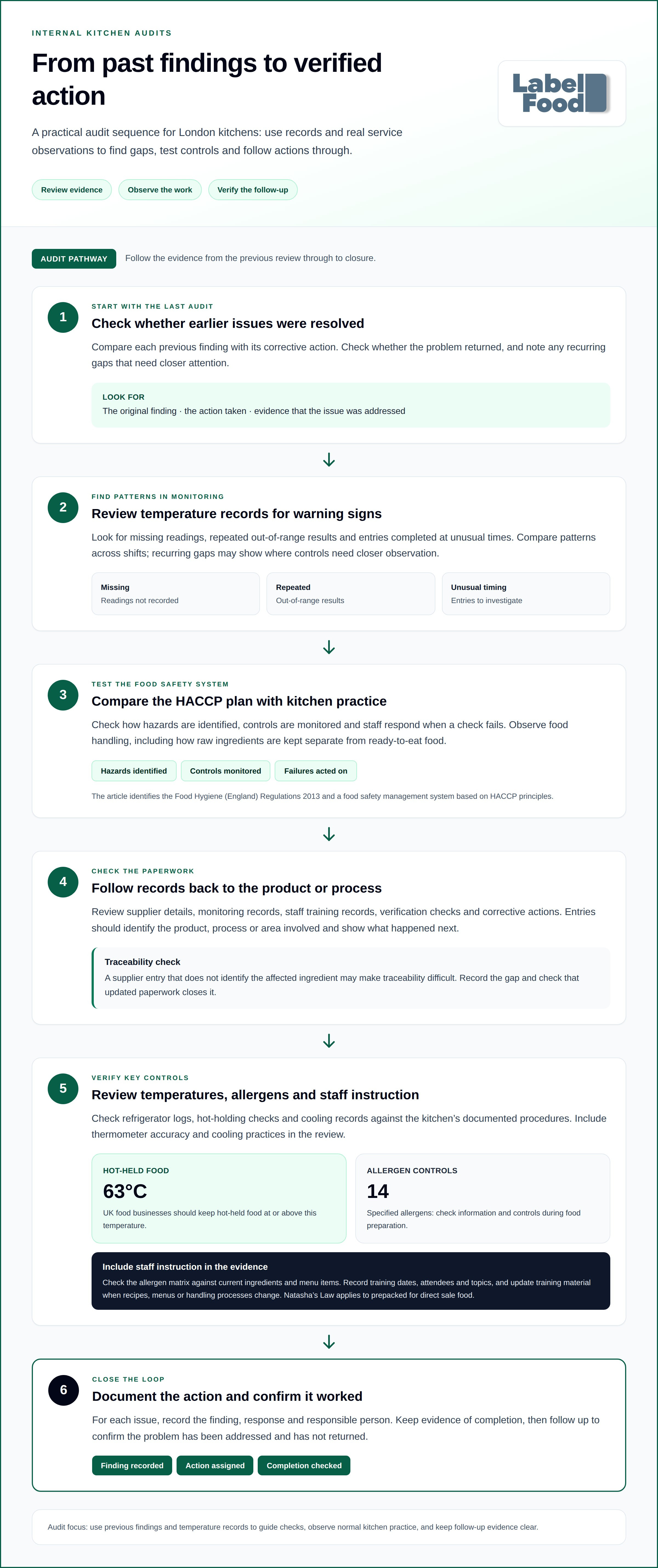
Start with the previous audit report, not a blank checklist. Compare each finding with its corrective action and check whether the problem returned. Then review temperature records for missing readings, repeated out-of-range results or entries completed at unusual times. Use these patterns to assess where food safety controls may be weakening. For example, recurring gaps on evening shifts may call for closer observation during that service.
In London, commercial kitchens must follow food hygiene requirements, including the Food Hygiene (England) Regulations 2013. Their food safety management system must be based on HACCP principles. An internal audit should therefore assess how the business identifies hazards, monitors controls and responds when a check fails. Compare the written HACCP plan with actual handling, such as how staff separate raw ingredients from ready-to-eat food.
Build the audit checklist around evidence, not general impressions. Review supplier details, monitoring records, staff training records, verification checks and documented corrective actions. Check that entries identify the product, process or area involved and show what happened next. If a delivery record identifies a supplier but not the affected ingredient, traceability may be difficult. Record the gap, assign an action and check that updated paperwork closes it.
Temperature checks need a consistent method. Review refrigerator logs, hot-holding checks and cooling records against the kitchen’s documented procedures. UK food businesses should keep hot-held food at or above 63°C. For a recorded deviation, confirm the entry includes the food involved, the reading and the action taken. Kitchen inspectors may also check thermometer accuracy and cooling practices, so include those points in the internal review.
London food businesses must provide information about 14 specified allergens and manage them during food preparation. Keep an allergen matrix aligned with current ingredients and menu items, plus records showing staff received relevant instruction. Natasha’s Law applies to prepacked for direct sale food. For audit evidence, record the training date, attendees and topics, then update the material when recipes, menus or handling processes change.
There is no single cost for making a commercial kitchen audit-ready. The work depends on the premises’ current condition, the records and controls needing attention, and whether equipment or staff processes need to change. An internal audit helps identify those needs before budgeting. Separate routine record-keeping improvements from physical repairs or operational changes, then prioritise actions according to food safety risk. This keeps decisions tied to actual findings rather than assumptions.
3. Internal kitchen audit planning and scheduling
For operators considering how to make a London kitchen audit-proof, begin with a calendar built around the kitchen’s risks and service pattern. Set daily, weekly or monthly checks, then assign an owner and define each check’s scope. A bakery might review ingredient storage during production, whilst a restaurant checks handovers between preparation and service. This makes food hygiene review part of normal operations.
There is no single internal audit interval for every food business. A monthly or quarterly review can be a starting point, adjusted when previous findings, menu changes or working practices indicate greater risk. Some businesses conduct internal audits every 3–6 months. A full mock audit every month can help identify wear, damaged equipment or routines that have slipped. Set the schedule to suit your food safety management system.
Separate routine monitoring from broader audits. Daily checks cover tasks that need attention during service, such as confirming cleaning is complete. A weekly review can identify missing entries or recurring issues. A monthly audit can assess whether controls are followed across departments and shifts. Put each activity on one calendar, recording its date, scope, responsible person and follow-up.
To plan how your London kitchen will stay ready for an EHO visit, work around actual operations. Include quieter periods, busy services, deliveries and handovers. Randomise some self-inspections so teams cannot prepare only for a known audit date. For example, review a closing shift after a weekend service, then compare it with a weekday opening check. This tests whether procedures hold up as workloads change.
Use triggers as well as fixed dates. A menu change, new supplier, equipment replacement or recurring finding should prompt a focused review of affected controls. Record why the schedule changed and which area needs reassessment. If corrective action is overdue, bring the check forward instead of waiting for the next full review. This keeps the plan responsive and structured.
Plan reviews around the food business’s performance, not just a rating target. The Food Standards Agency publishes rating information for England, but internal checks should assess whether the kitchen’s controls remain effective. Consider whether a menu or workflow change affects areas already covered by the schedule. This keeps compliance checks connected to day-to-day decisions.
After each review, compare findings with the last completed audit and update the calendar. Keep unresolved actions visible, assign responsibility and set a follow-up date according to risk. The schedule then records what was assessed, what changed and whether the improvement lasted.
4. HACCP documentation and corrective actions
In London, food businesses need a food safety management system based on HACCP principles. It should identify hazards, show how they are controlled and set out what staff do when a control fails. Keep the system proportionate to the food, processes and premises. A bakery handling raw dough and a restaurant preparing chilled ready-to-eat dishes may need different controls.
Make the records match the system. Keep the hazard analysis, monitoring records, corrective actions, verification checks, supplier information, staff training and temperature logs together or clearly cross-referenced. Each record should show what was checked, when it happened and who completed it. If the kitchen changes a process, ingredient or piece of equipment, update the relevant control and document the change.
Use the hazard analysis to connect risks with practical controls. For example, identify contamination risks during preparation, then document how staff separate raw and ready-to-eat food. A cooking control should state what the team monitors and how they respond if the required process is not achieved. Cleaning procedures should identify the equipment or surface, the method and how completion is recorded.
Corrective action starts with the finding. Describe the problem clearly, assess its food safety risk and record the immediate response. Then assign responsibility for the longer-term fix and set a deadline. For example, if a cleaning check finds residue on a food-contact surface, record how it was cleaned before use, who owns the follow-up and how the manager will confirm the routine is working.
Prioritise findings by severity. A potential immediate risk to customers needs prompt control; a documentation gap may require a different response. Record the decision and the reason, rather than giving every issue the same priority. If an action needs equipment maintenance or a process change, keep the interim control visible until the permanent correction is complete.
Verification shows whether the correction worked. Set a follow-up check that matches the problem, such as reviewing later cleaning records or observing the revised preparation method. Record the result, including any remaining issue. If the same finding returns, reassess the underlying cause rather than repeatedly closing the action without changing the control.
Keep the management system usable during service. Store current procedures where the responsible team can access them, and remove superseded versions from routine use. Use clear dates and named responsibilities so an EHO can follow a finding from discovery through resolution. A complete record links the hazard, control, monitoring result, corrective action and verification. That chain makes the documented system easier to explain and compare with everyday practice.
5. Staff interviews and real-time observation
Records show what should happen; observation shows what happens during service. Watch staff move through storage, preparation and service, then compare their actions with the kitchen’s written procedures. A short observation during a busy handover can reveal whether a safe routine works under pressure, not just during quiet preparation.
Keep the review practical and respectful. Ask a staff member to explain a task, then demonstrate it as they would normally perform it. For example, ask how they prevent contact between raw ingredients and ready-to-eat food. Note the steps they take, any equipment they use and whether their practice matches the food safety procedure.
Observe handwashing at the basin. Check that staff wash their hands at the required points in their work and that the basin has warm running water, soap and disposable paper towels. Watch whether someone returns to food handling after touching a waste bin or cleaning cloth. Record the observed action rather than relying on a general comment such as “hygiene was good”.
Include food storage and preparation in the same walk-through. Look at how staff identify and separate ingredients, where they place utensils between tasks and how they clean work surfaces. Follow one order from ingredient retrieval to service. This gives the auditor a clear view of actual hygiene practices and helps pinpoint where training or equipment changes may be needed.
Interviews should test understanding, not memory of a script. Ask staff what they would do if a routine check found a problem or if a customer asked about an ingredient. Compare the answer with the written procedure and training record. If the response is unclear, identify the specific instruction needing clarification, who needs a refresher and how the manager will assess understanding afterwards.
Observe cleaning and facilities as work continues. Check whether the cleaning method matches the task and whether staff handle cloths or sanitising materials as the procedure requires. Include ventilation and extraction in the premises walk-through. Record visible issues, such as an obstruction or build-up needing attention, and direct the finding to the responsible manager.
Document each observation with its date, area, task and relevant procedure. Separate facts from conclusions: “staff member placed raw poultry above ready-to-eat food” is more useful than “storage poor”. Discuss findings promptly with the shift lead, agree the immediate response and arrange follow-up observation. For consistent food labelling records across shifts, explore kitchen labelling support.
LabelFood: Multi-site Kitchen Labelling Management
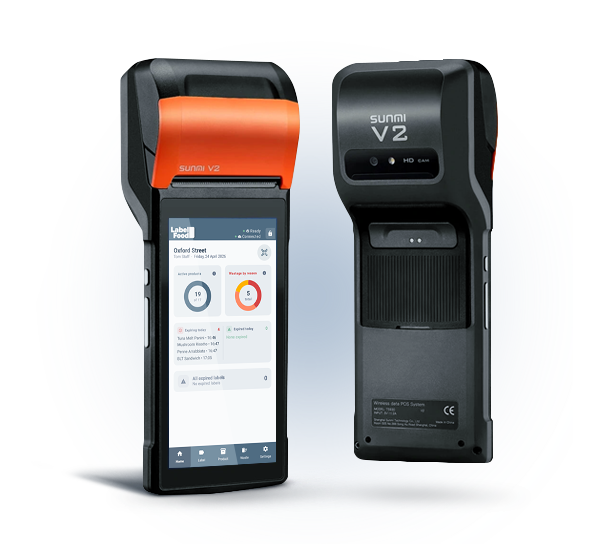
LabelFood’s Multi-site Kitchen Labelling Management supports consistent labelling and product data across kitchens. It is a complete food labelling system, not just a printer. The LabelFood Printer SV2 is included with subscriptions, works offline and syncs data to the Cloud Management Dashboard when connectivity returns.
Staff PINs attribute activity to individual users. Food Waste Recording captures photos and notes. The Compliance Pack, Label Report and Staff Activity provide tools for reviewing records. Product data can be entered manually, imported from Excel or read from photos and PDFs with AI assistance. Staff can review and edit information read by AI before saving it.
The management panel is available on web and iOS/iPad, with no Android version. If these tools fit your kitchen’s record-keeping needs, contact LabelFood to discuss multi-site labelling.
Build readiness into your next shift
The practical answer to how to prepare my London kitchen for an EHO visit is to treat readiness as part of daily management, not a separate project. Use audit findings to decide what needs attention next. Then make the relevant change visible in staff routines and records. This gives managers a clear basis for reviewing progress and setting the next priority.
Choose one improvement to put into practice first. It could be making a record easier to retrieve, clarifying who owns a check or strengthening how a procedure is followed during service. Keep the change focused, communicate it to the team and review whether it works in the kitchen. Build from there as new findings arise.
For support with kitchen labelling and related records, contact LabelFood about kitchen audit support. A consistent approach gives your team a practical starting point for ongoing improvement. Keep it current, and keep moving forward.
Frequently Asked Questions
Can an EHO visit without warning?
Yes, an EHO may visit without warning. Give the shift lead a simple arrival procedure: notify the manager on duty, identify a deputy if the manager is absent, and pause tasks that would obstruct access to the relevant area. Staff should answer honestly and direct detailed questions to someone familiar with the kitchen’s procedures. This keeps the visit orderly without rehearsed or misleading responses.
How to Perform Internal Kitchen Audits?
Choose a process to examine, such as receiving a delivery or preparing an order. Follow it from start to finish, compare what happens with the written procedure, and ask staff to explain any difference. Record what you observed, not assumptions about why it happened. Close the review by deciding whether the issue needs an immediate response, a procedure change or further observation during another shift.
What Is a Food Safety Audit?
A food safety audit is a planned examination of how a business manages food-related risks. It uses selected evidence, such as observed tasks and documented procedures, to assess whether controls operate as intended. An internal audit is arranged by the business; an external inspection is conducted by an authority. Both can identify gaps, but an audit does not replace daily management.
What does an EHO look for during a food hygiene inspection?
An EHO may compare what staff say with what happens during ordinary work. For example, an officer could ask a team member how they handle a procedure, then observe the task in context. If the explanation, written method and observed practice differ, the manager should be ready to clarify the process and address the discrepancy. Staff should answer directly rather than guess or speak for tasks they don’t perform.
What paperwork do I need for an EHO inspection?
Make paperwork easy to navigate, rather than handing over an unstructured folder. Keep a short index by topic, use clear dates and identify the current procedure. If a document has been amended, retain a clear version history so staff don’t rely on outdated instructions. A manager should be able to locate a requested file promptly and explain how it relates to the kitchen’s current working practices.
What does a London kitchen need to achieve a high food hygiene rating?
No single action secures a particular rating. Focus on consistency between shifts: ask team leaders to observe routine work, discuss recurring problems at handover and make sure new or changed procedures reach the people doing the task. If an issue returns, investigate its cause instead of treating each occurrence separately. This approach supports stronger day-to-day control, though a rating depends on the inspection findings.
What records should a commercial kitchen keep for an Environmental Health Officer inspection?
Make each record understandable without relying on the person who wrote it. Include the relevant date, task or area, result and any follow-up, where applicable. Correct mistakes transparently rather than obscuring the original entry, and ensure staff can explain unfamiliar shorthand. A consistent format helps managers compare entries and identify gaps without creating a second system solely for inspection day.
How often are London food businesses inspected, and what happens if a kitchen fails an inspection?
There is no single inspection timetable for every London food business; frequency depends on the business type and its food safety history. If an inspection identifies required action, the business should receive those requirements in writing. The officer should allow a reasonable period to address issues, except where there’s an immediate risk to customers’ health. A business may appeal an action it considers unfair.