Traceability is more than keeping invoices in a folder. Ensuring food traceability in my kitchen means being able to track ingredients back to their suppliers, follow them through preparation and storage, and identify where finished food has gone. According to the UK Government, Regulation (EC) No 178/2002 is the food traceability framework retained in UK law after Brexit.
That record trail matters during an inspection and when a supplier alert or food safety issue needs a quick response. Clear, current records help show where ingredients came from and narrow down which products or batches may be affected.
This article explains what food traceability means for UK kitchens, which records support it and how to keep them accessible. You’ll also learn how consistent ingredient and preparation records help you respond to incidents without relying on memory or searching through scattered paperwork.
Key Takeaways
- Understand how traceability links ingredients to suppliers, kitchen handling and the food you serve.
- Know which supplier, delivery and product details help make records useful during an inspection.
- See how batch information can help narrow down which food may be affected by a safety issue.
- Learn how consistent record-keeping across receiving, preparation and storage can support a clear supply-chain trail.
- Explore how LabelFood’s labelling system can support record-keeping across multiple kitchens.
What is food traceability?
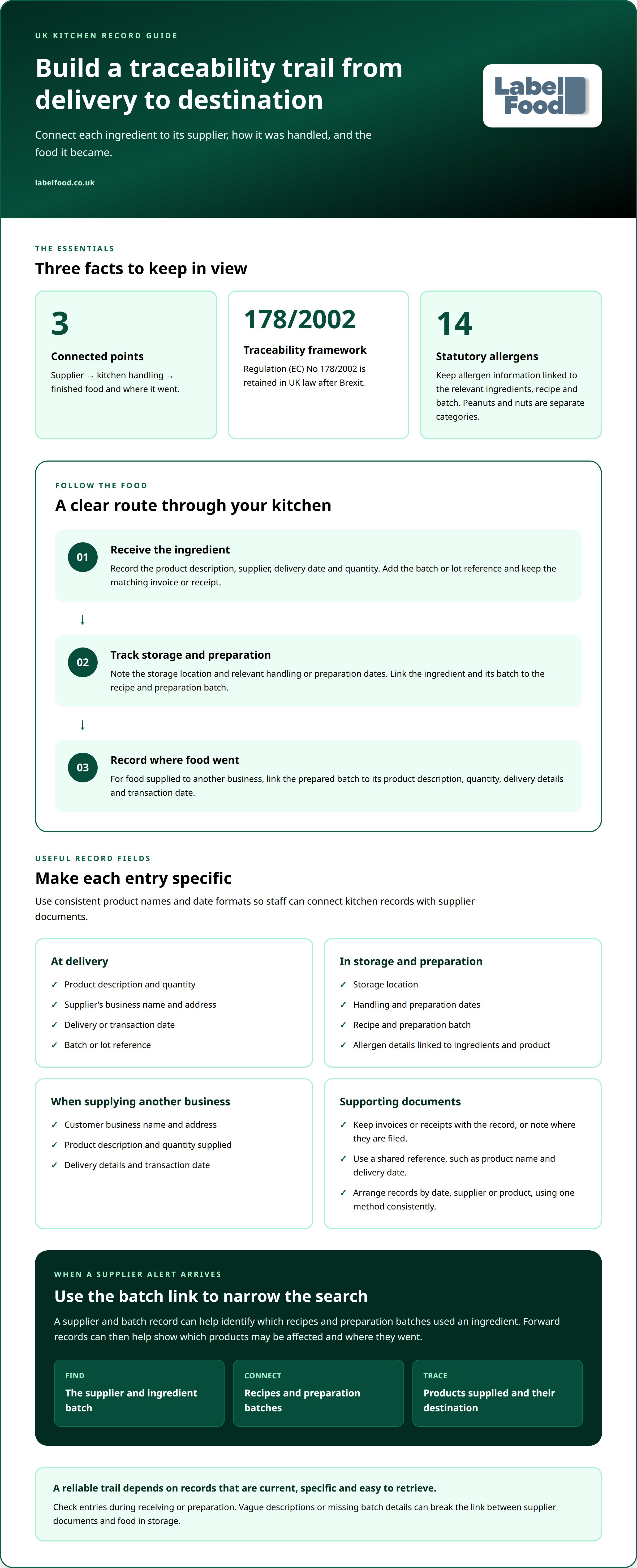
Food traceability links an ingredient to its supplier, how it was handled in the kitchen and the food it became. For a London kitchen, useful records make those connections clear during routine checks or a recall.
Linking ingredients to recipes and batches
Link ingredients to recipes and batches by recording what went into each prepared product or production run. That way, if a supplier issues an alert, you can identify the recipes and batches that used the ingredient.
To trace an ingredient from supplier to dish, record the supplier and batch details when it arrives, then link them to the recipe and preparation batch. Preparation and expiry dates help distinguish products made at different times.
Product and transaction records
Product and transaction records describe what food was received or supplied, how much was involved, and when the transaction took place. According to the UK Government, the General Food Law framework for food traceability in the UK is Regulation (EC) No 178/2002, retained in UK law after Brexit.
Use specific product descriptions to distinguish ingredients, prepared foods and quantities. Supplier and customer names and addresses, transaction dates and delivery details help connect each record to a movement of food.
Allergen information belongs alongside the relevant recipe and product records. Link the recorded allergen information to the ingredients used, so staff can identify which recipe or batch it concerns; keep peanuts and nuts as separate categories among the 14 statutory allergens.
Kitchen traceability technology
Kitchen traceability technology organises product and batch information so staff can retrieve it without searching through scattered paperwork. A shared digital record can connect deliveries, recipes and preparation details. A consistently maintained paper log can provide the same structure on a tight budget.
Small kitchens can start with a simple record for deliveries, batches and preparation, completed consistently. Use the same product names and date format each time. The priority is a reliable trail, not a costly system.
Following deliveries to served dishes
Forward traceability follows food from the kitchen to the customer or business receiving it. Records can link a prepared batch to its product description, quantity, delivery details and transaction date.
This connection supports a recall by helping identify which products may be affected and where they went. Poor records make inspection and withdrawal decisions harder. Regulatory consequences depend on the specific breach and applicable requirements; clear records help show the food’s route.
Keeping traceability records accessible for inspections
Keep traceability records current and accessible for inspection. Organised receiving, storage and preparation documents help staff find the relevant details without searching through unrelated paperwork.
Receiving, storage and preparation logs
These logs document what arrives, where it is stored and how it is handled during preparation. A clear sequence connects each delivery to the food produced from it.
At receipt, record the product description, supplier, delivery date and quantity. Check that chilled and frozen food is cold enough, packaging is undamaged and the delivery matches the order. Then note its storage location and relevant handling or preparation dates. For example, link a cheese delivery to its storage area and the dishes prepared with it.
Supplier and batch details
A supplier and batch record connects each ingredient to the business that supplied it and the batch it came from. This helps staff distinguish one delivery from another when the same product arrives on different dates.
Use the product name shown on the delivery document, alongside the supplier’s business name and address, batch or lot reference, quantity and transaction date. Keep invoices or receipts with the record, or note where they are filed. If flour arrives in separate batches, record each separately rather than grouping them under one general entry.
Recording food suppliers and business customers
Maintain records of businesses that supply food or ingredients and of businesses your kitchen supplies with food. Names and addresses identify each business in the supply chain, while product descriptions, quantities and transaction dates show what moved and when.
For a bakery supplying a local café, record the café’s business details alongside the products and delivery date. If your kitchen only serves individual diners, keep records that identify your suppliers and the food received. European supply-chain information may also appear on documents from a European supplier, so retain the relevant document with the matching product record.
Making records easy to retrieve
Arrange records by date, supplier or product, and use the same method consistently. Index paper folders by delivery date; for digital records, use clear product names and searchable dates. What matters is being able to find the entry for a specific ingredient or transaction.
Connect invoices, receipts and kitchen logs using a shared reference, such as the product name and delivery date. During an inspection, staff can move from a product record to its supporting document without relying on memory. Clearly labelled folders or digital files also help different staff find the same information.
Keeping the record complete
Check entries during receiving or preparation, rather than leaving them until the end of a shift. Missing batch details or vague product descriptions can break the link between a supplier document and the food in storage.
Use consistent product names, date formats and storage-location labels across records. A traceability document should let a colleague quickly identify the product, supplier, quantity and relevant transaction. This structure supports food safety checks and makes records more useful when information is requested.
Identifying affected batches during food safety incidents
During a food safety incident, batch records connect a concern to the ingredients and products involved. This helps the kitchen investigate, isolate potentially affected food and provide relevant information to consumers.
For example, if a supplier alerts a London restaurant about a batch of cooked chicken, staff can compare its batch reference with receiving and preparation records. They can identify which dishes used it, when they were prepared and whether any remain in storage. Without that link, the investigation may need to cover more products.
Use HACCP procedures to support prevention and response
Food businesses must establish food safety management procedures based on HACCP principles, unless their processes are very simple and good hygiene practice is sufficient to meet the legal requirement. HACCP-based procedures identify hazards and set out controls relevant to the food operation.
Traceability supports those controls by showing where ingredients entered the kitchen and which preparation steps followed. For a bakery, linking a flour batch to a production run helps staff investigate a supplier alert. It does not replace preventive controls such as safe handling and storage.
Act on a suspected risk
When a food safety concern arises, use records to establish the product, ingredient and batch involved. Separate potentially affected stock from food intended for service, then identify prepared products made with the ingredient. Record decisions and actions, including what was removed from use.
If a business needs to withdraw or recall products, it must immediately notify its local authority. Clear records of affected batches help the business provide specific information about the product and its movement, rather than treating all stock as potentially involved.
Give consumers clear information
Consumer communications should clearly identify the affected food and explain the action being taken. Product descriptions, batch references and transaction records help distinguish an affected item from other products with similar names. This supports prompt, relevant information for customers and the public.
For a kitchen supplying another business, delivery records can identify which customer received the product. For meals served directly, preparation records can help narrow down the relevant service or dish. Keep information accurate and consistent with the batch investigation.
Traceability cannot prevent every food safety incident, but it enables a more focused response. Keep the incident record with the related supplier, batch and preparation information. This documents what the kitchen found, which food it isolated and how it addressed the risk to public health.
Tracking food through the supply chain
A food supply chain connects the businesses that produce, handle, supply and serve food. For a London restaurant, traceability links a delivered ingredient to its supplier and the dishes made with it.
Map the businesses and handovers
Each handover is an opportunity to connect product and transaction details across the supply chain. A vegetable grower may supply a wholesaler, who delivers produce to a restaurant; the restaurant then prepares dishes for diners.
Record the business supplying each delivery, the products and quantities received, and the transaction date. If the restaurant supplies another business, record the recipient and what was delivered. These links help staff trace a product backwards to its source or forwards to its next recipient.
Understand each member’s role
Growers, processors, wholesalers, transport businesses, restaurants and business customers can all be part of a food supply chain. Each handles particular products or transactions, so clear records help distinguish one stage from another.
Food businesses are responsible for serving safe food and complying with applicable legislation. A kitchen’s records should connect the supplier’s product description and batch details with its own receiving, storage and preparation records. For example, a bakery needs to link flour delivery information to the production that uses it.
Choose suppliers with traceable records
Supplier choice affects how clearly a kitchen can document ingredient origin and delivery. Check whether product descriptions, business details and batch information on delivery documents are clear and consistent with the order.
At receipt, compare the delivered food with the order and accompanying documents. If a restaurant receives fresh herbs from a wholesaler, record the product name, quantity, supplier and delivery date together. Link invoices or receipts to that entry so staff can retrieve the source information when reviewing stock.
Keep communication and records aligned
Regular communication with suppliers can help resolve missing or unclear product information. For example, if a delivery note uses a different product description from the kitchen’s stock record, clarify which ingredient the entry refers to before reusing that description.
Record any changes to product details or supplier information clearly. Consistent names and batch references help staff connect documents across receiving, storage and production. They also support transparency when a customer or business recipient needs information about a product’s route.
Review the supply-chain trail during routine stock checks and periodic internal or external audits. Follow one ingredient from its delivery document through kitchen records to the products made with it. If a link is missing, identify which handover needs better documentation and agree how to record that information in future.
Food traceability definition and purpose
Food traceability is the ability to follow food through its origin, handling, production and distribution. For a London food business, that means connecting supplier information to ingredients, kitchen processes and the food supplied or served. Each link should be clear to someone who did not handle the product.
Consider three directions. Backward traceability follows an ingredient to its supplier. Internal traceability links it to preparation, storage or production records. Forward traceability follows the finished product to the customer or business receiving it. Together, these connections show the product’s route rather than leaving separate documents to tell disconnected parts of the story.
Consider a restaurant receiving a batch of tomatoes. A clear record links the supplier and delivery details to the storage entry, then to the prepared sauce made with those tomatoes. If the restaurant supplies the sauce to another business, the delivery record completes the next link. Product description, quantity and transaction date help distinguish this movement from other deliveries.
The practical purpose is to support a focused response when a product concern arises. If a supplier reports a problem with one ingredient batch, the kitchen can use its records to identify products made with it and determine what remains in stock. The business can then assess which items may need to be isolated, withdrawn or recalled. Without connected records, staff may struggle to establish the scope of the issue.
Traceability also supports transparency about a product’s origin and handling. Customers or business recipients may need information about a particular food, while kitchen staff may need to identify an ingredient’s supplier. Consistent product names and connected transaction records make these questions easier to answer. They also help the business investigate errors, suspected substitution or other gaps in the product trail.
A traceability process can be useful without being automated. Paper records and digital tools can both capture the necessary links, provided staff record information consistently and can retrieve it. Digitising records is more than transferring paper entries to a screen: the useful change is capturing information as products move through receiving, preparation and distribution. Recording a delivery when it arrives, for example, gives later production records a starting point.
The key test is whether the kitchen can trace a specific product backwards, through its own operation and forwards to its recipient. That ability helps the business investigate concerns, support an efficient product withdrawal and explain the food’s route with clear records.
Organise kitchen food labelling records to connect product information with day-to-day handling.
LabelFood: Multi-site Kitchen Labelling Management
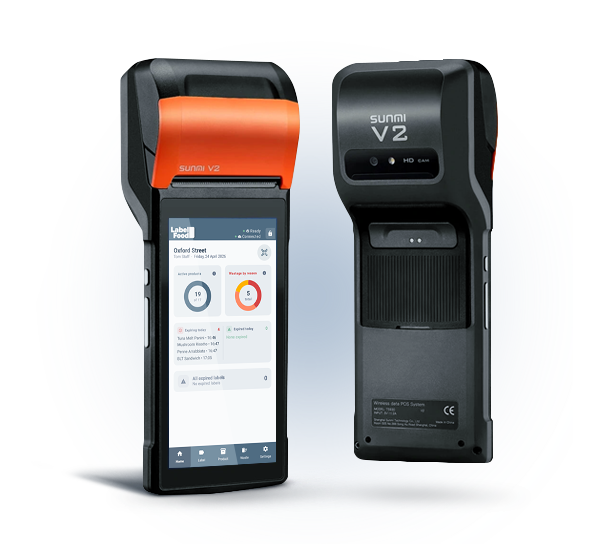
LabelFood’s Multi-site Kitchen Labelling Management supports consistent labelling across commercial kitchens. It is a complete food labelling system, not just a printer, and subscriptions include the LabelFood Printer SV2.
LabelFood’s system works offline and syncs with the cloud when connectivity returns. Staff can enter product data manually, import it from Excel or use AI-assisted photo and PDF reading. The AI suggests information for staff to review and edit before saving.
The Cloud Management Dashboard includes a Compliance Pack, Label Report and Staff Activity reports. Individual staff PINs attribute activity. Food Waste Recording lets teams add photos and notes to waste records.
The management panel is available on web and iOS/iPad, with no Android version. Contact LabelFood to discuss whether its multi-site labelling system fits your operation.
Make traceability part of the daily routine
Traceability works best when records fit the way your kitchen operates. Identify where information currently gets missed: at delivery, during preparation, across shifts or between sites. Choose a consistent process staff can follow during service, rather than leaving the task until later.
For operators focused on ensuring food traceability in their kitchens, the practical test is straightforward: can a team member trace an ingredient through the kitchen’s records without relying on memory? If not, start by improving the handover between receiving, storage and preparation. A reliable routine makes records useful in everyday operations, inspections and incident response.
LabelFood’s labelling and record-keeping tools can help kitchens organise this work. Consider whether a structured system fits your operation and how your team captures product information.
Contact LabelFood to discuss traceability and take a practical next step towards more organised kitchen records.
Frequently Asked Questions
How Does it Work?
A traceability process works by giving each relevant food movement a record that staff can find and understand. Use consistent product names and batch references, and make sure staff know where entries are stored. For example, if a supplier changes a product’s name on its paperwork, record the new description alongside the kitchen’s established name. This prevents searches from missing an entry because the wording differs.
How to make a traceability plan in 5 steps?
Build a plan staff can apply during normal kitchen work:
- Assign responsibility for keeping the process current.
- Choose consistent names for products and suppliers.
- Set a routine for recording changes to product descriptions.
- Decide how staff will handle incomplete or unclear entries.
- Review a sample record with the team and update the process.
Use feedback from staff who receive deliveries and prepare food. Their experience can reveal where the process needs clearer instructions.
So what records do you actually need to keep?
Keep supporting documents that make an entry understandable, such as delivery notes, invoices and receipts. Ensure each document matches a relevant kitchen entry rather than being filed without context. A practical filing convention might use the delivery date and supplier name, making documents easier to find even when staff do not remember the exact product description.
What should you look for in a traceability system?
Assess whether the system suits staff working at your pace and across your locations. Look for clear search and retrieval, consistent product naming, and a way to correct inaccurate entries while keeping the record understandable. Check whether staff can follow the routine during a busy delivery period. A system that does not work reliably in real conditions will not support dependable records.
Which companies need to comply with traceability regulations and why?
Traceability matters to food businesses handling food through production and supply, including manufacturers, caterers, restaurants and wholesalers. The records each business needs depend on its role and transactions. A bakery making products for another business has different handovers from a café serving diners directly. Each operator needs a process suited to the food it handles and the businesses it deals with.
Why is this traceability important?
Traceability gives a food business a practical way to investigate discrepancies, such as a delivery that does not match its order or a supplier changing a product description. Reliable records help staff narrow down where the discrepancy arose and what needs follow-up. This supports operational decisions, including stock control and supplier communication, without relying solely on memory.
What food traceability rules apply to UK kitchens and food businesses?
UK food businesses must meet the traceability requirements that apply to their activities and the food they handle. Sector-specific requirements may also affect record-keeping, so kitchens handling specialised products may have additional considerations. Keep procedures aligned with actual business processes, including changes to ingredients, production or distribution. Do not assume one generic record format covers every operation.
What records must a UK kitchen keep to trace food ingredients and suppliers?
Make sure records distinguish individual transactions, especially when the same ingredient arrives from the same supplier on different occasions. Keep relevant delivery paperwork with each entry, and note changes such as a replacement product or split delivery. If a kitchen uses one supplier for several types of flour, precise product descriptions help staff identify the correct item without relying on packaging alone.